
Albostan, Berat Feyza
Loading...
Profile URL
Name Variants
Soysal, Berat Feyza
Job Title
Dr. Öğr. Üyesi
Email Address
fsoysal@cankaya.edu.tr
Main Affiliation
İnşaat Mühendisliği
Status
Current Staff
Website
ORCID ID
Scopus Author ID
Turkish CoHE Profile ID
Google Scholar ID
WoS Researcher ID
Files
Sustainable Development Goals
 1
1NO POVERTY
0
Research Products
 2
2ZERO HUNGER
0
Research Products
 3
3GOOD HEALTH AND WELL-BEING
0
Research Products
 4
4QUALITY EDUCATION
0
Research Products
 5
5GENDER EQUALITY
0
Research Products
 6
6CLEAN WATER AND SANITATION
0
Research Products
 7
7AFFORDABLE AND CLEAN ENERGY
0
Research Products
 8
8DECENT WORK AND ECONOMIC GROWTH
0
Research Products
 9
9INDUSTRY, INNOVATION AND INFRASTRUCTURE
0
Research Products
 10
10REDUCED INEQUALITIES
0
Research Products
 11
11SUSTAINABLE CITIES AND COMMUNITIES
1
Research Products
 12
12RESPONSIBLE CONSUMPTION AND PRODUCTION
0
Research Products
 13
13CLIMATE ACTION
0
Research Products
 14
14LIFE BELOW WATER
0
Research Products
 15
15LIFE ON LAND
0
Research Products
 16
16PEACE, JUSTICE AND STRONG INSTITUTIONS
0
Research Products
 17
17PARTNERSHIPS FOR THE GOALS
0
Research Products

Documents
14
Citations
95
h-index
6

Documents
0
Citations
0
No records found in other affiliations.

Scholarly Output
8
Articles
6
Views / Downloads
18/0
Supervised MSc Theses
0
Supervised PhD Theses
0
WoS Citation Count
33
Scopus Citation Count
34
Patents
0
Projects
0
WoS Citations per Publication
4.13
Scopus Citations per Publication
4.25
Open Access Source
2
Supervised Theses
0
| Journal | Count |
|---|---|
| Challenge Journal of Structural Mechanics | 1 |
| Earthquake Engineering & Structural Dynamics | 1 |
| Journal of Earthquake Engineering | 1 |
| Lecture Notes in Civil Engineering | 1 |
| Magazine of Concrete Research | 1 |
Current Page: 1 / 2
Scopus Quartile Distribution
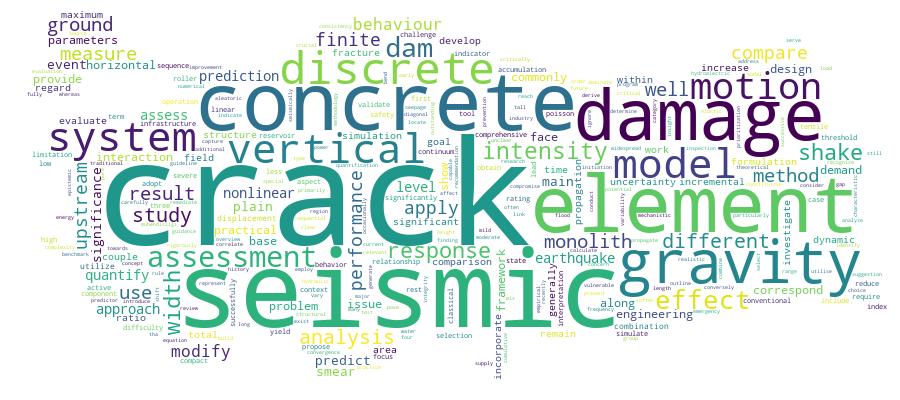
Competency Cloud
8 results
Scholarly Output Search Results
Now showing 1 - 8 of 8
Article A Discrete Element Method for Evaluating the Seismic Performance of Concrete Gravity Dam-Reservoir Systems Under Main Shock-Aftershock Events(Tulpar Academic Publishing, 2025) Soysal, B.F.Dams are crucial for water supply, flood prevention, and hydroelectric power generation. Often located in seismically active regions, they are vulnerable to main shock-aftershock (MS-AS) sequences, which can compromise structural integrity and hydraulic safety. Critical aspects of dam response to MS–AS events remain unclear, particularly the required rest time between successive events and threshold AS-to-MS intensity measure ratios that could serve as predictors of additional damage. This study addresses these gaps by analyzing concrete gravity dam–reservoir systems of three heights (50 m, 100 m, and 150 m) using the developed discrete element–based approach coupled with displacement/pressure-based mixed finite elements for the reservoir. Empirical rest time equations were derived from 124 as-recorded ground motions, while seismic performance under varying intensity levels was evaluated using 14 as-recorded MS–AS sequences. Damage was quantified using discrete indices of base crack length, maximum base crack width, and maximum total upstream crack width. Results indicate that AS primarily propagate existing cracks at lower intensities, whereas higher intensities generate new cracks along the upstream face, increasing crack widths by 25–30% on average. The 50 m high dam remained within the mild damage category, while taller dams occasionally reached moderate levels, posing potential seepage risks. Threshold AS-to-MS ratios for four different intensity measures were identified. These findings provide mechanistic insight into crack propagation under MS-AS events, providing practical guidance for post-earthquake dam safety assessment, inspection prioritization, and incorporating sequential seismic effects into design and emergency planning. © 2025 by the Author.Conference Object Citation - WoS: 1The Significance of Vertical Shaking on Seismic Assessment of Gravity Dams: A Case Study(Springer International Publishing AG, 2024) Arici, Yalin; Soysal, Berat Feyza; Ay, Bekir OzerVertical motions' effects have recently been recognized in building codes. The corresponding effects on infrastructure components is less certain. Current industry practice ignores vertical shaking based on earlier recommendations obtained using linear analyses. The goal of this study is to assess this suggestion for a case study and investigate the significance of the use of vertical motion, along with the horizontal component, during the seismic assessment of dam structures. A 50 m concrete dam monolith was used to this end and the effects of the vertical motion was assessed for two groups of engineering demand parameters (EDP). Such displacement and crack based EDPs are commonly used in the assessment of gravity dams. The response of the chosen system with and without the contribution of vertical ground motion was obtained and compared. The results show an increase in the horizontal displacement and vertical acceleration on the system when vertical ground motion was used along with the horizontal, in lieu of the horizontal only shaking case. The cracking around the neck of the system can be significantly different with the use of vertical motion, both with regard to extension and distribution.Article Citation - WoS: 6Citation - Scopus: 8A Modified Applied Element Model for the Simulation of Plain Concrete Behaviour(Emerald Group Publishing Ltd, 2023) Soysal, Berat Feyza; Arici, Yalin; Tuncay, KaganA modified applied element model to simulate the behaviour of plain concrete continuum structures including discrete cracking is proposed in this study. In the classical applied element model, Poisson effects are fully ignored. To remediate this issue, diagonal elements are introduced to include the Poisson effect, and the constitutive parameters are rigorously determined using the Cauchy-Born rule and the hyper-elastic theory. The formulation is validated for linear elastic problems and the consistency and convergence behaviour of the numerical approach is shown. Tensile softening formulation using the concept of fracture energy is utilised for the nonlinear range. In this range, the approach is validated using the classical benchmark tests with pure tensile, split-tensile, combined shear-tensile and bending dominated push-over loading. The load-displacement behaviour and crack response were captured successfully, showing the proposed methodology can be used to quantify discrete cracks on large systems, such as dam monoliths, from initiation to significant damage levels.Article Citation - WoS: 5Citation - Scopus: 6The Use of Discrete Element Models for the Seismic Assessment of Concrete Gravity Dams(Elsevier Science inc, 2024) Soysal, Berat Feyza; Arici, YalinThe assessment of the seismic performance of gravity dams is a difficult engineering problem requiring consideration of the cracking in a brittle medium as well as the interaction of the reservoir and the massive concrete structure. The problem is challenging from a practical point of view as well; a clear-cut damage indicator for assessing the performance of these systems is not present. The generally used finite element method (FEM)/rotating crack combination led to the utilization of indirect global demand parameters like crest displacements or damaged area ratios as damage indicators. While very robust in terms of the solution, the aforementioned combination leads to highly diffused crack patterns for large shaking, limiting the interpretation of the results for these systems on which discrete cracks' extent and widths are the primary damage measures. This limitation can be overcome by utilizing methods that simulate the discrete fracture phenomenon; in this study, the nonlinear seismic behavior of a concrete gravity dam-reservoir system was investigated using the developed discrete element framework, the modified applied element method (MAEM). Using incremental dynamic analysis, the cracking on the dam body was compared with those of the FEM qualitatively first, followed by a quantitative comparison focused on the propagation of the cracking using fragility curves. Then, the use of crack widths as a damage indicator was utilized, and model outcomes were compared. The utilized model reduced the diffusion of cracking commonly observed in FEM models using total strain smeared crack formulation and predicted more adverse behavior in terms of total crack widths and crack propagation.Article Citation - WoS: 6Citation - Scopus: 7Crack Width - Seismic Intensity Relationships for Concrete Gravity Dams(Taylor & Francis Ltd, 2024) Soysal, Berat Feyza; Arici, YalinSeismic assessment of plain concrete structures like gravity dams is generally conducted based on cracking. The responses of two types of gravity dams, i.e. the conventional and roller compacted concrete (RCC), were investigated in this study using a discrete element tool coupled with special reservoir elements. Using incremental dynamic analysis, the relationship between the seismic intensity measures and crack widths on the U/S face of the monolith was obtained. The damage accumulation on conventional and RCC dams was different: The cumulative cracking on the upstream face of the monolith correlated well to a seismic intensity measure representing base shear.Article Citation - WoS: 5Citation - Scopus: 5The Effect of Vertical Motions on Damage Accumulation on Concrete Gravity Dams(Wiley, 2023) Soysal, Berat Feyza; Arici, Yalin; Ay, Bekir OzerThe effect of vertical ground motions on the seismic response of dams has long been a concern in the seismic design and evaluation of concrete gravity dams. The guidelines regarding the use of vertical motions in time history analysis (THA) are not clear due to the complexity of the effect as well as the large uncertainty in the motion selection process. The goal of this study is to assess the significance of vertical motions' effects on concrete gravity dams considering the relevant variability due to ground motion, system frequency response as well as the shaking level. To this end, a carefully selected ground motion set providing realistic vertical(V)/horizontal(H) loading was used in nonlinear THAs of three different systems with different modal properties. In order to evaluate the intensity of shaking on the vertical motions' effect, the responses were calculated at different seismic levels corresponding to operation, design, and maximum shaking levels. Along with traditional demand parameters commonly employed in assessing seismic response, cracking on the base and at the upstream face of the monolith was adopted as demand measures using a model capable of yielding discrete cracking on the system. The effect of vertical motions was quantified by comparing the response of H + V to H only shaking. The results show the vertical shaking can significantly affect upstream cracking for the operation or design level earthquakes, the effect increasing for larger dams.Article Citation - WoS: 10Citation - Scopus: 8Predicting Seismic Damage on Concrete Gravity Dams: a Review(Taylor & Francis Ltd, 2024) Arici, Yalin; Soysal, Berat FeyzaThe seismic assessment of concrete gravity dams is a problem of prediction of cracking and the corresponding consequences. With the widespread use of general-purpose finite element programs, the work in the field has shifted towards quantifying the behaviour in a framework for assessment. The nonlinear analysis and coupling with foundation-reservoir interaction, conversely, is still a challenging task. The modelling approach has significant effects on the analysis results and the assessment framework. The field remains an active area for research with many outstanding issues regarding damage quantification and assessment compared to any other major infrastructure component. A comprehensive overview of the seismic assessment of gravity dams is presented in this work with the goal to outline the issues in the field. Different models and modelling choices are compared in the context of damaged state assessment of gravity dams. The links between practical difficulties and theoretical issues are critically discussed. The aleatoric and epistemic uncertainties in the field, and their sources, are presented. Areas of future work are identified for improvement in seismic assessment as well as reducing and quantifying the uncertainties in the prediction of damaged states for concrete gravity dams.Book Part Comparison of Damage Predictions for Concrete Dams, Finite Elements with Smeared Crack vs. Discrete Element Models(International Association for Earthquake Engineering, 2024) Soysal, B.F.; Arici, Y.The seismic assessment of gravity dam monoliths has been treated within the framework of performance based earthquake engineering (PBEE) in the last decade. The necessary inclusion of the soil-structure-reservoir interaction in combination with predicting the damage on these structures for use in PBEE is a significant challenge. Within this context, smeared crack models with general purpose finite element codes became to be used generally as the assessment tool for these systems. Perhaps the most practical limitation in this approach is the difficulty with providing discrete cracks and the corresponding impediment to the rating of the damage on these systems leading to possibly subjective conclusions. On the other hand, discrete element techniques offer a proficient simulation alternative to the FE, enabling the interpretation of results from the main aspect of the damage on these system, i.e. cracking. A novel discrete element framework, incorporating dam-reservoir interaction, has been developed to this end as part of the doctoral studies of the first author. The model incorporates individual elements connected by multiple springs, successfully modelling initial continuum with the accurate prediction of discrete cracks at the latter stages of loading. The predicted damage and damage rating of a generic monolith is compared to the FE counterparts in this work. A comprehensive comparison with different ground motions at several levels focusing on crack widths is shown. The results showed the cracking on the system is very different in severe shaking compared to similar predictions in lower earthquake excitations. The FE simulations, commonly adopted for the investigation of these systems with smeared crack modelling, yielded less cracking as well as smaller propagation in severe shaking conditions. © 2024, International Association for Earthquake Engineering. All rights reserved.