
Koçak, Eyup
Loading...
Profile URL
Name Variants
Koçak, E. & Kocak, Eyup & Koçak, Eyup & Koçak, Eyüp
Job Title
Dr. Öğr. Üyesi
Email Address
eyupkocak@cankaya.edu.tr
Main Affiliation
Makine Mühendisliği
Status
Current Staff
Website
ORCID ID
Scopus Author ID
Turkish CoHE Profile ID
Google Scholar ID
WoS Researcher ID
Files
Sustainable Development Goals
 1
1NO POVERTY
0
Research Products
 2
2ZERO HUNGER
0
Research Products
 3
3GOOD HEALTH AND WELL-BEING
2
Research Products
 4
4QUALITY EDUCATION
0
Research Products
 5
5GENDER EQUALITY
0
Research Products
 6
6CLEAN WATER AND SANITATION
1
Research Products
 7
7AFFORDABLE AND CLEAN ENERGY
5
Research Products
 8
8DECENT WORK AND ECONOMIC GROWTH
0
Research Products
 9
9INDUSTRY, INNOVATION AND INFRASTRUCTURE
1
Research Products
 10
10REDUCED INEQUALITIES
0
Research Products
 11
11SUSTAINABLE CITIES AND COMMUNITIES
0
Research Products
 12
12RESPONSIBLE CONSUMPTION AND PRODUCTION
0
Research Products
 13
13CLIMATE ACTION
0
Research Products
 14
14LIFE BELOW WATER
0
Research Products
 15
15LIFE ON LAND
0
Research Products
 16
16PEACE, JUSTICE AND STRONG INSTITUTIONS
0
Research Products
 17
17PARTNERSHIPS FOR THE GOALS
0
Research Products

This researcher does not have a Scopus ID.

This researcher does not have a WoS ID.
No records found in other affiliations.

Scholarly Output
26
Articles
19
Views / Downloads
1111/1069
Supervised MSc Theses
2
Supervised PhD Theses
1
WoS Citation Count
69
Scopus Citation Count
73
Patents
0
Projects
0
WoS Citations per Publication
2.65
Scopus Citations per Publication
2.81
Open Access Source
9
Supervised Theses
3
| Journal | Count |
|---|---|
| Journal of Thermal Engineering | 3 |
| Applied Sciences (Switzerland) | 2 |
| Journal of Computing and Information Science in Engineering | 2 |
| 5th International Anatolian Energy Symposium | 2 |
| Journal of Mechanical Science and Technology | 2 |
Current Page: 1 / 4
Scopus Quartile Distribution
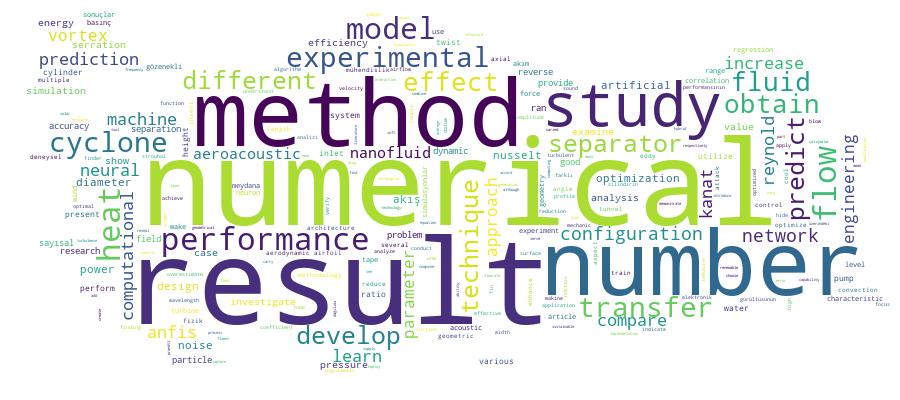
Competency Cloud
26 results
Scholarly Output Search Results
Now showing 1 - 10 of 26
Article Citation - WoS: 3Citation - Scopus: 6A Comprehensive Review of Cyclone Separator Technology(Wiley, 2024) Ayli, Ece; Kocak, EyupThis review article examines the working principles, optimal dimensions, effects of key parameters, and the results of experimental/numerical studies on cyclone separators. Investigations have been conducted on the effects of parameters such as vortex finder diameter, conical part diameter, cyclone separator diameter, cylinder height, inlet height, inlet width, vortex finder length, and cyclone total length on efficiency, performance, and pressure drop. Furthermore, the article explores current modifications and efforts to improve efficiency. These modifications include adding water nozzles, inserting ribs, employing double-stage cyclones, incorporating additional inlets, using finned cylinder bodies, adding extra top inlets, introducing liquid jets, employing helical roof inlets, adding laminarizers, incorporating internal spiral vanes, and employing slotted vortex finders. While serving as a guide to optimize the design and performance of cyclone separators, this article emphasizes new and innovative approaches to enhance their industrial applicability. By compiling studies conducted from conceptual birth to the present, the aim of this article is to serve as a guidebook.Article CFD and DEM Analysis of Cyclone Separator Performance: Implications of Cylinder-to Ratios for Sustainable Engineering(Springer Heidelberg, 2025) Ayli, Ece; Kocak, EyupThis research addresses a common industrial challenge: efficiently separating particles from gas using cyclone separators, a critical component for various applications in sustainable engineering. While several studies have focused on airflow within these separators, this research introduces a novel approach by combining two advanced simulation methods (CFD and DEM) to analyze how different cone heights in a cyclone separator impact its performance. This combined methodology enables the examination of particle movement within the separator, a critical aspect often overlooked in previous studies. By visualizing particle dynamics and analyzing them with DEM, the research underscores the importance of considering particle behavior for obtaining accurate results. Overall, this study enhances our understanding of cyclone separators through state-of-the-art simulations and empirical testing. By elucidating the complex airflow and the influence of geometric design on performance, practical recommendations are provided for the development of more efficient cyclone separators. These improvements can lead to enhanced particle separation and reduced energy consumption, offering significant benefits across multiple industries. The findings reveal that as the conical height-to-total height ratio (h/hc) increases, indicating a more pointed cone, there is a substantial increase in efficiency alongside a minimal and tolerable rise in pressure drop. For instance, at a velocity of 25 m/s, increasing the h/hc ratio from 0.33 to 3 results in a 0.7% reduction in pressure drop and a 14% efficiency increase, contributing to more sustainable operational practices.Conference Object Numerical Analysis of Aerodynamic and Aeroacoustic Characteristics of Subsonic Rectangular Cavity with Different Aspect Ratios(2020) Koçak, Eyup; Aylı, Ece; Türkoğlu, HaşmetArticle Citation - WoS: 4Citation - Scopus: 4Performance Optimization of Finned Surfaces Based on the Experimental and Numerical Study(Asme, 2023) Ayli, Ece; Kocak, Eyup; Turkoglu, HasmetThis paper presents the findings of numerical and experimental investigations into the forced convection heat transfer from horizontal surfaces with straight rectangular fins at Reynolds numbers ranging from 23,600 to 150,000. A test setup was constructed to measure the heat transfer rate from a horizontal surface with a constant number of fins, fin width, and fin length under different flow conditions. Two-dimensional numerical analyses were performed to observe the heat transfer and flow behavior using a computer program developed based on the openfoam platform. The code developed was verified by comparing the numerical results with the experimental results. The effect of geometrical parameters on heat transfer coefficient and Nusselt number was investigated for different fin height and width ratios. Results showed that heat transfer can be increased by modifying the fin structure geometrical parameters. A correlation for Nusselt number was developed and presented for steady-state, turbulent flows over rectangular fin arrays, taking into account varying Prandtl number of fluids such as water liquid, water vapor, CO2, CH4, and air. The correlation developed predicts the Nusselt number with a relative root mean square error of 0.36%. This research provides valuable insights into the effects of varying Prandtl numbers on the efficiency of forced convection cooling and will help in the design and operation of cooling systems. This study is novel in its approach as it takes into account the effect of varying Prandtl numbers on the heat transfer coefficient and Nusselt number and provides a correlation for the same. It will serve as a valuable reference for engineers and designers while designing and operating cooling systems.Article Citation - WoS: 2Numerical Investigation of Rod-Airfoil Configuration Aeroacoustic Characteristics Using Ffowcs-Williams Equations(Yildiz Technical Univ, 2021) Kocak, Eyup; Turkoglu, Hasmet; Ayli, EceThe rod-airfoil configuration is a fundamental study to understand sound generation processes and the acoustic phenomena in the application of turbines, fans, and airfoils. In the present research, the noise that is originated by the rod-airfoil configuration is examined using numerical methods which are Large Eddy Simulation (LES), and Reynolds Averaged Navier Stokes (RANS) models, coupled with an FFOWCS-WILLIAMS-HAWKINGS (FW-H) technique. For the RANS method, k-omega SST and Spalart Allmaras (S-A) turbulence models are utilized in order to investigate the capability of different models for the analysis of the aeroacoustic flow field. The ANSYS FLUENT solver is chosen to carry out the numerical simulations. The examined rod and chord diameter Reynolds numbers are 48000 and 480000, respectively and the Mach number is 0.2. Results are obtained for both in the near field and acoustic far-field. The obtained numerical results are verified with an experimental study from the literature, and the results of both approaches are compared with each other and the experiment. Comparisons are performed for mean velocity profiles in the rod and airfoil wakes, pressure spectra and power spectral density. The results obtained show that LES is preferable for this problem as it is capable of capturing the flow separation, reattachments, vortex street, and various length scales of turbulence. Although both RANS and LES methods provide a consistent flow field with experimental methods, the RANS approach overestimates the vortex shedding frequency and Strouhal number. The RANS model predicts the flow field well; however, it overestimates the noise spectra. The LES model predicts satisfactory acoustic spectra.Article Citation - WoS: 8Citation - Scopus: 8Supervised Learning Method for Prediction of Heat Transfer Characteristics of Nanofluids(Korean Soc Mechanical Engineers, 2023) Kocak, Eyup; Ayli, EceThis study focuses on the alication and investigation of the predictive ability of artificial intelligence in the numerical modelling of nanofluid flows. Numerical and experimental methods are powerful tools from an accuracy point of view, but they are also time- and cost-consuming methods. Therefore, using soft-computing techniques can improve such CFD drawbacks by patterning the CFD data. After obtaining the aropriate ANN and ANFIS architecture using the CFD data, many new data can be created without requiring numerical and experimental methods. In the scope of this research, the FCM-ANFIS and ANN methods are used to predict the thermal behaviour of the turbulent flow in a heated pipe with several nanoparticles. A parametric CFD study is carried out for water-TiO2, water-CuO, and water-SiO2 nanofluid through a pipe. The Reynolds number is varied between 7000 and 15000, and the nanofluid concentration is varied between 0.25 % and 4 %. The effects of using nanofluid on local values of Nusselt number and shear stress distribution were investigated. Numerical results indicate that with the increasing nanoparticle volume fraction of nanofluid, the average Nusselt number increases, but the required pumping power also increases. The obtained soft computing results demonstrate that the FCM clustering ANFIS has given better results both in training and testing when it is compared to the ANN architecture with an R-2 of 0.9983. Regarding this, the FCM-ANFIS is an excellent candidate for calculating the Nusselt number in heat transfer problems.Article Citation - WoS: 5Citation - Scopus: 6Prediction of the Heat Transfer Performance of Twisted Tape Inserts by Using Artificial Neural Networks(Korean Soc Mechanical Engineers, 2022) Kocak, Eyup; Ayli, EceA numerical study is undertaken to investigate the effect of twisted tape inserts on heat transfer. Twisted tapes with various aspect ratios and single, double, and triple inserts are placed inside a tube for Reynolds numbers ranging from 8000 to 12000. Numerical results show that the tube with a twisted tape and different numbers of tape is more effective than the smooth tube in terms of thermo-hydraulic performance. The highest heat transfer is achieved with the triple insert, with the highest turning number and an increment of 15 %. Then, an artificial neural network (ANN) model with a three-layer feedforward neural network is adopted to obtain the Nusselt number on the basis of four inputs for a heated tube with a twisted insert. Several configurations of the neural network are examined to optimize the number of neurons and to identify the most appropriate training algorithm. Finally, the best model is determined with one hidden layer and thirteen neurons in the layer. Bayesian regulation is chosen as the training algorithm. With the optimized algorithm, excellent precision for measuring the output is provided, with R2 = 0.97043. In addition, the optimized ANN architecture is applied to similar studies in the literature to predict the heat transfer performance of twisted tapes. The developed ANN architecture can predict the heat transfer enhancement performance of similar problems with R2 values higher than 0.93.Article System-Level Prediction and Optimization of Cyclone Separator Performance Using a Hybrid CFD-DEM-ANN Approach(MDPI, 2026) Kocak, EyupIn this study, the separation performance of cyclone separators with different geometric configurations was investigated using a hybrid approach that combines Computational Fluid Dynamics, the Discrete Element Method, and Artificial Neural Networks. In the first stage, the flow field was solved using the Reynolds-Averaged Navier-Stokes equations together with the Reynolds Stress Model turbulence closure, and particle motion was evaluated in detail through DEM. To examine the effect of geometric parameters, the inlet aspect ratio, vortex finder diameter, and cylinder height were systematically assessed. The results revealed the formation of a pronounced Rankine-type vortex structure inside the cyclone and showed that secondary flow regions intensified as the vortex finder diameter and cylinder height increased, thereby reducing the separation efficiency. In the inlet section, an optimal aspect ratio was identified. In the second stage, an ANN model was developed to expand the limited dataset obtained from the CFD-DEM analyses. By optimizing the activation function and the number of neurons, the best performance was achieved with a ReLU-based neural network containing a single hidden neuron, reaching a test-set accuracy of approximately R2 approximate to 0.991 and an overall fit of R2 approximate to 0.895. The ANN model also captured interaction trends between flow velocity and geometry that could not be observed with the limited CFD dataset. This hybrid approach provides an effective and low-cost method for performance prediction and optimization in cyclone separator design.Article Kanat Profili-Silindir Konfigürasyonunun Aerodinamik ve Aeroakustik Performansının Sayısal Analizi(2021) Türkoğlu, Haşmet; Ayli, Ece; Koçak, EyupFanlar, rüzgâr ve su türbinleri gibi birçok akım makinesinde ve uçak gövdesi bileşenlerinde akışın fiziğinin ve akustik performansının anlaşılmasında, kanat profilisilindir konfigürasyonlarının akış performansından yararlanılmaktadır. Silindirin arkasında meydana gelen kayma tabakası ayrılmaları ve Von Karman girdapları, kanat girişinde parçalanmakta ve birçok küçük yapı meydana getirmektedir. Ortaya çıkan akış-katı yüzey etkileşimine bağlı olarak gürültü ve titreşim meydana gelmektedir. Akım makinelerinde geniş bant gürültüsünün en önemli sebebi, türbülanslı akış ve stator kanat giriş ucu etkileşimidir. Bundan dolayı akım makineleri gürültüsünün analizi için, kanat profili-silindir konfigürasyonu modellemesi yapılır. Bu çalışmada, kanat profili dairesel silindirin iz bölgesine yerleştirilerek sayısal simülasyonlar yapılmıştır. Simülasyonlar için Large Eddy Simulation (LES) metodu kullanılmıştır. Sayısal sonuçlar literatürdeki deneysel çalışmalar ile karşılaştırılarak sonuçlar doğrulandıktan sonra, farklı çaplardaki silindirler için simülasyonlar yapılarak, silindir çapının girdap oluşum bölgesi, akış birleşme noktası, akış ayrılma noktası, basınç dağılımı ve ses basınç seviyesi üzerindeki etkileri incelenmiştir. Elde edilen sonuçlar, Strouhal sayısındaki artış ile ses basınç seviyelerinin yükseldiğini göstermiştir.Article Citation - WoS: 4Citation - Scopus: 4Investigation of Aerodynamic and Aeroacoustic Behavior of Bio-Inspired Airfoils With Numerical and Experimental Methods(Sage Publications Ltd, 2024) Kocak, Eyup; Aradag, Selin; Guzey, Kaan; Ayli, Ulku EceThis article presents numerical and experimental studies on the aerodynamic and aeroacoustic characteristics of the NACA0012 profile with owl-inspired leading-edge serrations for aeroacoustic control. The leading-edge serrations under investigation are in a sinusoidal profile with two main design parameters of wavelength and amplitude. The noise-suppressing ability of sinusoidal serrations is a function of several parameters such as amplitude, wavelength, inflow speed, angle of attack, which are examined in this study. Amplitude (A) and wavelength (& lambda;) of the serration are varied between 1.25 and 2.5, 20 < & lambda; < 60, respectively. The corresponding Reynolds numbers are between 1 and 3 x 10(5). The angle of attack for each configuration is changed between 4 & DEG; and 16 & DEG;. Forty different configurations are tested. According to the results, owl-inspired leading-edge serrations can be used as aeroacoustic control add-ons in blade designs for wind turbines, aircraft, and fluid machinery. Results show that the narrower and sharper serrations have a better noise reduction effect. Overall sound pressure level (SPL) reduces up to 20% for the configuration with the largest amplitude and smaller wavelength. The results also showed that serration amplitude had a distinct effect on aeroacoustic performance, whereas wavelength is a function of amplitude. At the smaller angle of attack values, AOA < 8 & DEG;, the lift and drag coefficients are almost the same for both clean and wavy profiles. On the other hand, typically for angle of attack values more than 12 & DEG; (after stall), when the angle of attack is increased, serration adversely affects aerodynamic performance.
- «
- 1 (current)
- 2
- 3
- »