
Türkoğlu, Haşmet
Loading...
Profile URL
Name Variants
Turkoglu, Hasmet & Türkoğlu, Haşmet
Job Title
Prof. Dr.
Email Address
hasmet@cankaya.edu.tr
Main Affiliation
Makine Mühendisliği
Status
Current Staff
Website
ORCID ID
Scopus Author ID
Turkish CoHE Profile ID
Google Scholar ID
WoS Researcher ID
Files
Sustainable Development Goals
 1
1NO POVERTY
0
Research Products
 2
2ZERO HUNGER
0
Research Products
 3
3GOOD HEALTH AND WELL-BEING
2
Research Products
 4
4QUALITY EDUCATION
0
Research Products
 5
5GENDER EQUALITY
0
Research Products
 6
6CLEAN WATER AND SANITATION
0
Research Products
 7
7AFFORDABLE AND CLEAN ENERGY
3
Research Products
 8
8DECENT WORK AND ECONOMIC GROWTH
0
Research Products
 9
9INDUSTRY, INNOVATION AND INFRASTRUCTURE
0
Research Products
 10
10REDUCED INEQUALITIES
0
Research Products
 11
11SUSTAINABLE CITIES AND COMMUNITIES
0
Research Products
 12
12RESPONSIBLE CONSUMPTION AND PRODUCTION
0
Research Products
 13
13CLIMATE ACTION
0
Research Products
 14
14LIFE BELOW WATER
1
Research Products
 15
15LIFE ON LAND
0
Research Products
 16
16PEACE, JUSTICE AND STRONG INSTITUTIONS
0
Research Products
 17
17PARTNERSHIPS FOR THE GOALS
0
Research Products

This researcher does not have a Scopus ID.

This researcher does not have a WoS ID.
No records found in other affiliations.

Scholarly Output
21
Articles
15
Views / Downloads
1654/328
Supervised MSc Theses
2
Supervised PhD Theses
0
WoS Citation Count
54
Scopus Citation Count
55
Patents
0
Projects
0
WoS Citations per Publication
2.57
Scopus Citations per Publication
2.62
Open Access Source
9
Supervised Theses
2
| Journal | Count |
|---|---|
| Isı Bilimi ve Tekniği Dergisi | 2 |
| Journal of Thermal Engineering | 2 |
| Journal of Thermal Science and Engineering Applications | 2 |
| Cryogenics | 1 |
| Journal of Computing and Information Science in Engineering | 1 |
Current Page: 1 / 3
Scopus Quartile Distribution
Competency Cloud
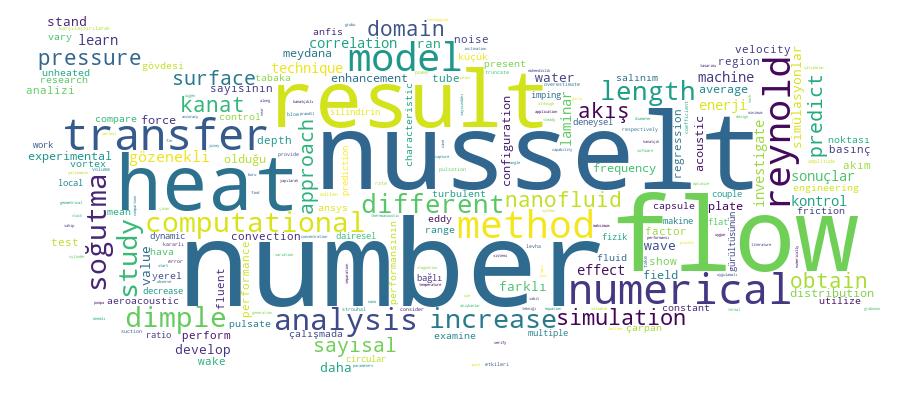
21 results
Scholarly Output Search Results
Now showing 1 - 10 of 21
Master Thesis Plastik Enjeksiyon Tekniğiyle Üretilen Gövdeli Santrifüj Sirkülasyon Pompasının Tasarımı, Analizi ve Testleri(2025) Kaya, Abdullah; Türkoğlu, HaşmetMevcut kum döküm tekniği ile yüksek miktarlardaki küçük boyutlu pompaların üretimi elverişli olmadığından, plastik enjeksiyon yöntemine uygun olarak tasarlanan kompozit-plastik pompa gövdesi çalışmanın önemli bir parçasıdır. Tasarlanan pompa gövdesi, üretilebilirlik, hidrolik verimlilik, maliyet etkinliği, ağırlık ve seri üretime uygunluk temelinde optimize edilmiştir. Tez çalışmasında, küçük kapasiteli bir sirkülasyon pompası gövdesi tasarlanmış, 3-boyutlu yazıcı kullanılarak üretilmiş ve test edilmiştir. Optimum ve en verimli tasarımı belirlemek için çeşitli tasarım kriterleri belirlenmiş ve farklı geometrilere uygulanmıştır. Hidrolik verimliliği ve mekanik gerilme dağılımını optimize etmek için ANSYS-CFX (2021 R2 versiyon) yazılım programı kullanılarak sayısal analiz yapılacaktır. Tasarımları doğrulamak için bir test sistemi geliştirilmiştir. Tüm prototipler adım adım test edilmiş ve birbirleriyle karşılaştırılarak, verim ve üretilebilirlik açılarından en uygun tasarım belirlenmiştir.Article Citation - WoS: 11Citation - Scopus: 14Numerical Study on Effects of Computational Domain Length on Flow Field in Standing Wave Thermoacoustic Couple(Elsevier Sci Ltd, 2019) Turkoglu, Hasmet; Mergen, Suhan; Yildirim, EnderFor the analysis of thermoacoustic (TA) devices, computational methods are commonly used. In the computational studies found in the literature, the flow domain has been modelled differently by different researchers. A common approach in modelling the flow domain is to truncate the computational domain around the stack, instead of modelling the whole resonator to save computational time. However, where to truncate the domain is not clear. In this study, we have investigated how the simulation results are affected by the computational domain length (I-d) when the truncated domain approach is used. For this purpose, a standing wave TA couple which undergoes a refrigeration cycle was considered. The stack plate thickness was assumed to be zero and the simulations were performed for six different dimensionless domain length (I-d/lambda) varying between 0.029 and 0.180. Frequency and Mach number were taken as 100 Hz and 0.01, respectively, and kept constant for all the cases considered. The mean pressure and the pressure amplitude were taken as 10 kPa and 170 Pa, respectively (Drive ratio of 1.7%). Helium was considered as the working fluid. To assess the accuracy of the simulation results, the pressure distributions across the domain were compared with that of the standing wave. In addition to the pressure variation, the effects of the domain length on the phase delay of the pressure and velocity waves along the stack plate were also investigated. The results showed that with the increasing I-d/lambda. ratio, the simulated pressure distribution compares better with the standing wave pressure distribution. With the lowest I-d/lambda ratio (0.029) considered, the difference between the amplitudes of the computed pressure distribution and theoretical standing wave pressure distribution was approximately 50 Pa. However, as I-d/lambda value increases, the simulation results approach to the theoretical standing wave pressure distribution better. The computational results obtained with Id/lambda = 0.132 and 0.180, were almost identical with standing wave acoustic field. Hence, it was concluded that the domain length has a significant effect on the accuracy of the computational results when the truncated domain approach is used. It was also observed that for a given TA device and operating parameters, there is a minimum I-d/lambda value for obtaining reliable results.Conference Object Santrifüj Pompada Spiral Gövdenin Akışa Dik Kesit Alanının Pompa Performansına Etkisinin Sayısal Olarak İncelenmesi(2017) Özbilgin, Onur; Türkoğlu, HaşmetArticle Soğutma Yüküne Bağlı Olarak Set Sıcaklığı Değişen Hava Soğutmalı Soğutma Grubunun Performansının Deneysel İncelenmesi(2017) Erşahin, Yasin; Türkoğlu, HaşmetAlışılmış enerji kaynaklarının global enerji ihtiyacını karşılamadaki yetersizliği, her geçen gün enerji ihtiya- cının artması ve enerji üretiminden kaynaklanan çevre kirliliği gibi sebepler enerji verimliliğinin önemini artır- maktadır. Günümüzde bütün sektörlerde, enerjiyi ola- bildiğince verimli kullanabilecek teknikler geliştirilmeye çalışılmaktadır. Gelişmiş ülkeleri incelediğimizde, ısıt- ma ve soğutma alanındaki önceliklerde ilk sırayı enerji verimliliği almaktadır. Merkezi yaşam alanları için gerekli olan soğutma ih- tiyacı, gün veya sezon içerisinde sürekli değişiklik gös- termektedir. Mahaldeki insan sayısının ve hava hare- ketliliğinin değişmesiyle ihtiyaç olan soğutma yükü de değişmektedir. Mahale bağlı bulunan soğutma grubu- nun bu değişken soğutma yüküne göre kendini ayar- layıp, hızlı bir şekilde reaksiyon vermesi enerjinin daha verimli kullanılmasını sağlamaktadır. Bu çalışmada, standart soğutma grubu kontrol tekniği ve adaptif algoritmalı kontrol tekniği ile kontrol edilen bir soğutma grubunun performansı ve enerji tüketimi, deneysel olarak incelenmiş ve sonuçlar karşılaştırma- lı olarak sunulmuştur. Testlerde, her iki kontrol sistemi için değişken soğutma yükü sağlanması amacıyla ciha- zın evaporatör su giriş sıcaklığı 12-7°C arasında de- ğiştirilerek, soğutma grubu kompresörlerinin devreye girmesi ve devreden çıkması sağlanmıştır. Tam ve kıs- mi soğutma yükleri altında yapılan ölçümlerde, adap- tif kontrol sistemi ile kontrol edilen soğutma grubunun, standart kontrol sistemine göre ortalama %10,72 daha az enerji tükettiği ve toplam ekserji yıkımının ise orta- lama % 6,23 daha az olduğu görülmüştür.Article Citation - WoS: 2Laminar Forced Convection Over an Inclined Flat Plate With Unheated Starting Length(2019) Özcan, Ahmet Cem; Turgut, Oğuz; Türkoğlu, HaşmetTwo-dimensional laminar forced convection over an inclined flat plate with an unheated starting length was investigated numerically for both constant surface temperature and constant heat flux boundary conditions. The numerical study was implemented using the commercial software ANSYS Fluent 15.0. Air is used as working fluid. The influence of Reynolds number, inclination angle and the length of unheated plate on velocity and temperature distributions, surface temperature, surface heat flux and local Nusselt number was investigated. The results show that Reynolds number, inclination angle and the length of unheated region of plate play important role on heat transfer from the plate. It is seen that Nusselt number increases with increasing Reynolds number and inclination angle of inclined flat plate but decreases with increasing the length of unheated region of plate.Article Gözenekli Düz Bir Yüzeye Çarpan Jetin Sayısal Olarak İncelenmesi(2017) Elibol, Emre Aşkın; Türkoğlu, HaşmetBu çalışmada, gözenekli malzeme ile kaplanmış sabit sıcaklıkta tutulan düz levha üzerine çarpan jetin akış ve ısı transferine etkileri nümerik olarak incelenmiştir. Birbirine paralel olarak duran, iki yatay levhadan biri olan alt levha, gözenekli bir tabaka ile kaplanmış ve üst levhanın ortasında bulunan lüleden çıkan hava jeti alt levhaya çarptırılmıştır. Gözenekli tabakanın katı matrisi ile akışkan arasında yerel ısıl denge olduğu kabul edilerek, laminar ve kararlı rejim için çözümler yapılmıştır. Gözeneklilik, gözenekli tabakanın kalınlığı ve jet Reynolds sayısının farklı değerlerinde simülasyonlar yapılarak, bu parametrelerin yerel Nusselt sayısı’na (Nu) etkileri analiz edilmiştir. Sonuçlar, yatay (x) yönde; yerel Nu sayıları ve sıcak alt levhadan olan ısı akıları, gözenekli tabaka bulunmayan durum ile karşılaştırılarak yorumlanmıştır. Analizler için yazılım paketi olan ANSYS Fluent yazılımı kullanılmıştır. Sonuçlar, sıcak levha yüzeyinin gözenekli tabaka ile kaplandığı durumlarda, gözenekli malzemenin belirli gözeneklilik ve kalınlık değerleri aralığında olması halinde, ısı transferinin gözenekli tabaka kullanılmayan duruma göre daha etkin olduğunu göstermiştir.Article Citation - WoS: 6Citation - Scopus: 7Machine Learning Based Developing Flow Control Technique Over Circular Cylinders(Asme, 2023) Turkoglu, Hasmet; Ayli, Ece; Kocak, EyupThis paper demonstrates the feasibility of blowing and suction for flow control based on the computational fluid dynamics (CFD) simulations at a low Reynolds number flows. The effects of blowing and suction position, and the blowing and suction mass flowrate, and on the flow control are presented in this paper. The optimal conditions for suppressing the wake of the cylinder are investigated by examining the flow separation and the near wake region; analyzing the aerodynamic force (lift and drag) fluctuations using the fast Fourier transform (FFT) to separate the effects of small-scale turbulent structures in the wake region. A method for stochastic analysis using machine learning techniques is proposed. Three different novel machine learning methods were applied to CFD results to predict the variation in drag coefficient due to the vortex shedding. Although, the prediction power of all the methods utilized is in the acceptable accuracy range, the Gaussian process regression (GPR) method is more accurate with an R-2(coefficient of determination) > 0.95. The results indicate that by optimizing the blowing and suction parameters like mass flowrate, slot location, and the slot configuration, up to 20% reduction can be achieved in the drag coefficient.Article Numerical Analysis Of Pulsating Circular Impinging Laminar Jet On A Planar Disc(Turkish Soc Thermal Sciences Technology, 2017) Türkoğlu, Haşmet; Kahroba, MitraBu çalışmada, düzlem bir diske çarpan dairesel osilasyonlu jetlerin akış ve ısı transferi karakteristikleri sayısal olarak incelenmiştir. Çalışmanın amacı, dairesel bir nozuldan çıkıp düzlem bir yüzeye çarpan salınımlı hava jetinin, Reynolds sayısının, salınım genliğinin ve salınım frekansının, hedef yüzeyden akışkana olan ısı transferine etkilerini incelemektir. Bu sayısal çalışmayı yapmak için, kontrol hacmi formülasyonu ve SIMPLE algoritmasına dayanan bir bilgisayar programı geliştirilmiştir. Simülasyonlar, Reynolds sayısı 300 - 700, salınım genliği 0.0V0-0,8V0 ve salınım frekansı 1-6 Hz aralığındaki jet akışlar için yapılmıştır. Nozul-çarpma yüzeyi arasındaki uzaklığın, lüle çapına oranı H/d=3 sabit tutulmuştur. Simülasyon sonuçlarından çarpma periyodunun bütün anlarında durma noktası Nusselt sayısının maksimum olduğu ve durma noktasından uzaklaştıkça Nusselt sayısının azaldığı görülmüştür. Nusselt sayısındaki bu azalma, kararlı jetlerde olduğu gibi monotomik olmayıp yerel maksimum ve minum değerlere sahip olduğu gözlenmiştir. Alt levha üzerinde hareketli akış döngüleri meydana geldiği ve bu döngüler nedeniyle Nusselt sayısında yerel maksimum ve minimum değerlerin oluştuğu görülmüştür. Düşük salınım frekanslarında, Nusselt sayısı aynı Reynolds sayısına sahip kararlı jet Nusselt sayısından daha küçük olduğu, ancak artan frekansla salınımlı jet Nusselt sayısının arrtığı ve kararlı jet Nusselt sayısından daha yüksek değere ulaştığı görülmüştür.Conference Object Article Citation - WoS: 10Citation - Scopus: 11Analysis of Heat Transfer Enhancement of Passive Methods in Tubes With Machine Learning(Sage Publications Ltd, 2024) Ayli, Ece; Turkoglu, Hasmet; Yapici, Ekin Ozgirgin; Özgirgin Yapıcı, EkinThis study investigates the efficacy of machine learning techniques and correlation methods for predicting heat transfer performance in a dimpled tube under varying flow conditions, including the presence of nanoparticles. A comprehensive numerical analysis involving 120 cases was conducted to obtain Nusselt numbers and friction factors, considering different dimple depths and velocities for both pure water and water-Al2O3 nanofluid at 1%, 2%, and 3% volume concentrations. Utilizing the data acquired from the numerical simulations, a correlation equation, SVM ANN architectures were developed. The predictive capabilities of the statistical approach, ANN, and SVM models for Nusselt number distribution and friction factor were meticulously assessed through mean average percentage error (MAPE) and correlation coefficients (R2). The research findings reveal that machine learning techniques offer a highly effective approach for accurately predicting heat transfer performance in a dimpled tube, with results closely aligned with Computational Fluid Dynamics (CFD) simulations. Particularly noteworthy is the superior performance of the ANN model, demonstrating the most precise predictions with an error rate of 2.54% and an impressive R2 value of 0.9978 for Nusselt number prediction. In comparison, the regression model achieved an average error rate of 6.14% with an R2 value of 0.8623, and the SVM model yielded an RMSE value of 2.984% with an R2 value of 0.9154 for Nusselt number prediction. These outcomes underscore the ANN model's ability to effectively capture complex patterns within the data, resulting in highly accurate predictions. In conclusion, this research showcases the promising potential of machine learning techniques in accurately forecasting heat transfer performance in dimpled tubes. The developed ANN model exhibits notable superiority in predicting Nusselt numbers, making it a valuable tool for enhancing thermal system analyses and engineering design optimization.
- «
- 1 (current)
- 2
- 3
- »