
Doğdu, Erdoğan
Loading...

Profile URL
Name Variants
Doğdu, E.
Dogdu, Erdogan
Dogdu, Erdogan
Job Title
Prof. Dr.
Email Address
Main Affiliation
Bilgisayar Mühendisliği
Status
Former Staff
Website
ORCID ID
Scopus Author ID
Turkish CoHE Profile ID
Google Scholar ID
WoS Researcher ID
Sustainable Development Goals
13
CLIMATE ACTION

0
Research Products
8
DECENT WORK AND ECONOMIC GROWTH

0
Research Products
3
GOOD HEALTH AND WELL-BEING

1
Research Products
15
LIFE ON LAND

0
Research Products
17
PARTNERSHIPS FOR THE GOALS

0
Research Products
14
LIFE BELOW WATER

0
Research Products
4
QUALITY EDUCATION

0
Research Products
11
SUSTAINABLE CITIES AND COMMUNITIES

0
Research Products
6
CLEAN WATER AND SANITATION

0
Research Products
10
REDUCED INEQUALITIES

0
Research Products
9
INDUSTRY, INNOVATION AND INFRASTRUCTURE

0
Research Products
12
RESPONSIBLE CONSUMPTION AND PRODUCTION

0
Research Products
2
ZERO HUNGER

1
Research Products
1
NO POVERTY

0
Research Products
7
AFFORDABLE AND CLEAN ENERGY

0
Research Products
5
GENDER EQUALITY

0
Research Products
16
PEACE, JUSTICE AND STRONG INSTITUTIONS

0
Research Products

This researcher does not have a Scopus ID.

This researcher does not have a WoS ID.

Scholarly Output
22
Articles
2
Views / Downloads
1351/18
Supervised MSc Theses
0
Supervised PhD Theses
0
WoS Citation Count
654
Scopus Citation Count
946
WoS h-index
9
Scopus h-index
11
Patents
0
Projects
0
WoS Citations per Publication
29.73
Scopus Citations per Publication
43.00
Open Access Source
5
Supervised Theses
0
Google Analytics Visitor Traffic
| Journal | Count |
|---|---|
| IEEE International Conference on Big Data (Big Data) -- DEC 10-13, 2018 -- Seattle, WA | 2 |
| IEEE International Conference on Big Data (IEEE Big Data) -- DEC 11-14, 2017 -- Boston, MA | 2 |
| ACM Southeast Regional Conference -- APR 13-17, 2017 -- Kennesaw, GA | 2 |
| Annual ACM Southeast Conference (ACMSE) -- MAR 29-31, 2018 -- Eastern Kentucky Univ, Richmond, KY | 2 |
| 27th World Wide Web (WWW) Conference -- APR 23-27, 2018 -- Lyon, FRANCE | 1 |
Current Page: 1 / 4
Scopus Quartile Distribution
Competency Cloud
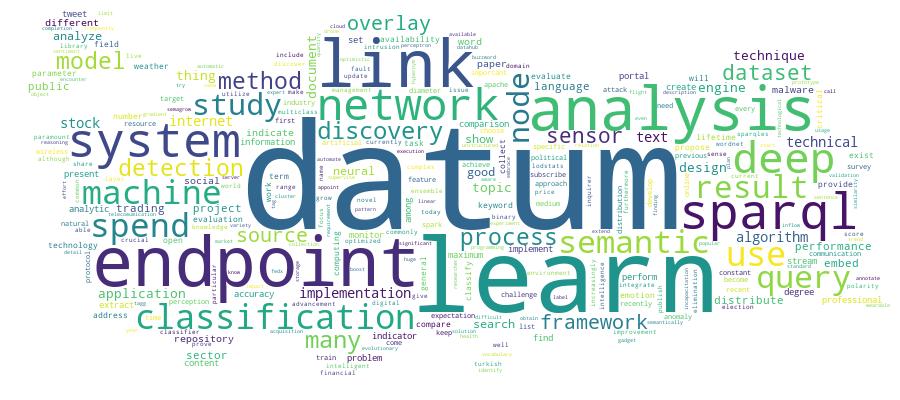
22 results
Scholarly Output Search Results
Now showing 1 - 10 of 22
Conference Object Classification of Linked Data Sources Using Semantic Scoring(Ieice-inst Electronics information Communication Engineers, 2018) Dogdu, Erdogan; Kodaz, Halife; Yumusak, SemihLinked data sets are created using semantic Web technologies and they are usually big and the number of such datasets is growing. The query execution is therefore costly, and knowing the content of data in such datasets should help in targeted querying. Our aim in this paper is to classify linked data sets by their knowledge content. Earlier projects such as LOD Cloud, LODStats, and SPARQLES analyze linked data sources in terms of content, availability and infrastructure. In these projects, linked data sets are classified and tagged principally using VoID vocabulary and analyzed according to their content, availability and infrastructure. Although all linked data sources listed in these projects appear to be classified or tagged, there are a limited number of studies on automated tagging and classification of newly arriving linked data sets. Here, we focus on automated classification of linked data sets using semantic scoring methods. We have collected the SPARQL endpoints of 1,328 unique linked datasets from Datahub, LOD Cloud, LODStats, SPARQLES, and SpEnD projects. We have then queried textual descriptions of resources in these data sets using their rdfs: comment and rdfs: label property values. We analyzed these texts in a similar manner with document analysis techniques by assuming every SPARQL endpoint as a separate document. In this regard, we have used WordNet semantic relations library combined with an adapted term frequency-inverted document frequency (tfidf) analysis on the words and their semantic neighbours. In WordNet database, we have extracted information about comment/label objects in linked data sources by using hypernym, hyponym, homonym, meronym, region, topic and usage semantic relations. We obtained some significant results on hypernym and topic semantic relations; we can find words that identify data sets and this can be used in automatic classification and tagging of linked data sources. By using these words, we experimented different classifiers with different scoring methods, which results in better classification accuracy results.Conference Object Citation - WoS: 56Citation - Scopus: 89A Deep Neural-Network Based Stock Trading System Based on Evolutionary Optimized Technical Analysis Parameters(Elsevier Science Bv, 2017) Ozbayoglu, Murat; Dogdu, Erdogan; Sezer, Omer BeratIn this study, we propose a stock trading system based on optimized technical analysis parameters for creating buy-sell points using genetic algorithms. The model is developed utilizing Apache Spark big data platform. The optimized parameters are then passed to a deep MLP neural network for buy-sell-hold predictions. Dow 30 stocks are chosen for model validation. Each Dow stock is trained separately using daily close prices between 1996-2016 and tested between 2007-2016. The results indicate that optimizing the technical indicator parameters not only enhances the stock trading performance but also provides a model that might be used as an alternative to Buy and Hold and other standard technical analysis models. (c) 2017 The Authors. Published by Elsevier B.V.Conference Object Perceptions, Expectations and Implementations of Big Data in Public Sector(2018) Doğdu, Erdoğan; Özbayoğlu, Murat; Yazıcı, Ali; Karakaya, ZiyaBig Data is one of the most commonly encountered buzzwords among IT professionals nowadays. Technological advancements in data acquisition, storage, telecommunications, embedded systems and sensor technologies resulted in huge inflows of streaming data coming from variety of sources, ranging from financial streaming data to social media tweets, or wearable health gadgets to drone flight logs. The processing and analysis of such data is a difficult task, but as appointed by many IT experts, it is crucial to have a Big Data Implementation plan in today’s challenging industry standards. In this study, we performed a survey among IT professionals working in the public sector and tried to address some of their implementation issues and their perception of Big Data today and their expectations about how the industry will evolve. The results indicate that most of the public sector professionals are aware of the current Big Data requirements, embrace the Big Data challenge and are optimistic about the future.Conference Object Citation - WoS: 40Citation - Scopus: 77Malware Classification Using Deep Learning Methods(Assoc Computing Machinery, 2018) Dogdu, Erdogan; Cakir, BugraMalware, short for Malicious Software, is growing continuously in numbers and sophistication as our digital world continuous to grow. It is a very serious problem and many efforts are devoted to malware detection in today's cybersecurity world. Many machine learning algorithms are used for the automatic detection of malware in recent years. Most recently, deep learning is being used with better performance. Deep learning models are shown to work much better in the analysis of long sequences of system calls. In this paper a shallow deep learning-based feature extraction method (word2vec) is used for representing any given malware based on its opcodes. Gradient Boosting algorithm is used for the classification task. Then, k-fold cross-validation is used to validate the model performance without sacrificing a validation split. Evaluation results show up to 96% accuracy with limited sample data.Conference Object Citation - WoS: 34Citation - Scopus: 58Weather Data Analysis and Sensor Fault Detection Using an Extended Iot Framework With Semantics, Big Data, and Machine Learning(Ieee, 2017) Sezer, Omer Berat; Ozbayoglu, Murat; Dogdu, Erdogan; Onal, Aras CanIn recent years, big data and Internet of Things (IoT) implementations started getting more attention. Researchers focused on developing big data analytics solutions using machine learning models. Machine learning is a rising trend in this field due to its ability to extract hidden features and patterns even in highly complex datasets. In this study, we used our Big Data IoT Framework in a weather data analysis use case. We implemented weather clustering and sensor anomaly detection using a publicly available dataset. We provided the implementation details of each framework layer (acquisition, ETL, data processing, learning and decision) for this particular use case. Our chosen learning model within the library is Scikit-Learn based k-means clustering. The data analysis results indicate that it is possible to extract meaningful information from a relatively complex dataset using our framework.Conference Object Citation - Scopus: 2A Discovery and Analysis Engine for Semantic Web(Assoc Computing Machinery, 2018) Kamilaris, Andreas; Dogdu, Erdogan; Kodaz, Halife; Uysal, Elif; Aras, Riza Emre; Yumusak, SemihThe Semantic Web promotes common data formats and exchange protocols on the web towards better interoperability among systems and machines. Although Semantic Web technologies are being used to semantically annotate data and resources for easier reuse, the ad hoc discovery of these data sources remains an open issue. Popular Semantic Web endpoint repositories such as SPARQLES, Linking Open Data Project (LOD Cloud), and LODStats do not include recently published datasets and are not updated frequently by the publishers. Hence, there is a need for a web-based dynamic search engine that discovers these endpoints and datasets at frequent intervals. To address this need, a novel web meta-crawling method is proposed for discovering Linked Data sources on the Web. We implemented the method in a prototype system named SPARQL Endpoints Discovery (SpEnD). In this paper, we describe the design and implementation of SpEnD, together with an analysis and evaluation of its operation, in comparison to the aforementioned static endpoint repositories in terms of time performance, availability, and size. Findings indicate that SpEnD outperforms existing Linked Data resource discovery methods.Conference Object Spend Portal: Linked Data Discovery Using Sparql Endpoints(Ieee, 2017) Yumusak, Semih; Aras, Riza Emre; Uysal, Elif; Dogdu, Erdogan; Kodaz, Halife; Oztoprak, KasimWe present the project SpEnD, a complete SPARQL endpoint discovery and analysis portal. In a previous study, the SPARQL endpoint discovery and analysis steps of the SpEnD system were explained in detail. In the SpEnD portal, the SPARQL endpoints are extracted from the web by using web crawling techniques, monitored and analyzed by live querying the endpoints systematically. After many sustainability improvements in the SpEnD project, the SpEnD system is now online as a portal. SpEnD portal currently serves 1487 SPARQL endpoints, out of which 911 endpoints are uniquely found by SpEnD only when compared to the other existing SPARQL endpoint repositories. In this portal, the analytic results and the content information are shared for every SPARQL endpoint. The endpoints stored in the repository are monitored and updated continuously.Conference Object Citation - Scopus: 1Distributed Query Processing and Reasoning Over Linked Big Data(Springer Science and Business Media Deutschland GmbH, 2022) Mohammed, H.H.; Doğdu, E.; Choupani, R.; Zarbega, T.S.A.The enormous amount of structured and unstructured data on the web and the need to extract and derive useful knowledge from this big data make Semantic Web and Big Data Technology explorations of paramount importance. Open semantic web data created using standard protocols (RDF, RDFS, OWL) consists of billions of records in the form of data collections called “linked data”. With the ever-increasing linked big data on the Web, it is imperative to process this data with powerful and scalable techniques in distributed processing environments such as MapReduce. There are several distributed RDF processing systems, including SemaGrow, FedX, SPLENDID, PigSPARQL, SHARD, SPARQLGX, that are developed over the years. However, there is a need for computational and qualitative comparison of the differences and similarities among these systems. In this paper, we extend a previous comparative analysis to a diverse study with respect to qualitative and quantitative analysis views, through an experimental approach for these distributed RDF systems. We examine each of the selected RDF query systems with respect to the implementation setup, system architecture, underlying framework, and data storage. We use two widely used RDF benchmark datasets, FedBench and LUBM. Furthermore, we evaluate and examine their performances in terms of query execution time, thus, analyzing how those different types of large-scale distributed query engines, support long-running queries over federated data sources and the query processing times for different queries. The results of the experiments in this study show that SemaGrow distributed system performs more efficiently compared to FedX and Splendid, even though in smaller queries the former performs slower. © 2022, The Author(s), under exclusive license to Springer Nature Switzerland AG.Conference Object Citation - WoS: 7Phishing E-Mail Detection by Using Deep Learning Algorithms(Assoc Computing Machinery, 2018) Hassanpour, Reza; Dogdu, Erdogan; Choupani, Roya; Goker, Onur; Nazli, NazliBook Part Topic distribution constant diameter overlay design algorithm (TD-CD-ODA)(IEEE, 2017) Öztoprak, Kasım; Layazali, Sina; Doğdu, ErdoğanPublish/subscribe communication systems, where nodes subscribe to many different topics of interest, are becoming increasingly more common in application domains such as social networks, Internet of Things, etc. Designing overlay networks that connect the nodes subscribed to each distinct topic is hence a fundamental problem in these systems. For scalability and efficiency, it is important to keep the maximum node degree of the overlay in the publish/subscribe system low. Ideally one would like to be able not only to keep the maximum node degree of the overlay low, but also to ensure that the network has low diameter. We address this problem by presenting Topic Distribution Constant Diameter Overlay Design Algorithm (TD-CD-ODA) that achieves a minimal maximum node degree in a low-diameter setting. We have shown experimentally that the algorithm performs well in both targets in comparison to the other overlay design algorithms.

- «
- 1 (current)
- 2
- 3
- »