
Süzer, Özge
Loading...
Profile URL
Name Variants
Süzer, O.
Suzer, Ozge
Suzer, Ozge
Job Title
Doç. Dr.
Email Address
ozgesuzer@cankaya.edu.tr
Main Affiliation
05.01. İç Mimarlık
İç Mimarlık
05. Mimarlık Fakültesi
01. Çankaya Üniversitesi
İç Mimarlık
05. Mimarlık Fakültesi
01. Çankaya Üniversitesi
Status
Current Staff
Website
ORCID ID
Scopus Author ID
Turkish CoHE Profile ID
Google Scholar ID
WoS Researcher ID
Files
Sustainable Development Goals
15
LIFE ON LAND

0
Research Products
14
LIFE BELOW WATER

0
Research Products
4
QUALITY EDUCATION

1
Research Products
16
PEACE, JUSTICE AND STRONG INSTITUTIONS

1
Research Products
7
AFFORDABLE AND CLEAN ENERGY

9
Research Products
10
REDUCED INEQUALITIES

1
Research Products
2
ZERO HUNGER

0
Research Products
11
SUSTAINABLE CITIES AND COMMUNITIES

0
Research Products
9
INDUSTRY, INNOVATION AND INFRASTRUCTURE

0
Research Products
6
CLEAN WATER AND SANITATION

0
Research Products
5
GENDER EQUALITY

0
Research Products
17
PARTNERSHIPS FOR THE GOALS

0
Research Products
12
RESPONSIBLE CONSUMPTION AND PRODUCTION

9
Research Products
8
DECENT WORK AND ECONOMIC GROWTH

0
Research Products
3
GOOD HEALTH AND WELL-BEING

0
Research Products
13
CLIMATE ACTION

0
Research Products
1
NO POVERTY

0
Research Products

This researcher does not have a Scopus ID.

Documents
2
Citations
172

Scholarly Output
10
Articles
9
Views / Downloads
6/0
Supervised MSc Theses
0
Supervised PhD Theses
0
WoS Citation Count
173
Scopus Citation Count
206
WoS h-index
2
Scopus h-index
2
Patents
0
Projects
0
WoS Citations per Publication
17.30
Scopus Citations per Publication
20.60
Open Access Source
7
Supervised Theses
0
| Journal | Count |
|---|---|
| Artium | 2 |
| A/Z ITU Journal of the Faculty of Architecture | 1 |
| Beyond All Limits 2018: International Congress on Sustainability in Architecture, Planning and Design Proceedings Book | 1 |
| Building and Environment | 1 |
| ECOLOGY’ 18: II. INTERNATIONAL CONFERENCE ON ECOLOGY, ECOSYSTEMS AND CLIMATE CHANGEAt | 1 |
Current Page: 1 / 2
Scopus Quartile Distribution
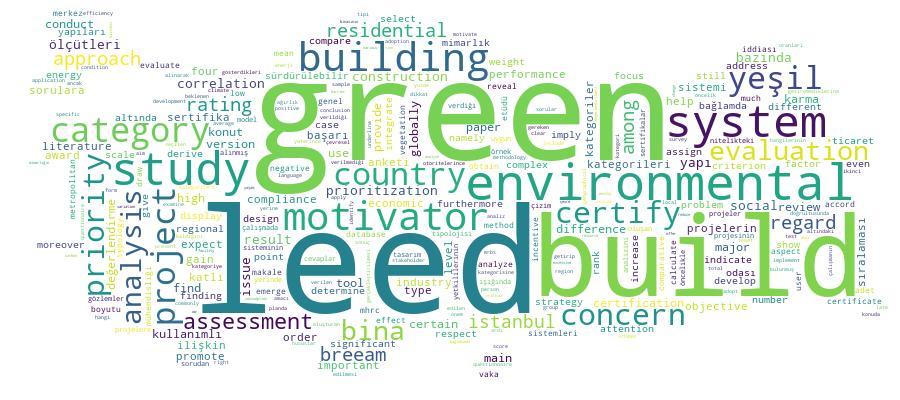
Competency Cloud
10 results
Scholarly Output Search Results
Now showing 1 - 10 of 10
Article Critical Aspects, Motivators and Barriers of Building-Integrated Vegetation(2020) Suzer, Ozge; Almuder, MonderPurposeGreen buildings which provide improved user health conditions and environmentallyresponsibleapplicationshavegainedsignificantattention, due to the increasing environmental problems, particularly causedbytheconstructionindustryattheglobalscale.However,vegetation is still not sufficiently integrated into buildings, even though numerous benefits of plants have been proven by many studies in literature.Thisresearchaimstofindouttheopinionsofprofessionalsandacademiciansinarchitecture-relatedfieldsregardingthecriticalaspects,aswellasthemotivatorsandbarriersfacedinBIVapplications, namely; green roofs, green walls and interior gardens. Hence, it strives to help increase their application rates by underlining the significant issues to be considered.Design/methodology/approachAs to fulfilling these objectives, a questionnaire survey was conducted on120participantswithvaryingprofessionsincludingarchitects,landscape designers and civil engineers, from four countries.FindingsThe results of this study pointed out that, healthcare buildings were given the first priority among the building types for applying BIV. Moreover, among the motivator factors, receiving a certificate was found as an important incentive, besides the environmental, social and economicbenefitsofBIV.Furthermore,althoughthehighlyratedbarriers were found as ‘the lack of proper regulations’ and ‘lack of demandbytheuser/client’,thefindingsshowedthatthehighestresponsibility for the implementation of these applications was placed on the architect.Research Limitations/Implications Based on the five major groups of Köppen climate classification system, the case countries were selected as one from each of the four main types,andbyneglectingonlyPolar,asitlackssettlements.Byconsideringdiverselevelsofdevelopmentandeconomicwelfare,countries were selected as; Canada (Snow: Humid-Subarctic), Libya (Dry:Desert-arid),Malaysia(Tropical:Tropical-Rainforest)andTurkey (Mild temperate: Mediterranean).Sincethestudycoveredfourdifferentcountries,thesurveywasconducted by the use of Google Forms software program. This tool enabled the production and distribution of questionnaires, as well as thecollectionofdatabasedontheresponsesoftheparticipants.Furthermore, in order to provide consistency among the questionnaires applied in different countries, the survey was conducted in English language, although it was not the native language for a majority of the participants. Moreover,basedonstudiesclaimingthatparticipantsaremoreinclined to select the option with the mid-value in a Likert scale, which implies a neutral position, in the questionnaire, these types of questions were constructed with the forced choice method, by keeping the scales with even number of options.Practical ImplicationsIt is expected that the results of this study would be beneficial to both the academicians and professionals involved in the green building industry,aswellastothegovernmentaland/orgreenbuildingauthorities. It is expected that this study will help serve as a guide for thestakeholderstoincreasetheapplicationratesofBIVintheconstruction industry.Social ImplicationsThe results of this study were also evaluated based on the findings of four case countries and certain conclusions were derived as to their underlying socio-economic and geographical reasons.Originality/value - Althoughstudiesonsimilarsubjectshaveappeared in the literature, there are none which solely focuses on BIV applicationsbyconductingasurveyonthementionedfourcasecountries and compares its findings with the literature and presents an in-depth analysis on the issue.Article Karma Kullanımlı Çok Katlı Konut Yapıları Üzerine Bir Analiz:Yeşil Bina Değerlendirme Kategorileri Bazında Üç Vaka Etüdü(2020) Suzer, Ozge; Yılmaz, MeltemBu makale, İstanbul’da yeşil iddiası olan üç adet karma kullanımlı çok katlı konut projesinin, LEED yeşil bina sertifika sisteminin değerlendirme kategorileri bazında analizini içermektedir. Çalışmada öncelikle LEED sistemi model alınmış ve bu yapı tipolojisi için uygun nitelikteki yeşil bina tasarım ölçütleri ışığında 53 sorudan oluşan bir ölçme-değerlendirme anketi hazırlanmıştır. Örnek projeler; yetkililerinin sorulara verdiği cevaplar, projelere ilişkin çizim ve sertifikalar ile yerinde gözlemler doğrultusunda değerlendirilmiştir. Anketi oluşturan sorular, LEED sistemi temel alınarak; beş ana kategori altında gruplanmıştır. Seçilen projelerin, bu kategoriler altındaki sorulara ilişkin olarak, gerçekleştirilmesi beklenen ölçütleri yerine getirip getiremediklerine göre, her kategoriye ait başarı yüzde oranları hesaplanmıştır. Bu bağlamda çalışmanın amacı, İstanbul’da bu yapı tipi için, hangi kategorilere öncelik verildiği ve hangilerinin ikinci planda kaldığını belirlemektir. Analiz edilen projelerin kategoriler bazında gösterdikleri başarı sıralaması ile LEED otoritelerince verilen önem sıralaması kıyaslanmıştır. Sonuç olarak, enerji kategorisine yeterince ağırlık verilmediği bulunmuş ve bu konuda dikkat edilmesi gereken hususlar ortaya konmuştur.Review Motivators for Green Buildings: A Review(2018) Akreim, Mohamed; Süzer, ÖzgeMotivators can be defined as specific catalysts that drive people to act in a certain way. These motivators are important for promoting green buildings and have a clear impact on decision-makers to adopt and implement the green building concept in architectural practice. This paper presents a comprehensive literature review to identify the important motivators for the adoption of green buildings among the stakeholders of the construction industry, the categorization and efficiency of green building motivators, and also the strategies for green building motivators. By reviewing 32 relevant studies conducted in different countries from 2008 to 2017, a total of 26 factors were identified as the main motivators to promote green buildings. These green building motivators were categorized into environmental, economic, and social motivators. With regard to efficiency, it was found that all green building motivators, whether environmental, economic or social are important for promoting green buildings and to determine a priority among these categories was not possible. The strategies for the adoption of green building motivators were also found. It is notable that the government has the greatest role to motivate stakeholders to adopt and implement the green building concept. The literature review of this study has a wide scope, covering most of the countries in the world, including developed and developing countries from the West to East. Hence, unlike most studies on the main issue of this paper that focus on a specific country or region, this in-depth research led to the development of a list of motivators for green buildings, derived from an extensive range of nations, which vary from environmental, economic, and social This paper is expected to provide valuable information for decision-makers in the construction industry, namely, governmental authorities, design teams, and owners of projects regarding what motivate people to help further promote green buildings. The findings may also be useful for researchers to pursue further analyses on similar topics.Article Sürdürülebilir Mimarlığın Sosyo-Kültürel Boyutu Bağlamında İzmir Ticaret Odası Genel Merkez Binasının Değerlendirilmesi(2020) Süzer, ÖzgeT Sürdürülebilirlik kavramı; çevresel, sosyo-kültürel ve ekonomik olmak üzere üç ana boyut içermektedir. Ancak birinci nesil yapı değerlendirme sistemlerinin, genellikle sosyo-kültürel ölçütleri göz ardı ederek yalnızca çevresel kriterleri kapsadıkları görülmektedir. Bu bağlamda söz konusu makalede İzmir Ticaret Odası Genel Merkez Binası sürdürülebilirliğin sosyo-kültürel boyutu altında irdelenmektedir. Yapı, aldığı LEED sertifikası ile yeşil bir binadır, ancak literatür taraması sonucunda belirlenen; “tarihi ve kültürel değerlerin korunması”, “sosyal eşitlik ve sosyal bütünleşme” ve “yaşam kalitesinin iyileştirilmesi” ölçütleri göz ardı edildiği için sürdürülebilir olarak tanımlanamamaktadır.Article An analysis on mixed-use high-rise residential complexes in Istanbul as to their prioritization of evaluation categories in LEED(Çankaya University Press, 2018) Süzer, Özge; Yılmaz, MeltemThe most globally used environmental assessment tool; LEED, offers the certification of projects according to the evaluation criteria of green buildings. Furthermore, emerging mixed-use high-rise residential complexes (MHRC) in metropolitans like Istanbul draw attention, as they help reduce carbon emissions by providing various facilities in one entity for its residents. Yet, they also have negative effects on resources, due to excessive energy consumptions owing to their high user capacities. The objective of this study is to analyse LEED certified MHRC in Istanbul, regarding their prioritization of evaluation categories. LEED’s database revealed nine certified MHRC under the NC scheme. Based on their gained points, mean ranks ( ) of categories were calculated, which indicated the priorities given by this building typology in Istanbul. The obtained category priority order was then compared to the one implied by LEED’s assigned category weights. It was found that EA gained much lower attention than needed.Article Citation - WoS: 58Citation - Scopus: 75Analyzing the Compliance and Correlation of Leed and Breeam by Conducting a Criteria-Based Comparative Analysis and Evaluating Dual-Certified Projects(Pergamon-elsevier Science Ltd, 2019) Suzer, OzgeCertified green buildings are known to demonstrate high environmental performance; however, it is still not clear where they stand among each other, unless certified by the same body. This study aims to examine the compliance and correlation between the most prominent green building rating systems, LEED and BREEAM. It also estimates how a project would be graded by one system if already certified by the other. Regarding the methodology of the study, the intents of evaluation criteria in the latest versions for new constructions of LEED and BREEAM are analyzed. Commonly addressed and different concerns are determined, and the scales for assigning their award levels are compared. It is observed that they have a high level of compliance because 83% of the environmental concerns are commonly addressed issues. Moreover, it is derived that a dual-certified project aiming to achieve the same award level in both assessments has to display a better performance in BREEAM as it includes a higher number of concerns to be fulfilled. Based on the correlation analyses on twenty dual-certified buildings, the results from the scatter plot diagram, Pearson's Correlation Coefficient (r) and Paired Samples t-Test show that there is a large positive linear correlation and that LEED scores are significantly higher than BREEAM scores. Furthermore, the difference between the averages of LEED and BREEAM scores and the average difference between award levels indicate that if there would be a difference in ratings of dual-certified projects, it would be in favor of LEED by one award level.Article Citation - Scopus: 2Leed Certified Mixed-Use Residential Buildings in Istanbul: a Study on Category-Based Performances(Istanbul Teknik Universitesi, Faculty of Architecture, 2021) Süzer, O.The building industry has a significant negative effect on climate change and increases other environmental problems at the global scale. LEED, which is one of the most globally used environmental assessment tool, provides the certification of projects according to the evaluation criteria of green buildings under certain categories. On the other hand, an emerging form of architecture, the mixed-use residential high-rise building (MRB), appears in larger numbers especially in the metropolitans of developing countries, such as Istanbul. This building typology displays a positive approach in the context of sustainability. Since they are high-budget projects addressing to high-income groups, it is inherently expected that they have a green approach as a social responsibility. The objective of this study is to analyze LEED certified MRBs in Istanbul by focusing on their prioritization of evaluation categories. LEED’s database revealed a total of twenty-one certified projects under the New Constructions (v.3) scheme. Based on the gained points by these projects, mean rank values of the evaluation categories were calculated, which indicated the priorities given by this sample group. Furthermore, the conducted Kruskal-Wallis test showed there was highly significant difference among the rankings of the categories for these projects. Based on these rank order tests, obtained category priority order of MRBs was compared to the one implied by LEED’s assigned category weights. It was found that Energy and Atmosphere category gained much lower attention than required. Taking the results of the study into account, certain conclusions were drawn for this building type in Istanbul. © 2021, Istanbul Teknik Universitesi, Faculty of Architecture. All rights reserved.Article Citation - WoS: 115Citation - Scopus: 129A Comparative Review of Environmental Concern Prioritization: Leed Vs Other Major Certification Systems(Academic Press Ltd- Elsevier Science Ltd, 2015) Suzer, OzgeThe matter of environmental concern prioritization integrated into globally used green building rating systems is a fundamental issue since it determines how the performance of a structure or development is reflected. Certain nationally-developed certification systems are used globally without being subjected to adjustments with respect to local geographical, cultural, economic and social parameters. This may lead to a situation where the results of an evaluation may not reflect the reality of the region and/or the site of construction. The main objective of this paper is to examine and underline the problems regarding the issue of weighting environmental concerns in the Leadership in Energy and Environmental Design (LEED) certification system, which is a US-originated but globally used assessment tool. The methodology of this study consists of; (i) an analysis of the approach of LEED in the New Construction and Major Renovations scheme in version 3 (LEED NC, v.3) and the Building Design and Construction scheme in version 4 (LEED BD + C, v.4), (ii) case studies in which regional priority credits (RPCs) set by LEED for four countries (Canada, Turkey, China and Egypt) are criticized with respect to countries' own local conditions, and, (iii) an analysis of the approaches of major environmental assessment tools, namely; BREEAM, SBTool, CASBEE and Green Star, in comparison to the approach in LEED, regarding the main issue of this paper. This work shows that, even in its latest version (v.4) LEED still displays some inadequacies and inconsistencies from the aspect of environmental concern prioritization and has not yet managed to incorporate a system which is more sensitive to this issue. This paper further outlines the differences and similarities between the approaches of the aforementioned major environmental assessment tools with respect to the issue of concern and the factors that should be integrated into future versions of LEED. (C) 2015 Elsevier Ltd. All rights reserved.Conference Object Article Karma Kullanımlı Çok Katlı Konut Yapıları Üzerine Bir Analiz: Yeşil Bina Değerlendirme Kategorileri Bazında Üç Vaka Etüdü(2020) Süzer, Özge; Yılmaz, MeltemBu makale, İstanbul’da yeşil iddiası olan üç adet karma kullanımlı çok katlı konut projesinin, LEED yeşil bina sertifika sisteminin değerlendirme kategorileri bazında analizini içermektedir. Çalışmada öncelikle LEED sistemi model alınmış ve bu yapı tipolojisi için uygun nitelikteki yeşil bina tasarım ölçütleri ışığında 53 sorudan oluşan bir ölçme-değerlendirme anketi hazırlanmıştır. Örnek projeler; yetkililerinin sorulara verdiği cevaplar, projelere ilişkin çizim ve sertifikalar ile yerinde gözlemler doğrultusunda değerlendirilmiştir. Anketi oluşturan sorular, LEED sistemi temel alınarak; beş ana kategori altında gruplanmıştır. Seçilen projelerin, bu kategoriler altındaki sorulara ilişkin olarak, gerçekleştirilmesi beklenen ölçütleri yerine getirip getiremediklerine göre, her kategoriye ait başarı yüzde oranları hesaplanmıştır. Bu bağlamda çalışmanın amacı, İstanbul’da bu yapı tipi için, hangi kategorilere öncelik verildiği ve hangilerinin ikinci planda kaldığını belirlemektir. Analiz edilen projelerin kategoriler bazında gösterdikleri başarı sıralaması ile LEED otoritelerince verilen önem sıralaması kıyaslanmıştır. Sonuç olarak, enerji kategorisine yeterince ağırlık verilmediği bulunmuş ve bu konuda dikkat edilmesi gereken hususlar ortaya konmuştur.
