
Şener, İrge
Loading...
Profile URL
Name Variants
Şener, İrge & Şener, İ. & Sener, Irge
Job Title
Doç. Dr.
Email Address
irge@cankaya.edu.tr
Main Affiliation
İşletme
Status
Current Staff
Website
ORCID ID
Scopus Author ID
Turkish CoHE Profile ID
Google Scholar ID
WoS Researcher ID
Files
Sustainable Development Goals
 1
1NO POVERTY
0
Research Products
 2
2ZERO HUNGER
0
Research Products
 3
3GOOD HEALTH AND WELL-BEING
0
Research Products
 4
4QUALITY EDUCATION
1
Research Products
 5
5GENDER EQUALITY
2
Research Products
 6
6CLEAN WATER AND SANITATION
0
Research Products
 7
7AFFORDABLE AND CLEAN ENERGY
0
Research Products
 8
8DECENT WORK AND ECONOMIC GROWTH
0
Research Products
 9
9INDUSTRY, INNOVATION AND INFRASTRUCTURE
5
Research Products
 10
10REDUCED INEQUALITIES
0
Research Products
 11
11SUSTAINABLE CITIES AND COMMUNITIES
0
Research Products
 12
12RESPONSIBLE CONSUMPTION AND PRODUCTION
4
Research Products
 13
13CLIMATE ACTION
0
Research Products
 14
14LIFE BELOW WATER
1
Research Products
 15
15LIFE ON LAND
1
Research Products
 16
16PEACE, JUSTICE AND STRONG INSTITUTIONS
1
Research Products
 17
17PARTNERSHIPS FOR THE GOALS
4
Research Products

This researcher does not have a Scopus ID.

This researcher does not have a WoS ID.
No records found in other affiliations.

Scholarly Output
54
Articles
26
Views / Downloads
4100/3881
Supervised MSc Theses
5
Supervised PhD Theses
1
WoS Citation Count
254
Scopus Citation Count
64
Patents
0
Projects
0
WoS Citations per Publication
4.70
Scopus Citations per Publication
1.19
Open Access Source
28
Supervised Theses
6
| Journal | Count |
|---|---|
| 10th International Strategic Management Conference -- JUN 19-21, 2014 -- Rome, ITALY | 3 |
| Kybernetes | 3 |
| İş ve İnsan Dergisi | 2 |
| 7th International Strategic Management Conference -- JUN 30-JUL 02, 2011 -- Paris, FRANCE | 2 |
| 8th International Strategic Management Conference -- JUN 21-23, 2012 -- Barcelona, SPAIN | 2 |
Current Page: 1 / 8
Scopus Quartile Distribution
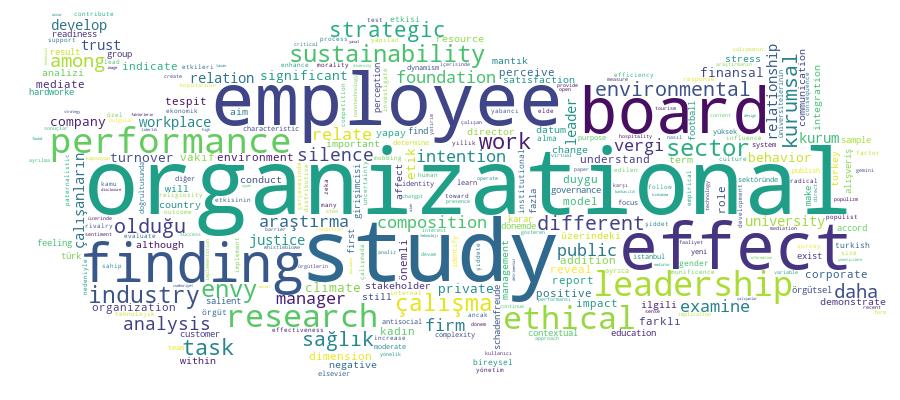
Competency Cloud
54 results
Scholarly Output Search Results
Now showing 1 - 10 of 54
Conference Object Citation - WoS: 81The Impact of Ethical Leadership and Leadership Effectiveness on Employees' Turnover Intention: The Mediating Role of Work Related Stress(Elsevier Science Bv, 2012) Sener, Irge; Aksoy, Seval; Alpkan, Lutfihak; Elci, MeralHaving significant effects on organizational performance, the determinants of employee turnover has been studied extensively. One of the important antecedents of turnover intention of employees is leadership and work related stress. With this study it was intended to understand the effects of ethical leadership and leadership effectiveness on employees' turnover intentions. Work related stress is examined as a mediator of the relationship among ethical leadership, leader effectiveness and turnover intention. Using a sample of 1093 employees in 70 firms operating in nine different industries, it was found out that while ethical leadership and leadership effectiveness negatively affects turnover intention of employees, work related stress has a positive effect on employees's turnover intentions. In addition, work related stress occur to be a mediator variable for the proposed relations.Conference Object Citation - WoS: 11Citation - Scopus: 13The Impact of Morality and Religiosity of Employees on Their Hardworking Behavior(Elsevier Science Bv, 2011) Sener, Irge; Alpkan, Lutfihak; Elci, MeralHardworking behaviour, one of the significant dimensions of work ethic, is among the most anticipated behaviours of employees working at all organizations. However, the research on the relation of hardworking with other variables is limited. In this study, it was intended to examine the influence of morality and religiosity on employees' hardworking behaviours. For this purpose, the data (N=715) were collected from the employees working in manufacturing, service and trade organizations located in Istanbul, Ankara and Kocaeli. Findings of this research indicate that morality and religiosity are factors that both have positive impact on hardworking behaviour. In addition, it was found out that hardworking, religiosity and morality differs according to gender, marital status and education level of participants. It is suggested that this study will contribute to the literature with its findings on the relation of morality, religiosity and hardworking behaviour. (C) 2011 Published by Elsevier Ltd. Selection and/or peer-review under responsibility 7th International Strategic Management ConferenceBook Part Citation - WoS: 3Citation - Scopus: 4Entry Barriers To the Nanotechnology Industry in Turkey(Igi Global, 2010) Sener, Irge; Aydogan-Duda, NeslihanNanotechnology is the science that focuses on the control of matter at the atomic scale. It has the potential to create many new materials and devices with wide-ranging applications, such as in medicine, electronics and energy production. There are many entry barriers which can affect nanotechnology penetration in developing and emerging nations. This chapter discusses such barriers for Turkey. Despite about 10 universities having nanotechnology programs, the number of nanotechnology firms in the country is still low. Using combinations of interviews, surveys and literature, these issues that continue to stall the commercialization of discoveries in Turkey are examined.Article Citation - WoS: 4Citation - Scopus: 5The Effects of Paternalistic Leadership on Task Performance: Testing a Moderated Mediation Model in Turkish Organizations(Nomos verlagsgesellschaft Mbh & Co Kg, 2021) Karabay, Melisa Erdilek; Sener, Irge; Elci, Meral; Cetin, FatihDrawing on the findings from a serial moderated mediation model, this study aims to expand prior research by investigating the interaction between paternalist leadership and employee task performance. Study also aims to test the indirect effects of perceived person-organization fit and psychological ownership on the relationship between paternalistic leadership and employee task performance, through serial mediation models. Furthermore, the moderating role of organizational size in direct and all indirect relations between paternalistic leadership and task performance, through five different models is tested. Sample consists of 1,652 employees from various industries in Istanbul, Turkey. Hypothesized relationships were tested through structural equation modelling. The findings demonstrated the significant positive direct relationship between paternalistic leadership and employee task performance. Psychological ownership mediated the relationship of paternalistic leadership and task performance while person-organization fit had no mediating effect. Practical implications and further recommendations are also discussed.Article Değişen Kurumsal Mantık Çerçevesinde Vergi Afları ile İlgili Popülist Söylemlerin 100 Yıllık Süreçte İncelenmesi: 1923-2023(2023) Avsaroglu, Guliz Lerzan; Şener, İrgeTarihsel süreç içerisinde değerlendirildiğinde vergi kanunları ekonomik ve siyasi duruma göre yenilenirken zaman içerisinde devletin veya mükelleflerin karşılaştıkları zorlukların aşılması amaçlanmıştır. Cumhuriyet tarihi boyunca farklı alanlarda faaliyet gösteren mükelleflerin vergi cezalarının vergi afları müessesesi ile ödemesinin kolaylaştırıldığı veya azaltıldığı görülmektedir. Bu çalışmanın amacı, vergi aflarının kapsamlarının kurumsal rasyonalizm veya popülizm nedeni ile mi ortaya çıktığının tespit edilmesidir. Bu amaç doğrultusunda, Türkiye Cumhuriyeti Devletinin 1923-2023 yılları arasında sahip olduğu kurumsal mantık dönemlerinde, çıkartılan 40 vergi affının kanunlaşması sırasında kayda alınan meclis tutanakları, hükümetlerin vergi aflarına ilişkin popülist söylemlerinin belirlenmesi için içerik analizine tabi tutularak incelenmiş; vergi aflarının ait olduğu dönemin mantığını taşıyan popülist politikalar doğrultusunda çıkartıldığı sonucuna ulaşılmıştır. Bununla birlikte, devletçi mantık, liberal mantık ve serbest piyasa mantığı dönemlerinin her birinde üç farklı popülizm türü belirlenmiştir. Bu dönemlere ek olarak, mükellef odaklı piyasa mantığı olarak tanımlanan 2002 yılından sonraki dönemde çoğunlukla milli irade popülizmini yansıtan ifadelerin olduğu tespit edilmiştir.Master Thesis Health Employees Coping Methods for Dealing With Violence: an Example of a University Hospital(2024) Karaboğa, Gülay; Şener, İrgeHer gün binlerce sağlık çalışanı şiddete maruz kalmakta; bu durum hem çalışanlara hem de hastalara zarar vermektedir. Sağlık sektöründeki şiddet, sağlık çalışanlarına yönelik fiziksel, psikolojik, sözel veya cinsel saldırılardır. Bu şiddet olayları, çalışanlar, toplum ve örgütler açısından birçok olumsuzluğa yol açmaktadır. Bu olumsuzlukları önlemek için şiddetle baş etme yöntemlerini etkili bir şekilde kullanmak, bu yöntemleri örgüt kültürü haline getirmek ve toplumda şiddete karşı farkındalık oluşturmak önemlidir. Kurumsal anlamda sağlık sektöründe şiddetle baş etme için ilk adım, şiddeti önlemektir. İkinci adım ise şiddet olayları sırasında ve sonrasında çalışanlara destek sağlamaktır. Bu çalışma, Ankara'daki bir Üniversite hastanesinde çalışan sağlık personelinin şiddete maruz kalma durumlarını ve baş etme yöntemlerini incelemektedir. 282 anket verisi doğrultusunda, kadın sağlık çalışanlarının erkeklere göre daha fazla şiddete maruz kaldığı, hekimlerin diğer meslek gruplarına göre sözlü ve fiziksel şiddete, hemşirelerin ise sözlü ve cinsel şiddete daha fazla uğradığı belirlenmiştir. Ayrıca, şiddet olayları sırasında katılımcıların bireysel baş etme yöntemleri kullandıkları ve kurumsal desteğin yetersiz olduğu ortaya çıkmıştır. Katılımcılar kurumsal bilinç durumuna sahip olsalar bile, şiddet olaylarını bildirdiklerinde sonuç alacaklarını düşünmemektedirler. Şiddet sonrası hekimlerin daha pasif baş etme yöntemlerini seçtiği, hemşireler ve diğer sağlık personelinin (hasta bakıcı, tıbbi sekreter, anestezi teknikeri, radyoloji teknikeri, eczacı, laborant, sağlık memuru) ise sosyal destek arayışında olduğu sonucuna varılmıştır.Article Board Composition and Organizational Performance: Environmental Characteristics Matter(2011) Şener, İrge; Varoğlu, A. Kadir; Aren, SelimConcern for board of directors considerably increased with the recent developments in the corporate governance field. Despite that extensive research was conducted, the understanding of the board and its effects is still limited. This is mainly because that the majority of the corporate governance research focused mostly on the direct relation of board characteristics with organizational outcomes, and neglected the effect of intervening variables, leading to inconclusive research findings. Deriving on this limitation, in this study, the effect of board composition on organizational performance was investigated for different environmental conditions, which are measured in terms of munificence and dynamism of the industry in which the organizations operate and product complexity of the organizations. In addition, the moderating effects of these dimensions of organizational task environments on the relationship between board composition and organizational performance were also addressed. Building on resource dependence theory, it is suggested that under different environmental conditions, different compositions of boards will positively influence organizational performance. Based on the data from 80 companies which shares are publicly traded in İstanbul Stock Exchange, the findings indicate that the effect of board composition on organizational performance vary among different environmental conditions.Article Does workplace envy always have detrimental consequences in organizations? A study of public and private sector employees(2020) Şener, İrge; Karabay, Melisa; Elçi, Meral; Erman, HalilPurpose Based on the situational approach for envy, the purpose of this paper is to examine the effect of two-dimensional workplace envy (being envied and envying others) on the task and contextual performance of employees working in either private or public sector organizations. Design/methodology/approach This study was conducted on survey data collected from 988 private sector employees and 530 employees from the public sector employed in Istanbul. Following a quantitative empirical design, structural equation modeling was used to test the hypotheses. Findings The study results revealed that envying-others dimension has a significant negative effect on both task performance and contextual performance. In addition, the findings indicate more envious feelings of private sector employees than public sector employees. For public sector employees, male participants were found to envy others more than females. Research limitations/implications In addition to the contributions, this study has its limitations. First, although the study was carried out with a comprehensive sample, it is limited to the views of 1,518 employees in Istanbul and is a cross-sectional study. Also, employee performance is evaluated through self-reporting, which forms another limitation; it could have been more reliable for the supervisors to assess their subordinates' performance. Practical implications Apart from scholars, our findings have implications for practitioners. Feelings such as envy that comes with a sense of competition can create an environment that stimulates people, motivates them to work, can make them productive and can also cause an ultimately destructive situation. This makes it critical to manage envy in the workplace. Though there may be facilitators behind it, one crucial factor that fuels envy in the workplace is the lack of fair human resources policies and systems. Still, human resources management is undeveloped in most public organizations. With effective human resources management, there may be some roadmaps for managers to dissolve conflicts arising from envy. First, it is imperative to have systems that will separate the employee from the others, which everyone will accept, strengthening the feelings of justice among employees. Envy often occurs following a social comparison. Management can implement an incentive system that supports employee collaboration and avoid nepotism. Especially in private organizations where the competition is more among employees, managers should give more attention to understand their subordinates' feelings. The managers' attention to expressing their feelings toward their subordinates could establish an equal distance within the workplace. In this sense, language selection is critical, and managers should be mindful of linguistic triggers. Managers should not avoid giving both positive and negative feedback to their employees. Unwarranted and unsystematic reward and/or punishment systems, made with the good intentions of increasing competition, can trigger envy. Finally, managers should implement an open-door policy and open communication that will encourage all team members to be transparent to each other. Originality/value The study was based on a rationale that envy has detrimental workplace outcomes that lead to low task and contextual performance. Although there exists a recent interest for examining the relation between workplace envy and employee performance, based on being envied and envying others dimensions, these studies are limited. This study focuses on these dimensions and performance relations, and it also provides a comparative outlook for public and private sector employees in Turkey in terms of workplace envy.Conference Object Citation - WoS: 1Citation - Scopus: 10Board Composition and Organizational Performance: Environmental Characteristics Matter(Elsevier Science Bv, 2011) Varoglu, Abdulkadir; Aren, Selim; Sener, IrgeConcern for board of directors considerably increased with the recent developments in the corporate governance field. Despite that extensive research was conducted, the understanding of the board and its effects is still limited. This is mainly because that the majority of the corporate governance research focused mostly on the direct relation of board characteristics with organizational outcomes, and neglected the effect of intervening variables, leading to inconclusive research findings. Deriving on this limitation, in this study, the effect of board composition on organizational performance was investigated for different environmental conditions, which are measured in terms of munificence and dynamism of the industry in which the organizations operate and product complexity of the organizations. In addition, the moderating effects of these dimensions of organizational task environments on the relationship between board composition and organizational performance were also addressed. Building on resource dependence theory, it is suggested that under different environmental conditions, different compositions of boards will positively influence organizational performance. Based on the data from 80 companies which shares are publicly traded in Istanbul Stock Exchange, the findings indicate that the effect of board composition on organizational performance vary among different environmental conditions. (C) 2011 Published by Elsevier Ltd. Selection and/or peer-review under responsibility 7th International Strategic Management ConferenceConference Object Citation - WoS: 12Sustainability Reports Disclosures: Who Are the Most Salient Stakeholders(Elsevier Science Bv, 2016) Sener, Irge; Varoglu, Abdulkadir; Karapolatgil, Ahmet AnilDue to the importance of stakeholders for the sustainability of the companies, there exists a research interest to identify the important stakeholders. With this study, most salient and other groups of stakeholders were identified based on a content analysis of sustainability reports of 78 large-scale companies. Although many researches are undertaken in developed countries based on sustainability reports that are popular tools for information disclosure for the companies, similar research in developing countries is still at infancy. The findings of the study indicate shareholders and government to be the most salient stakeholders regardless of industry difference. (C) 2016 The Authors. Published by Elsevier Ltd.