Büke, Fatma Gül
Loading...
Profile URL
Name Variants
Buke, Fatma Gul Ozturk
Büke, Fatma Gül Öztürk
Öztürk Büke, Fatma Gül
Öztürk, Fatma Gül
Ozturk Buke, Fatma Gul
Ozturk, Fatma Gul
Büke, Fatma Gül Öztürk
Öztürk Büke, Fatma Gül
Öztürk, Fatma Gül
Ozturk Buke, Fatma Gul
Ozturk, Fatma Gul
Job Title
Doç. Dr.
Email Address
gulozturk@cankaya.edu.tr
Main Affiliation
Mimarlık
Status
Current Staff
ORCID ID
Scopus Author ID
Turkish CoHE Profile ID
Google Scholar ID
WoS Researcher ID
Files
Sustainable Development Goals


Google Analytics Visitor Traffic
| Journal | Count |
|---|
Current Page: 1 / NaN
Scopus Quartile Distribution
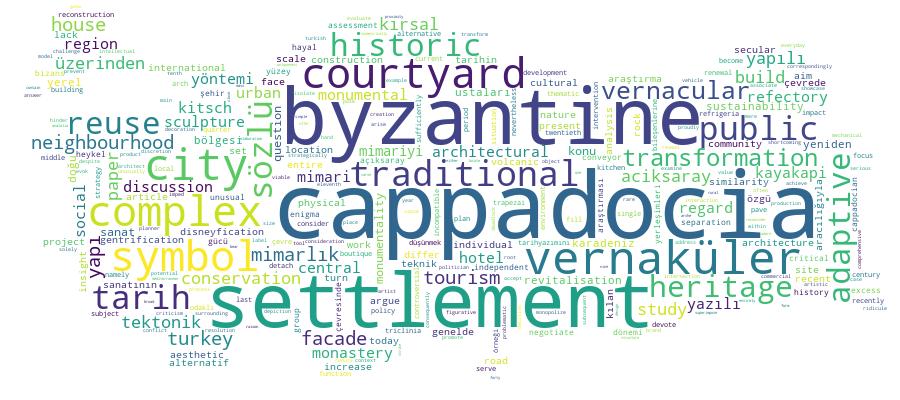
Competency Cloud

Scholarly Output Search Results
Now showing 1 - 10 of 11
Article Citation - WoS: 5Citation - Scopus: 5Aciksaray "open Palace": a Byzantine Rock-Cut Settlement in Cappadocia(Walter de Gruyter Gmbh, 2014) Ozturk, Fatma GulCourtyard complexes formed entirely out of the volcanic rock mass in Cappadocia, in Central Anatolia, differ from the other rock-cut structures in the region, in both scale and elaboration of design. There are more than forty such complexes in Cappadocia, either gathered in one location or isolated. Located on the Nevsehir-Gulsehir road, Aciksaray contains nine such complexes in close proximity, many of which feature monumental facades as well as reception areas and utilitarian spaces such as large stables around a courtyard. This paper, in the light of survey results, presents site analysis and architectural readings that lead the discussion of the nature and stages of occupation at Aciksaray. By doing this, the paper aims to bring new insights to the discussion on courtyard complexes, adding details and nuance to our understanding of the Aciksaray settlement, while noting similarities with other settlements in the region. Underlining the secular and elite character of the Aciksaray settlement, this study contributes in particular to enlarging the picture of medieval life in Cappadocia, and in general to the studies of Byzantine domestic architecture, for which architectural evidence is still scarce.Article Sanat ve Hayal Gücü Bir Şehir Bir Konu Üç Heykel(2015) Öztürk Büke, Fatma GülArticle Citation - WoS: 7Citation - Scopus: 6Tourism-Led Adaptive Reuse of the Built Vernacular Heritage: a Critical Assessment of the Transformation of Historic Neighbourhoods in Cappadocia, Turkey(Routledge Journals, Taylor & Francis Ltd, 2023) Buke, Fatma Gul OzturkSince the last quarter of the twentieth century, increased tourism in traditional settlements have led to the adaptive reuse of built vernacular heritage to serve the tourism industry. The adaptive reuse of historic buildings is considered a conservation strategy and an alternative to new constructions in historic environments. Nevertheless, the adaptive reuse of built vernacular heritage and its socio-spatial impacts have not yet been sufficiently investigated. To fill the gap, this paper, focuses on Cappadocia, Turkey, where adaptive reuse of individual vernacular houses has recently paved the way for the transformation of an entire neighbourhood, the historic neighbourhood of Kayakapi, into a 'holiday village.' This study argues that traditional settlements and communities in Cappadocia have been subjected to 'gentrification' and so-called 'Disneyfication.' Such historic environments are facing controversial physical interventions, detached from local communities and devoted to a single function, namely tourism, becoming 'stereotypical and depersonalised.' The study further argues that the current situation is incompatible with international heritage and conservation policies. Correspondingly, to reveal the potential conflicts, the recent revitalisation project of the historic neighbourhood of Kayakapi in Cappadocia is examined as a case study.Article Vernaküler Mimari ve Kırsal Yapılı Çevre Bileşenlerine ‘Yer’ ve Tektonik Odaklı Bir Yaklaşım: Doğu Karadeniz Bölgesi Örneği(2025) Akbaş, Gamze; Büke, Fatma Gül ÖztürkÇalışma, “yer” ve tektonik kavramlarının birlikte etkileşimde oldukları, birbirlerini tamamladıkları ve hatta var ettikleri düşüncesinden yola çıkmakta; bu ilişkiyi görünür kılan vernaküler mimariyi ele almaktadır. Makalede, kırsal yapılı çevrede, “yer” ve tektonik arasındaki bağın, yapı yapma sanatının üç aşaması olan; “yer seçimi,” “yere müdahale biçimi” ve “örüntü diline” göre biçimlenen vernaküler mimari aracılığıyla kurulduğu ve vernaküler mimariyi bir “yer”e özgü kılan şeyin bu üç unsurun karşılıklı etkileşimine dayanan bu bağ olduğu önerisi üzerinde durulmaktadır. Öneri, Doğu Karadeniz Bölgesi vernaküler mimarisine özgü kırsal yapılı çevrenin üç bileşeni; “teras,” “köprü” ve “serender” üzerinden test edilmektedir. Araştırma sonucunda, yapı sanatının üç aşamasına uymayan sağlıksız yenileme ve yeniden yapım çalışmalarının, kırsal yapılı çevrede “yer” ve tektonik ilişkisini yok sayan “melez yapıları” ve “sahte vernakülerleri” ortaya çıkardığı vurgulanmaktadır.Article Rock-Cut Facades: Conveyors of 'false Monumentality in Byzantine Cappadocia(Cambridge Univ Press, 2022) Ozturk Buke, Fatma GulThe monumental rock-cut facades of the tenth to eleventh century-mansions - so-called courtyard complexes - in Cappadocia, central Turkey, are rare examples of secular Byzantine architecture. While these symmetrically designed facades adorned with superimposed arches differ from the simpler ones (both carved and built) in the region, they bear striking similarities to others from the broader Mediterranean basin. This article offers new insights into the discussion on the uniqueness of the rock-cut facades of courtyard complexes and reconsiders the raison d'etre of this 'false' monumentality in the rural setting of Byzantine Cappadocia.Article Citation - WoS: 4Citation - Scopus: 7The Unusual Separation of Cappadocian Refectories and Kitchens: an Enigma of Architectural History(Middle East Technical Univ, 2012) Ozturk, Fatma GulArticle Vernaküler Mimarlık Tarihyazımını Sözlü Tarih Yöntemi ve Yerel Yapı Ustaları Üzerinden Yeniden Düşünmek(2023) Akbaş, Gamze; Büke, Fatma Gül ÖztürkSözlü tarih; yeterli yazılı belgeye ulaşılamayan araştırma alanlarında, konu ile ilişkili aktör ve/veya tanıkların anlatımlarından yararlanarak, kısıtlı arşiv sorununu aşmayı amaçlayan alternatif bir tarih yazımı yöntemi olarak karşımıza çıkmaktadır. Bilhassa vernaküler mimari üzerinden değerlendirdiğimizde, bu yapı stoğunun üretim sürecine ışık tutacak, yazılı bir sözleşmeye, teknik çizimlere, teknik ve mali hesaplamalara ve benzeri yazılı belgelere genelde rastlanılmaması sözlü tarihin potansiyelini tartışmaya açmaktadır. Bu nedenledir ki, makale, sözlü tarih yöntemiyle vernaküler mimariyi anlamak ve bu alana sağlayabileceği katkıları anlatmayı amaçlamaktadır. Bunun için öncelikle, genelde mimarlık ve özelde vernaküler mimarlık tarihyazımı çerçevesinde sözlü tarih yöntemine başvuran belli başlı metinler incelenilmektedir. Daha sonra, sözlü tarihin kayda geçmemiş ya da unutulmaya yüz tutmuş bilgilere ulaşmamıza yardımcı bir yöntem olabileceği yerel yapı ustaları üzerinden vurgulanmaktadır. Böylece, sözlü tarih yöntemi aracılığıyla alternatif bir vernaküler mimarlık tarihyazımının mümkün olup olmadığı tartışılmaktadır.Article The Dead-End of Public Art in Turkey: The Excess of "themed City Sculptures"-City Symbols(Middle East Technical Univ, 2024) Buke, Fatma Gul OzturkIn recent years, public art in Turkey has been transformed into a branding tool and reduced to mere decoration to promote cities. Large-scale models of products and values associated with the region are strategically placed at intersections on main roads. Decisions regarding these "themed city sculptures"-city symbols-appear to be solely at the discretion of politicians, with their mechanical production monopolized by a few commercial enterprises. While these city symbols are proudly showcased, they face criticism from artists, architects, and urban planners for their aesthetic shortcomings, and are often ridiculed on social media. The problematic nature of presenting city symbols as public art arises from their isolated location on vehicle roads, hindering interaction with their surroundings and viewers. Despite evoking Pop Art sculptures, with their unusually sized figurative depictions of everyday objects, these symbols, lacking an intellectual and artistic creation process, pose challenges in being accepted as works of art. On the other hand, labelling city symbols as kitsch and the subsequent lack of serious consideration have impeded addressing the root causes of the problem. A comprehensive analysis can only achieve a viable resolution to this deadlock in Turkish public art. Consequently, this article evaluates city symbols within the context of public art, Pop Art and kitsch, aiming to answer the question: What prevents city symbols from being regarded as works of art?Conference Object Negotiating between the Independent and Groups of Courtyard Complexes in Cappadocia(2013) Öztürk, Fatma GülConference Object Reconstruction Traditional Settlements in Cappadocia: Questions of Sustainability(Cankaya University Press, 2018) Öztürk Büke, Fatma GülCappadocia, today a popular tourist destination in central Turkey, is internationally known for its peculiar volcanic landscape and abundant rock-cut architecture. In 1985, the “Göreme National Park and the Rock Sites of Cappadocia” had been inscribed in UNESCO World Heritage List, which in turn led to an increase in visitors’ number. Accordingly, by the 1980s, construction of large hotel facilities ignoring the natural, historical and traditional setting accelerated. Parallel to the international trends of the tourism industry, by the end of the 1990s, traditional houses began to be “restored/reconstructed” and turned into “boutique hotels”. This transformation first started with individual houses, and followed by houses in neighbouring plots that were put together into hotel complexes. Today, the transformation comprises even entire neighbourhoods. This paper is questioning the rapid physical and conceptual transformation of the traditional settlements with regard to cultural and social sustainability. It also discusses the accuracy and reliability of large scale “reconstruction” projects and the degree of falsification.