Bilgilendirme: Kurulum ve veri kapsamındaki çalışmalar devam etmektedir. Göstereceğiniz anlayış için teşekkür ederiz.
 

Demir, Engin

Loading...
Profile Picture
Name Variants
Demir, E.
Job Title
Dr. Öğr. Üyesi
Email Address
Main Affiliation
06.01. Bilgisayar Mühendisliği
Bilgisayar Mühendisliği
06. Mühendislik Fakültesi
01. Çankaya Üniversitesi
Status
Former Staff
Website
ORCID ID
Scopus Author ID
Turkish CoHE Profile ID
Google Scholar ID
WoS Researcher ID

Sustainable Development Goals

SDG data is not available
This researcher does not have a Scopus ID.
This researcher does not have a WoS ID.
Scholarly Output

3

Articles

0

Views / Downloads

571/9

Supervised MSc Theses

0

Supervised PhD Theses

0

WoS Citation Count

0

Scopus Citation Count

13

WoS h-index

0

Scopus h-index

1

Patents

0

Projects

0

WoS Citations per Publication

0.00

Scopus Citations per Publication

4.33

Open Access Source

0

Supervised Theses

0

Google Analytics Visitor Traffic

JournalCount
2017 25th Signal Processing And Communications Applications Conference (SIU)1
25th Signal Processing and Communications Applications Conference (SIU) -- MAY 15-18, 2017 -- Antalya, TURKEY1
ACM SIGGRAPH 2017 Posters, SIGGRAPH 2017 -- 44th International Conference on Computer Graphics and Interactive Techniques, ACM SIGGRAPH 2017 -- 30 July 2017 through 3 August 2017 -- Los Angeles -- 1293151
Current Page: 1 / 1

Scopus Quartile Distribution

Quartile distribution chart data is not available

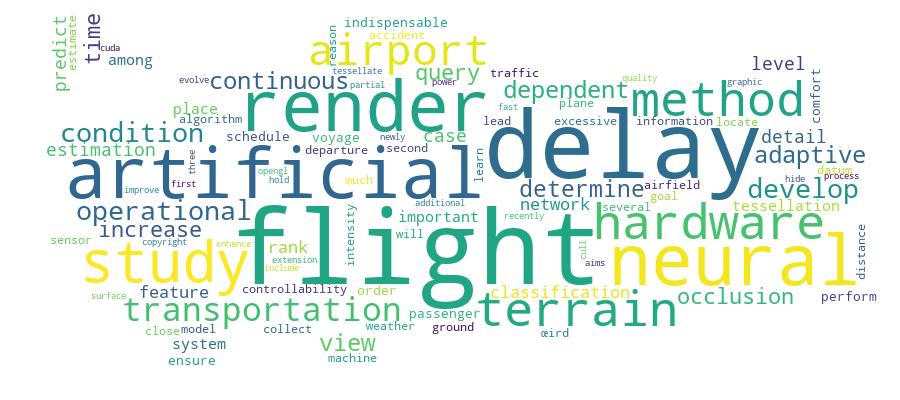
Competency Cloud

GCRIS Competency Cloud

Scholarly Output Search Results

Now showing 1 - 3 of 3
  • Conference Object
    Pixel-Based Level of Detail on Hardware Tessellated Terrain Rendering
    (Association for Computing Machinery, Inc, 2017) Demir, E.; Özek, M.Ö.
    As the GPU's processing power has been improving much faster than the CPU's. the terrain rendering algorithms have evolved to use the graphics hardware as much as possible. One of the recently developed GPU-based Level of Detail (LOD) algorithm is Continuous View Dependent Adaptive LOD using hardware tessellation. In this study, Continuous View Dependent Adaptive LOD using hardware tessellation is enhanced using three additional methods. First method is determining pixel-based LOD using occlusion query. Because of hidden surface culling, render time is reduced. Second method is determining pixel-based LOD using occlusion query that newly developed by using OpenGL and CUDA interoperability. Œird method is extension of second method that includes quad-tree based query for each terrain node. Œird method aims to increase rendering quality of partial rendered terrain node. © 2017 Copyright held by the owner/author(s).
  • Book Part
    Predicting flight delays with artificial neural networks: case study of an airport
    (IEEE, 2017) Demir, Engin; Demir, Vahap Burhan
    Air transportation has an important place among transportation systems and it is indispensable for the flights to perform their voyages in scheduled time in order to ensure the comfort of passengers and controllability of operational costs. There are several reasons for flight delays like weather conditions, excessive intensity in air traffic, accidents or closed airfields, conditions that will lead to an increase in distances between planes and operational delays in ground services. In this study, using the data collected from the sensors located in the airport and the information about the flight, the goal is develop a machine learning model to estimate departure delays of flights using artificial neural networks.
  • Conference Object
    Citation - Scopus: 13
    Predicting Flight Delays With Artificial Neural Networks: Case Study of an Airport
    (Ieee, 2017) Demir, Engin; Demir, Vahap Burhan
    Air transportation has an important place among transportation systems and it is indispensable for the flights to perform their voyages in scheduled time in order to ensure the comfort of passengers and controllability of operational costs. There are several reasons for flight delays like weather conditions, excessive intensity in air traffic, accidents or closed airfields, conditions that will lead to an increase in distances between planes and operational delays in ground services. In this study, using the data collected from the sensors located in the airport and the information about the flight, the goal is develop a machine learning model to estimate departure delays of flights using artificial neural networks.