
Yapıcı, Ekin
Loading...
Profile URL
Name Variants
Yapıcı, Ekin Özgirgin & Özgirgin Yapıcı, Ekin & Ozgirgin Yapici, Ekin & Yapici, Ekin Ozgirgin
Job Title
Doç. Dr.
Email Address
ekinozgirgin@cankaya.edu.tr
Main Affiliation
06.06. Makine Mühendisliği
Makine Mühendisliği
06. Mühendislik Fakültesi
01. Çankaya Üniversitesi
Makine Mühendisliği
06. Mühendislik Fakültesi
01. Çankaya Üniversitesi
Status
Current Staff
Website
ORCID ID
Scopus Author ID
Turkish CoHE Profile ID
Google Scholar ID
WoS Researcher ID
Files
Sustainable Development Goals
 1
1NO POVERTY
0
Research Products
 2
2ZERO HUNGER
0
Research Products
 3
3GOOD HEALTH AND WELL-BEING
0
Research Products
 4
4QUALITY EDUCATION
0
Research Products
 5
5GENDER EQUALITY
0
Research Products
 6
6CLEAN WATER AND SANITATION
0
Research Products
 7
7AFFORDABLE AND CLEAN ENERGY
11
Research Products
 8
8DECENT WORK AND ECONOMIC GROWTH
0
Research Products
 9
9INDUSTRY, INNOVATION AND INFRASTRUCTURE
1
Research Products
 10
10REDUCED INEQUALITIES
0
Research Products
 11
11SUSTAINABLE CITIES AND COMMUNITIES
0
Research Products
 12
12RESPONSIBLE CONSUMPTION AND PRODUCTION
1
Research Products
 13
13CLIMATE ACTION
2
Research Products
 14
14LIFE BELOW WATER
0
Research Products
 15
15LIFE ON LAND
0
Research Products
 16
16PEACE, JUSTICE AND STRONG INSTITUTIONS
0
Research Products
 17
17PARTNERSHIPS FOR THE GOALS
0
Research Products

This researcher does not have a Scopus ID.

This researcher does not have a WoS ID.
No records found in other affiliations.

Scholarly Output
18
Articles
11
Views / Downloads
1534/1154
Supervised MSc Theses
4
Supervised PhD Theses
0
WoS Citation Count
65
Scopus Citation Count
71
Patents
0
Projects
0
WoS Citations per Publication
3.61
Scopus Citations per Publication
3.94
Open Access Source
6
Supervised Theses
4
| Journal | Count |
|---|---|
| Hittite Journal of Science and Engineering | 2 |
| Isı Bilimi ve Tekniği Dergisi | 2 |
| Energy Generation and Efficiency Technologies for Green Residential Buildings | 1 |
| Isi Bilimi Ve Teknigi Dergisi/ Journal of Thermal Science and Technology | 1 |
| Journal of Cleaner Production | 1 |
Current Page: 1 / 3
Scopus Quartile Distribution
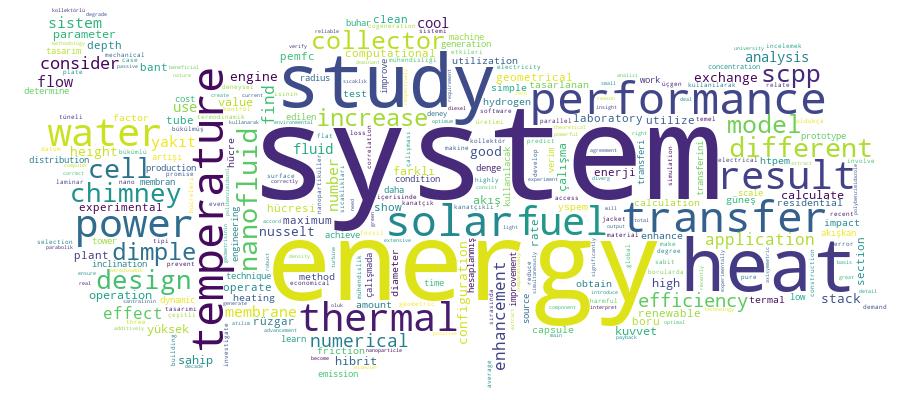
Competency Cloud
18 results
Scholarly Output Search Results
Now showing 1 - 10 of 18
Conference Object Yüksek Sıcaklık Pem Yakıt Hücresi Mikro-Kojenerasyon Sistemi Tasarımı(2016) Devrim, Yılser; Üregen, Nurhan; Özgirgin Yapıcı, EkinArticle Citation - WoS: 1Numerical Investigation for Enhancement of Heat Transfer in the Cooling Water Jacket of CI Engine(Taylor & Francis inc, 2025) Altug, Hakan; Yapici, Ekin OzgirginDiesel engines are essential in heavy industries and agriculture, especially in vehicles like tractors that operate under challenging conditions, often causing engine faults. Effective thermal management systems are vital for faultless operation preventing overheating, extending engine life, reducing emissions, and improving efficiency. The core of these systems is the water jacket around the cylinder head, which regulates temperatures, facilitates lubrication, prevents friction-related faults, increase durability and thermal performance of the engine. Computational Fluid Dynamics techniques are crucial for analyzing engine thermal behavior and designing cooling systems with complex flows. This study simulates the engine block's temperature distribution under extreme conditions to prevent overheating and improve thermal performance. Geometrical modifications, such as optimizing outlet water ports are employed to achieve enhanced thermal performance by reducing the temperature of coolant. 3D model of the engine block is developed using STAR CCM+ to calculate water temperatures, flow rates and outlet pressures. Numerical validation is conducted with a test bench, and three geometric improvements are analyzed for temperature distribution and heat transfer coefficient. Results showed that, 6.2% improvement on thermal performance is achieved based on the average coolant temperatures and 10% enhancement is achieved in terms of heat transfer coefficient values.Conference Object Design, Production, Theoretical And Experimental Analysis Of Parabolic Trough Solar Collector With Sun Tracking Mechanism(2017) Özgirgin Yapıcı, Ekin; Ünver, Eymen; Çelik, Damla; Tercan, Furkan; Ünalan, Emre; Taşkan, GökhanMaster Thesis Bükülmüş Bant Geometrisinin ve Nanoparçacıkların Tüplerde Isı Transfer Performansına Sinerjistik Etkileri(2025) Çakmak, Yılmaz Ömür; Yapıcı, Ekin Özgirgin; Aylı, Ülkü EceBorularda ısı transferini artırmak son yıllarda verimlilik açısından önemli bir konu olmuştur. Bu nedenle birçok pasif yöntem kullanılmış ve araştırmalarda yer bulmuştur. Bükülmüş bant ek parçaları bu pasif yöntemlerden biri olup borudaki akış rejimini ve hareketi değiştirerek ısı transferini artıran yapılar olarak öne çıkmaktadır. Bu parçalar akış içerisinde belirli bölgelerde girdap hareketi oluşturarak türbülans görevi görmekte ve termal sınır tabakasını bozarak ısı transfer katsayısını iyileştirmektedir. Bu çalışmada borularda kullanılan bükümlü bant geometrisinin nanopartiküllerle ısı transferi iyileştirmesine olan etkileri incelenmiştir. Temel amaç, kullanılacak sıvıya çeşitli nanopartikül konsantrasyonlarına sahip nanopartiküller eklenmesi ve sistem yapısına farklı büküm oranlarıyla eklenen bükümlü bant ek parçası ile ısı transferi iyileştirmesindeki artışı incelemek ve gözlemlemektir. Hesaplamalı Akışkanlar Dinamiği (HAD) simülasyonları kullanılarak, bükülmüş bant geometrisine sahip boru içerisindeki nanoakışkanın ısı transferi davranışı simüle edilmiştir. Bu simülasyonlardan elde edilen sonuçlar, nanopartikül konsantrasyonunun artırılmasının ısı transfer performansını arttırdığını ve en verimli bükümlü bant ek parçası tasarımının 4 büküm oranına sahip olan tasarım olarak tasvir edildiğini göstermektedir. Al2O3-TiO2 (%10-6) nanofluidinin kullanımının sistem üzerinde oldukça olumlu bir etkiye sahip olduğu gözlemlenmiştir. Nusselt sayısı, sürtünme faktörü ve Performans değerlendirme kriterleri (PEC) ile ilgili karşılaştırmalar yapılmıştır.Article Performance Analysis of a Flat Plate Solar Collector Utilizing Different Nanofluids(Korean Soc Mechanical Engineers, 2025) Topak, Aysu Deniz; Yapici, Ekin OzgirginGiven the risks of fossil fuel utilization, interest in renewable energy sources like solar power is growing, particularly with solar collectors. Flat plate solar collectors are common in solar thermal applications, though conventional heat transfer fluids have low thermal conductivity. To improve efficiency, nanofluids are employed. This study involves thermal analysis of a solar collector system using different nanofluids prepared in laboratories. Design parameters of the collector and the impact of utilizing nanofluids with different concentrations on the thermal performance of collector system are investigated through both analytical and experimental approaches. Results show nanofluids enhance thermo-physical properties, improving collector efficiency even at low concentrations. Comparing commonly used oxides (Al2O3) and rarely used nitrides (AlN), AlN-based nanofluids showed superior thermal properties. Additionally, MXene-water nanofluid with MAX (Ti3AlC2) synthesized from Titanium (II) hydride further increased efficiency. Experimental results demonstrated up to a 55.3 % efficiency improvement for nanofluids over water.Article YÜKSEK SICAKLIK PROTON DEĞİŞİM MEMBRAN YAKIT HÜCRESİ MİKROKOJENERASYON UYGULAMASININ DENEYSEL VE TEORİK İNCELENMESİ(2018) Devrim, Yılser; Özgirgin Yapıcı, EkinBu çalışmada, yüksek verimlilikleri ve çevre dostu teknolojiler olmaları sebebiyle tercih edilen, güvenilir güç üretim tekniklerinden biri olan yüksek sıcaklık proton değişim membran (YSPEM) yakıt hücreleri kullanılarak bir evsel mikro-kojenerasyon (birlikte ısı-güç) sistemi tasarlanmıştır. Tasarlanan sistem, YSPEM yakıt hücresi tarafından üretilen elektrik gücü ve faydalı ısının kombine bir şekilde, kullanılmasını içermektedir. Hücrenin çalışması sırasında, yüksek performans ve kararlı güç üretimi sağlanabilmesi için hücre içerisinde üretilen ısının uzaklaştırılması ve hücre içi sıcaklığın sabit kalması gerekmektedir. Bu sebeple tasarlanan yenilikçi soğutma sisteminin atık ısısı, sıcak su ısıtmasında kullanılacak olan ısıl enerjinin teminini sağlamaktadır. Böylelikle toplam verim basit çevrimlere göre yaklaşık iki katına çıkabilmektedir. Çalışma kapsamında tasarlanan 225 W gücünde YSPEM yığını 160°C çalışma sıcaklığında hidrojen ve hava gazları ile test edilmiştir. Çalışması sırasında sıcaklığın hücre içerisinde homojen olarak dağılımı, hücrenin kısa sürede gerekli çalışma sıcaklığına ulaşabilmesi, yakıt hücresinde oluşan ısının hücreden sürekli olarak uzaklaştırılabilmesi için yakıt hücresi yığını soğutucu akışkan (Isı Transfer Yağı 32-Petrol Ofisi) kullanılarak soğutulmuştur. Hücre izolasyon malzemesi seçimi ve kalınlığı, doğal taşınım ve radyasyon yolu ile ısı kaybı hesabıyla belirlenmiştir. Maksimum verim çalışma koşulları için mikro-kojenerasyon sisteminin su giriş çıkış sıcaklıkları, su ve soğutucu akışkan debileri, uygun boru çapı hesabı ve pompa güç hesabı yapılarak nihai sistem tasarlanmıştır. Çalışmada tasarlanan kojenerasyon sisteminde, YSPEM yığınının soğutulması ile açığa çıkan atık ısı, 15-20C’lik şebeke suyunun ısıtılması için kullanılmıştır. Şebeke suyu sıcaklığı yalıtımlı hücre kullanılması durumunda ortalama 50C’ye kadar ısıtılmıştır. Elde edilen veriler yakıt hücresi mikro-kojenerasyon uygulamasının kullanılabilirliğini göstermektedir. Anahtar Kelimler: YSPEM, Yakıt hücresi, Polibenzimidazol membran, Mikro-kojenerasyonArticle Citation - WoS: 10Citation - Scopus: 11Analysis of Heat Transfer Enhancement of Passive Methods in Tubes With Machine Learning(Sage Publications Ltd, 2024) Ayli, Ece; Turkoglu, Hasmet; Yapici, Ekin Ozgirgin; Özgirgin Yapıcı, EkinThis study investigates the efficacy of machine learning techniques and correlation methods for predicting heat transfer performance in a dimpled tube under varying flow conditions, including the presence of nanoparticles. A comprehensive numerical analysis involving 120 cases was conducted to obtain Nusselt numbers and friction factors, considering different dimple depths and velocities for both pure water and water-Al2O3 nanofluid at 1%, 2%, and 3% volume concentrations. Utilizing the data acquired from the numerical simulations, a correlation equation, SVM ANN architectures were developed. The predictive capabilities of the statistical approach, ANN, and SVM models for Nusselt number distribution and friction factor were meticulously assessed through mean average percentage error (MAPE) and correlation coefficients (R2). The research findings reveal that machine learning techniques offer a highly effective approach for accurately predicting heat transfer performance in a dimpled tube, with results closely aligned with Computational Fluid Dynamics (CFD) simulations. Particularly noteworthy is the superior performance of the ANN model, demonstrating the most precise predictions with an error rate of 2.54% and an impressive R2 value of 0.9978 for Nusselt number prediction. In comparison, the regression model achieved an average error rate of 6.14% with an R2 value of 0.8623, and the SVM model yielded an RMSE value of 2.984% with an R2 value of 0.9154 for Nusselt number prediction. These outcomes underscore the ANN model's ability to effectively capture complex patterns within the data, resulting in highly accurate predictions. In conclusion, this research showcases the promising potential of machine learning techniques in accurately forecasting heat transfer performance in dimpled tubes. The developed ANN model exhibits notable superiority in predicting Nusselt numbers, making it a valuable tool for enhancing thermal system analyses and engineering design optimization.Master Thesis Nanopartiküller ve Farklı Geometrilere Sahip Kanatçıklar Kullanarak Borularda Isı Transferi İyileştirme(2025) Eğerci, Neslihan; Yapıcı, Ekin Özgirgin; Türkoğlu, HaşmetEnerji, havacılık ve otomotiv gibi sektörlerde mühendislik uygulamaları geliştirmek, ısı transfer verimliliğini artırmak için yaratıcı yöntemler gerektirir. Isı transfer yüzey alanını genişleterek, ısı eşanjörlerindeki boru kanatçıkları termal performansı artıran temel parçalardır. Ancak, tipik kanatçık tasarımlarının en iyi performansı göstermesini engelleyen birkaç kısıtlama vardır. Nanopartiküller, akışkan özelliklerini ve termal iletkenliği artırarak daha etkili ısı iletimi sağlar. Geleneksel soğutma sıvılarından daha fazla termal iletkenlik sunarak, nanofluidlerin kullanımı boru kanatçık sistemlerinde ısı transferini artırır. Bu çalışmanın amacı, farklı geometrilerde kanatçıklı bir boru tasarımı yaparak en etkili tasarımda farklı konsantrasyonlarda sabit boyutta nanoakışkanlar kullanarak ısı transferini incelemektir. Kanatçık çalışması için çeşitli konfigürasyonlar incelendi (üçgen, dikdörtgen ve daire). Üçgen kanatçıklı borunun en uygun olduğu çalışmalar sonucunda bulundu. Üçgen kanatçıklı yapıya farklı konsantrasyonlarda nano akışlar eklendi. Sonuç olarak en iyi nano akış konsantrasyonu ve geometri yapısı bulundu. En iyi nanoakış Al₂O₃-TiO₂ ve konstrasyonu %10-6' dır. En iyi geometri üçgen yapılı fin olarak bulunmuştur.Article Investigation Of Working Temperature Effect On Micro-Cogeneration Application Of Proton Exchange Membrane Fuel Cells(2018) Budak, Yağmur; Özgirgin Yapıcı, Ekin; Devrim, YılserI n this study, micro-cogeneration application is used to increase the efficiency of Proton Exchange Membrane Fuel Cell (PEMFC) systems and effect of different operation temperatures on system performance is observed. For this reason, two different PEMFC systems were comparatively studied operating at 70o C and 160o C, respectively. Micro-cogeneration system design has done considering experimentally determined current density, power and temperature values. Since the amount of heat extracted from each PEMFC system is different related to the operating temperatures, different heat transfer fluids have been used for the cooling systems. These systems are designed for utilization of electricity and hot water for Atılım University Hydrogen Energy Laboratory. Heat loss calculation is made for the laboratory and thermal energy needed for heating the laboratory is calculated. Parallel to the design calculations, simple payback times for PEMFCs with micro-cogeneration applications were determined. LT-PEMFC and HT-PEMFC systems have 402 W and 456 W thermal powers respectively and 87.4 % and 92.8 % total cogeneration efficiencies were calculated for each system respectively. For each system maximum water temperatures and flow rates are calculated as a result of micro-cogeneration application. HT-PEMFC system has found to be capable of higher amount of heating. Even LT-PEMFC system has a lower thermal power and efficiency; it is determined to be more economical and has a lower pay pack time then HT-PEMFC system. For both systems, necessary number of stacks to be used for laboratory heating is calculated as four.Master Thesis Energy, Exergy, Economic and Environmental Analysis (4E) of Reciprocating Air Compressors(2024) Udül, Nisa İrem; Yapıcı, Ekin Özgirgin; Doğan, BattalBu tez çalışmasında deneysel olarak iki tipte kompresör çeşidi kullanılmıştır. Bunlar tek kademeli 5,016 kW ve çift kademeli 11,096 kW güçteki pistonlu kompresörlerdir. Deneyler Ankara Tamsan Kompresör A.Ş. firmasında gerçekleştirilmiştir. 5 farklı ortam sıcaklığı ele alınarak her iki kompresör çeşidi için enerji, ekserji, ekonomik ve çevresel analizleri hesabı yapılmıştır. Enerji analizi ile P-v diyagramı, izentropik, politropik, izotermal ve gerçek iş hesabı ve verim hesaplanmıştır. Enerji analizinde sıcaklık arttıkça tek kademe ve çift kademeli kompresör için de gerçek işin azaldığı, politropik, izentropik ve izotermal işin arttığı, yine sıcaklık arttığı zaman tüm hal değişimlerinde verimin arttığı gözlemlenmiştir. Ekserji analizi ile, tek kademeli kompresörler düşük giriş sıcaklıklarında ekserji verimliliği açısından daha avantajlı bir haldedir, çift kademeli kompresörlerde ekserji verimliliği yüksek sıcaklıklarda artmakta ve performans farkı azalmaktadır. Ekserji yıkımı için çift kademeli kompresörlerin ekserji kaybı, tüm sıcaklık aralıklarında tek kademeli kompresöre göre daha yüksektir. Ekonomik analizlere göre çift kademeli kompresörler yüksek basınç oranlarında ve doğru ara soğutucu tasarımıyla termodinamik olarak daha verimlidir; ancak bu çalışmada kullanılan varsayımlar (motor güçleri, CRF, φ, yıllık süre vb.) altında maliyet açısından her sıcaklıkta tek kademe daha avantajlıdır. Çevresel analiz için (toplam çevresel etki öncelikli) tüm sıcaklıklarda tek kademeli kompresör çevresel açıdan daha avantajlıdır. Sürdürülebilirlik analiz için de sıcaklık arttıkça her iki kompresörde de artış gözlemleniyor, fakat tek kademe kompresör daha avantajlı olduğu gözlemleniyor. Tez kapsamında öncelikle kompresör tanımı, çeşitleri anlatılmıştır. Hesaplama kısmında teorik analiz hesabı yapılmıştır. Bu hesaplamalardaki veriler için farklı ortam sıcaklıkları baz alınmıştır. Elde edilen sonuçlar grafik ve tablo üzerinde belirtilmiştir. Tüm enerji, ekserji, ekonomik, çevresel ve sürdürülebilirlik analiz sonuçları birlikte değerlendirildiğinde, kullanılan çalışma koşulları ve varsayımlar altında tek kademeli kompresörün tüm sıcaklık aralıklarında genel olarak daha avantajlı olduğu, çift kademeli kompresörün ise yalnızca yüksek sıcaklık ve yüksek basınç oranlarında belirli termodinamik verimlilik artışları sağladığı tespit edilmiştir.