Bilgilendirme: Kurulum ve veri kapsamındaki çalışmalar devam etmektedir. Göstereceğiniz anlayış için teşekkür ederiz.
 

Pirencek, Gülşen Fatma

Loading...
Profile Picture
Name Variants
Çulhaoğlu Pirencek, Gülşen
Pirencek, Gülşen F. Çulhaoğlu
Job Title
Dr. Öğr. Üyesi
Email Address
gulsen@cankaya.edu.tr
Main Affiliation
Ortak Dersler Bölümü
Status
Current Staff
Website
Scopus Author ID
Turkish CoHE Profile ID
Google Scholar ID
WoS Researcher ID

Sustainable Development Goals

SDG data is not available
This researcher does not have a Scopus ID.
This researcher does not have a WoS ID.
Scholarly Output

2

Articles

2

Views / Downloads

408/3907

Supervised MSc Theses

0

Supervised PhD Theses

0

WoS Citation Count

0

Scopus Citation Count

0

WoS h-index

0

Scopus h-index

0

Patents

0

Projects

0

WoS Citations per Publication

0.00

Scopus Citations per Publication

0.00

Open Access Source

2

Supervised Theses

0

Google Analytics Visitor Traffic

JournalCount
Cankaya University Journal of Humanities and Social Sciences1
Gazi Türkiyat1
Current Page: 1 / 1

Scopus Quartile Distribution

Quartile distribution chart data is not available

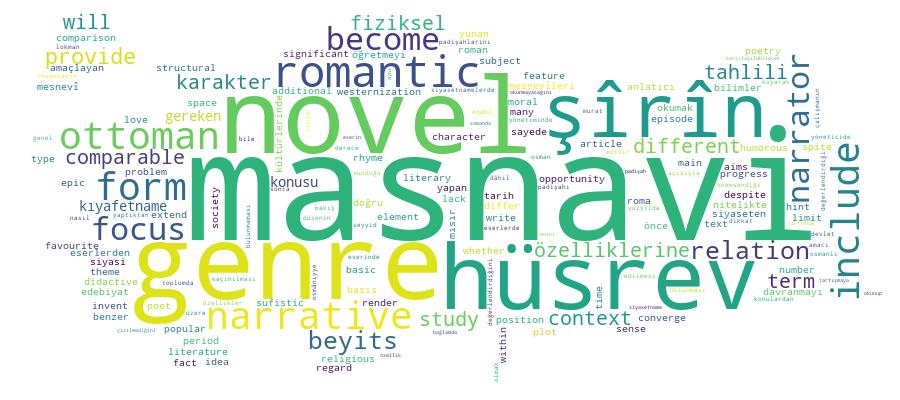
Competency Cloud

GCRIS Competency Cloud

Scholarly Output Search Results

Now showing 1 - 2 of 2
  • Article
    Kıyâfetü’l-İnsâniyye Fî Şemâ’ili’l-Osmâniyye’yi Siyaseten Okumak
    (2021) Pirencek, Gülşen F. Çulhaoğlu
    İnsanların fiziksel özelliklerine göre karakter tahlili yapan ve bu sayede onlara doğru davranmayı öğretmeyi amaçlayan kıyafetname, İslamiyet’ten önce de Mısır, Roma, Yunan, İran, Hint kültürlerinde var olan bir ilimdir. Kıyafetname ile benzer bir şekilde ahlaki/öğretici nitelikte eserlerden olan siyasetnamelerde ise, devlet yönetiminde dikkat edilmesi ve kaçınılması gereken konulardan söz edilir ve bir yöneticide bulunması ya da bulunmaması gereken özellikler belirtilir. Bu çalışmanın amacı, Seyyid Lokman Çelebi’nin 16. yüzyılda, III. Murat’a sunduğu ve genel olarak insanların fiziksel özelliklerine göre karakter tahlili yaptıktan sonra Osman Gazi’den III Murat da dâhil olmak üzere Osmanlı padişahlarını değerlendirdiği Kıyâfetü’l-İnsâniyye fi Şemâ’ili’l- Osmâniyye adlı eserinde, söz konusu padişahı nasıl bir bakış açısıyla değerlendirdiğini ortaya koyarak “ideal” düzenin son derece önemsendiği bir toplumda, edebî eserlerde bile karşılaşılabilecek bir özellik olan, “ideal padişah portresi”nin çizilip çizilmediğini tartışmak ve bu bağlamda söz konusu eserin aynı zamanda bir siyasetname metni olarak okunup okunmayacağını tartışmaya çalışmaktır.
  • Article
    Literary Genres vis-à-vis: Novel-Masnavi and the Position of the Narrator
    (2018) Çulhaoğlu Pirencek, Gülşen
    This article aims to focus on the problem of whether masnavi, one of the most significant narrative forms in Ottoman poetry, and novel, as a narrative form that became popular in Ottoman literature through the Westernization period, are interrelated. In masnavi, the lack of rhyme relations between beyits and a limit for the number of beyits provide poets with the opportunity to extend the subject they write on, and in this way, masnavi became one of the favourite narrative forms in Ottoman poetry. In spite of the fact that there are many masnavi types such as religious, sufistic, humorous, moral, didactive, epic etc., romantic masnavis - since they include elements like characters, episode, time and space - are more comparable with the novel genre which includes the same elements. In this regard, this study will focus on romantic masnavis, on the basis of Şeyhî’s Hüsrev ü Şîrîn, the main theme of which is a love affair. Despite being invented and progressed in different societies, contexts and having different structural features, this study will include the ideas on the comparable relations between these two genres. The genres, masnavi and novel, converge on in terms of plot, basic and additional texts, and, in this sense, differing narrators. In this context, a comparison in terms of the “narrator” provides the masnavi genre to be rendered within new viewpoints.