
Taşel, Faris Serdar
Loading...
Profile URL
Name Variants
Tasel, Faris Serdar
Tasel, Serdar Faris
Tasel, Serdar F.
Tasel, Serdar Faris
Tasel, Serdar F.
Job Title
Dr. Öğr. Üyesi
Email Address
fst@cankaya.edu.tr
Main Affiliation
06.01. Bilgisayar Mühendisliği
Bilgisayar Mühendisliği
06. Mühendislik Fakültesi
01. Çankaya Üniversitesi
Bilgisayar Mühendisliği
06. Mühendislik Fakültesi
01. Çankaya Üniversitesi
Status
Current Staff
Website
ORCID ID
Scopus Author ID
Turkish CoHE Profile ID
Google Scholar ID
WoS Researcher ID
Files
Sustainable Development Goals
11
SUSTAINABLE CITIES AND COMMUNITIES

0
Research Products
3
GOOD HEALTH AND WELL-BEING

0
Research Products
9
INDUSTRY, INNOVATION AND INFRASTRUCTURE

0
Research Products
6
CLEAN WATER AND SANITATION

0
Research Products
14
LIFE BELOW WATER

0
Research Products
12
RESPONSIBLE CONSUMPTION AND PRODUCTION

0
Research Products
8
DECENT WORK AND ECONOMIC GROWTH

0
Research Products
1
NO POVERTY

0
Research Products
4
QUALITY EDUCATION

1
Research Products
5
GENDER EQUALITY

0
Research Products
10
REDUCED INEQUALITIES

0
Research Products
16
PEACE, JUSTICE AND STRONG INSTITUTIONS

0
Research Products
15
LIFE ON LAND

0
Research Products
7
AFFORDABLE AND CLEAN ENERGY

0
Research Products
13
CLIMATE ACTION

0
Research Products
17
PARTNERSHIPS FOR THE GOALS

0
Research Products
2
ZERO HUNGER

0
Research Products

This researcher does not have a Scopus ID.

Documents
7
Citations
50

Scholarly Output
9
Articles
4
Views / Downloads
1307/581
Supervised MSc Theses
2
Supervised PhD Theses
0
WoS Citation Count
21
Scopus Citation Count
29
WoS h-index
2
Scopus h-index
3
Patents
0
Projects
0
WoS Citations per Publication
2.33
Scopus Citations per Publication
3.22
Open Access Source
4
Supervised Theses
2
| Journal | Count |
|---|---|
| 3. Mühendislik ve Teknoloji Sempozyumu | 1 |
| 5. Mühendislik ve Teknoloji Sempozyum | 1 |
| Conference on Medical Imaging - Image Processing -- FEB 16-18, 2014 -- San Diego, CA | 1 |
| Journal of Structural Biology | 1 |
| Journal of Supercomputing | 1 |
Current Page: 1 / 2
Scopus Quartile Distribution
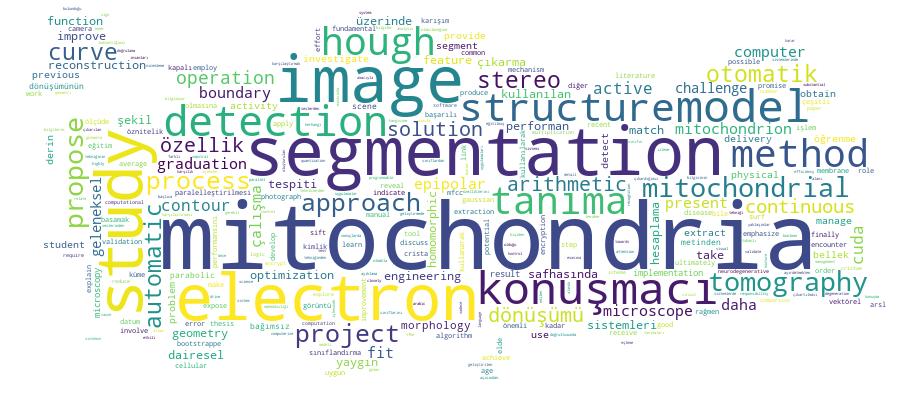
Competency Cloud
9 results
Scholarly Output Search Results
Now showing 1 - 9 of 9
Conference Object Metinden Bağımsız Otomatik Konuşmacı Tanıma Sistemleri ve Performans Karşılaştırması(2010) Taşel, Faris Serdar; Sönmez, Arzu BurçakOtomatik Konuşmacı Tanıma Sistemleri önemli bir çalışma alanı olmakla beraber başlıca üç farklı alanda yaygın olarak kullanılmaktadır. Bunlar, kimlik doğrulama, kimlik izleme ve adli uygulamalardır. Otomatik konuşmacı tanıma uygulamaları, konuşma esnasında çıkardığımız seslerden gerekli bilgilerin çıkartılması esasına dayanmaktadır. Geliştirilen uygulamalar, çıkarılan bu bilgiler doğrultusunda, insanları seslerinden tanımaları için eğitilebilirler. Otomatik Konuşmacı Tanıma Sistemlerinde ilk basamak öznitelik çıkarma işlemidir. Bu işlem için MFCC (Mel-frequency Cepstral Coefficients) tabanlı yaklaşımlar yaygın olarak kullanılır. İkinci basamak ise öznitelik sınıflandırma işlemidir. Her konuşmacı bir sınıfa karşılık gelmekte ve bulunduğu sınıfın özelliklerini belirlemektedir. VQ (Vector Quantization - Vektörel Nicemleme) ve GMM (Gaussian Mixture Models - Gaussian Karışım Modelleri), sınıflandırma işleminde kullanılan tekniklerden en yaygın olanlarıdır. Bahsettiğimiz bu işlemler sistemin eğitim safhasında kullanılırlar. Test safhasında ise, herhangi bir kişiden gelen ses bilgisinin eğitim safhasında oluşturulan sınıflardan hangisine ait olabileceğine karar verilir. Kapalı küme sistemlerde, sistem sadece daha önce eğitilmiş konuşmacı sınıflarını ayırdetmekten sorumludur. Bu çalışma, metinden bağımsız, kapalı küme konuşmacı tanıma sistemi geliştirmede etkili olan bu iki tekniği performans açısından karşılaştırmak amacıyla yapılmıştır. Elde edilen sonuçlarda GMM tekniğinin, VQ tekniğinden daha başarılı olduğu gözlemlenmiştir.Article Citation - WoS: 1Citation - Scopus: 1Mitoseg: Mitochondria Segmentation Tool(Elsevier, 2025) Tasel, Faris Serdar; Ciftci, EfeRecent studies suggest a potential link between the physical structure of mitochondria and neurodegenerative diseases. With advances in Electron Microscopy techniques, it has become possible to visualize the boundary and cristae structures of mitochondria in detail. Segmenting mitochondria from microscopy images remains challenging due to image quality and complex morphology of mitochondria, including cristae and the other subcellular structures. It is crucial to automatically segment mitochondria from images exhibiting different mitochondrial boundary and crista characteristics to investigate the relationship between mitochondria and diseases. In this paper, we present a software solution for mitochondrial segmentation using an automatic validation scheme based on the general physical properties of mitochondria, highlighting boundaries in electron microscopy tomography images and generating corresponding 3D meshes. These capabilities help researchers conduct further investigations into mitochondrial morphology and explore its role in the mechanisms of neurodegenerative diseases.Master Thesis 3D reconstruction of a scene using stereo images(2008) Taşel, Faris SerdarTwo-dimensional photographs do not have depth-information. One solution to determine the location of an object in three-dimensional environment is to use more than one photograph as exposed by the nature. Extracting the depth information using stereo images is purposed in this thesis. The thesis analyzes the steps and encountered problems in three-dimensional reconstruction process, explains the solutions exposed with the aid of epipolar geometry using some of the feature-based matching techniques. Stereo images which are taken from two calibrated cameras viewing the same scene are used to obtain estimated three-dimensional data. Pinhole camera model, epipolar geometry and its recovery are discussed; common stereo triangulation methods are explained in the chapters of the thesis. Besides, feature extraction and matching topics which are used for the reconstruction process are examined. Some of the methods used in the thesis are presented by algorithmic solutions and mathematical notations. Significant advantages and disadvantages of the methods are briefly discussed and encountered problems are tried to be challenged by fundamental approaches.Article Improved Arithmetic Efficiency in TFHE Through Gate-Level Optimizations(Springer, 2025) Tasel, Faris Serdar; Saran, Ayse NurdanFully homomorphic encryption (FHE) enables computations to be performed directly on encrypted data without decryption, offering a promising solution for privacy-preserving applications, such as secure cloud computing, confidential machine learning, and encrypted analytics. However, one major drawback of FHE is the high computational cost of homomorphic operations, which slows down real-world implementations, making them impractical. This paper explores the implementation of arithmetic operations within the framework of Torus FHE (TFHE) and demonstrates the construction of gate-level optimization for fundamental operations such as addition, subtraction, negation, comparison, and multiplication on fixed-point numbers. Our work emphasizes optimizing arithmetic logic to reduce the number of bootstrapping operations, a critical factor in improving computational efficiency. Furthermore, we investigate the error rates associated with the proposed operations, providing valuable insight into their accuracy and practical applicability. This study contributes to developing more efficient and reliable arithmetic logic for privacy-preserving computations in FHE systems. The experimental results indicate that the proposed optimizations yield speedups of up to 2.27x for addition/subtraction, 3.55x for comparison, and 1.80x for multiplication operations.Article Citation - WoS: 14Citation - Scopus: 18A Validated Active Contour Method Driven by Parabolic Arc Model for Detection and Segmentation of Mitochondria(Academic Press inc Elsevier Science, 2016) Hassanpour, Reza Z.; Perkins, Guy; Tasel, Serdar F.; Mumcuoglu, Erkan U.Recent studies reveal that mitochondria take substantial responsibility in cellular functions that are closely related to aging diseases caused by degeneration of neurons. These studies emphasize that the membrane and crista morphology of a mitochondrion should receive attention in order to investigate the link between mitochondria] function and its physical structure. Electron microscope tomography (EMT) allows analysis of the inner structures of mitochondria by providing highly detailed visual data from large volumes. Computerized segmentation of mitochondria with minimum manual effort is essential to accelerate the study of mitochondrial structure/function relationships. In this work, we improved and extended our previous attempts to detect and segment mitochondria from transmission electron microcopy (TEM) images. A parabolic arc model was utilized to extract membrane structures. Then, curve energy based active contours were employed to obtain roughly outlined candidate mitochondrial regions. Finally, a validation process was applied to obtain the final segmentation data. 3D extension of the algorithm is also presented in this paper. Our method achieved an average F-score performance of 0.84. Average Dice Similarity Coefficient and boundary error were measured as 0.87 and 14 nm respectively. (C) 2016 Elsevier Inc. All rights reserved.Conference Object Citation - WoS: 1Citation - Scopus: 4Automatic Detection of Mitochondria From Electron Microscope Tomography Images: a Curve Fitting Approach(Spie-int Soc Optical Engineering, 2014) Mumcuoglu, Erkan U.; Perkins, Guy; Martone, Maryann; Tasel, Serdar F.; Hassanpour, RezaMitochondria are sub-cellular components which are mainly responsible for synthesis of adenosine tri-phosphate (ATP) and involved in the regulation of several cellular activities such as apoptosis. The relation between some common diseases of aging and morphological structure of mitochondria is gaining strength by an increasing number of studies. Electron microscope tomography (EMT) provides high-resolution images of the 3D structure and internal arrangement of mitochondria. Studies that aim to reveal the correlation between mitochondrial structure and its function require the aid of special software tools for manual segmentation of mitochondria from EMT images. Automated detection and segmentation of mitochondria is a challenging problem due to the variety of mitochondrial structures, the presence of noise, artifacts and other sub-cellular structures. Segmentation methods reported in the literature require human interaction to initialize the algorithms. In our previous study, we focused on 2D detection and segmentation of mitochondria using an ellipse detection method. In this study, we propose a new approach for automatic detection of mitochondria from EMT images. First, a preprocessing step was applied in order to reduce the effect of non-mitochondrial sub-cellular structures. Then, a curve fitting approach was presented using a Hessian-based ridge detector to extract membrane-like structures and a curve-growing scheme Finally, an automatic algorithm was employed to detect mitochondria which are represented by a subset of the detected curves. The results show that the proposed method is more robust in detection of mitochondria in consecutive EMT slices as compared with our previous automatic method.Master Thesis Developing Arabic Sign Language Recognition System(2025) Juboorı, Mohammed Khaleel Naser Al; Taşel, Faris SerdarBu çalışma, hem geleneksel makine öğrenimi hem de derin öğrenme tekniklerini kullanarak Arap İşaret Dili (ArSL) tanımlaması için eksiksiz bir çözüm önermektedir. 31 sınıfı kapsayan 7.857 ArSL resminden oluşan bir veri kümesinde, geleneksel sınıflandırıcıları (SVM, Random Forest) kullanarak çeşitli özellik çıkarma yöntemlerini (HOG, SIFT, SURF, LBP) derin öğrenme modelleri CNN, MobileNet+Transformer ile karşılaştırdık. Araştırmalarımız, SVM-RBF ile HOG özelliklerinin diğer çıkarma tekniklerinden SIFT, SURF ve buna bağlı olarak büyük ölçüde daha iyi performans gösterdiğini buldu. Bu, uygun özellik mühendisliğinin geleneksel model performansını ne kadar önemli ölçüde artırabileceğini göstermektedir. Google Colab'ın donanım kısıtlamaları olmasına rağmen, MobileNet+Transformer modelimiz yalnızca 20 epoch'un ardından %76 doğruluk elde etti ve şaşırtıcı bir şekilde 100 epoch'un daha uzun bir eğitimden sonra %98'e ulaştı. Amerikan (%99,22), İrlanda (%99'dan fazla) ve Alman (%97,5) gibi çeşitli işaret dilleri için performansı son teknoloji sistemleri geride bırakıyor. Bellek sınırlarının ötesine geçmek için diğer teknolojik ince ayarlar arasında etkin bellek yönetimi, çözünürlük ölçekleme ve toplu boyut azaltma kullandık. Sonuçlarımız, derin öğrenme modellerinin hiyerarşik gösterimleri otomatik olarak öğrendiğini, dolayısıyla olay içinde bile insan mühendisliğini ortadan kaldırdığını, geleneksel yaklaşımların karmaşık özellik çıkarımına ihtiyaç duyduğunu göstermektedir. Bu çalışma, ArSL tanıma konusunda içgörülü bir analiz sunar ve uygun yaklaşımlarla, kısıtlı işlem kapasitesiyle bile uluslararası standartlarla aynı seviyede performansın mümkün olduğunu gösterir.Conference Object Hough Dönüşümünün Dairesel Şekil Tespiti İçin CUDA Üzerinde Paralelleştirilmesi(2012) Tasel, Serdar FarisHough Dönüşümü, görüntü işlemede çizgi, daire ve elips gibi şekillerin tespitinde kullanılan iyi bilinen bir tekniktir. Hough Dönüşümü başarılı bir teknik olmasına rağmen, yüksek miktarda hesaplama ve bellek ihtiyaçlarından dolayı bu tekniğin uygulanmasında güçlük çekilmektedir. Bu tür tekniklerin Grafik İşlem Birimi (GPU) üzerinde Birleşik Hesaplama Aygıtı Mimarisi (CUDA – Compute Unified Device Architecture) kullanılarak paralelleştirilmesi son zamanlarda önem kazanmıştır. Bu makalede, standart Hough Dönüşümü yaklaşımları ve CUDA kullanılarak dairesel şekil tespiti için özelleştirimiş Hough Dönüşümü stratejileri sunulmuştur. Yapılan deneyler, CUDA üzerinde dairesel şekil tespiti için özelleşmiş Hough Dönüşümünün paralelleştirilmesinin, algoritma performansını yaklaşık 360 kata kadar hızlandırdığını göstermektedir. Deneylerde kullanılan programın kaynak kodlarına aşağıdaki adresten erişilebilir: http://academic.cankaya.edu.tr/~fst/cuda/htcircles.htmlArticle Citation - WoS: 5Citation - Scopus: 6Towards a Process Management Life-Cycle Model for Graduation Projects in Computer Engineering(Public Library Science, 2018) Gulec, Ulas; Sopaoglu, Ugur; Yilmaz, Murat; Tasel, Faris SerdarGraduation projects play an important role in computer engineering careers in which students are expected to draw upon their knowledge and skills that were acquired since admission. To manage the activities of graduation projects, an iterative and incremental approach which aims continuous improvement is proposed as an alternative to a controversial delivery model. However, such integration brings up a set of challenges to be taken into account: e.g. multiple project deliveries, more labor-intensive effort from instructors, and ultimately continuous learning for all participants. One promising way to achieve such an integrated and continuous deployment velocity is to eliminate potential bottlenecks by giving student teams to receive early and continuous feedback. To this end, we propose a continuous feedback and delivery mechanism for managing the life-cycle of a graduation project through draft proposal, literature review, requirements gathering, design, implementation and testing which should produce intermediate outputs at predefined intervals. Most importantly, our approach makes it possible to quantify most of the activities involved in life-cycle process with various rubrics (i.e. measurement scales) that have been purposefully developed. The proposed model promotes the fact that all improvements should be monitored, evaluated and documented. The results of this study indicate that students who were managed using this approach produced better project deliverables and ultimately have delivered better and successful projects.
