
Tokdemir, Gül
Loading...
Profile URL
Name Variants
Tokdemir, Gul
Tokdemir, G.
Tokdemir, G.
Job Title
Doç. Dr.
Email Address
gtokdemir@cankaya.edu.tr
Main Affiliation
Bilgisayar Mühendisliği
Status
Current Staff
ORCID ID
Scopus Author ID
Turkish CoHE Profile ID
Google Scholar ID
WoS Researcher ID
Files
Sustainable Development Goals
11
SUSTAINABLE CITIES AND COMMUNITIES

1
Research Products
3
GOOD HEALTH AND WELL-BEING

1
Research Products
9
INDUSTRY, INNOVATION AND INFRASTRUCTURE

1
Research Products
6
CLEAN WATER AND SANITATION

1
Research Products
14
LIFE BELOW WATER

0
Research Products
12
RESPONSIBLE CONSUMPTION AND PRODUCTION

1
Research Products
8
DECENT WORK AND ECONOMIC GROWTH

1
Research Products
1
NO POVERTY

0
Research Products
4
QUALITY EDUCATION

2
Research Products
5
GENDER EQUALITY

0
Research Products
10
REDUCED INEQUALITIES

0
Research Products
16
PEACE, JUSTICE AND STRONG INSTITUTIONS

1
Research Products
15
LIFE ON LAND

0
Research Products
7
AFFORDABLE AND CLEAN ENERGY

1
Research Products
13
CLIMATE ACTION

0
Research Products
17
PARTNERSHIPS FOR THE GOALS

0
Research Products
2
ZERO HUNGER

0
Research Products

This researcher does not have a Scopus ID.

This researcher does not have a WoS ID.

Scholarly Output
48
Articles
19
Views / Downloads
1926/1010
Supervised MSc Theses
2
Supervised PhD Theses
0
WoS Citation Count
318
Scopus Citation Count
457
WoS h-index
7
Scopus h-index
8
Patents
0
Projects
0
WoS Citations per Publication
6.63
Scopus Citations per Publication
9.52
Open Access Source
17
Supervised Theses
2
| Journal | Count |
|---|---|
| Journal of Systems and Software | 2 |
| Lecture Notes in Computer Science (including subseries Lecture Notes in Artificial Intelligence and Lecture Notes in Bioinformatics) -- 17th International Conference on Human-Computer Interaction, HCI International 2015 -- 2 August 2015 through 7 August 2015 -- Los Angeles -- 123829 | 2 |
| PeerJ Computer Science | 2 |
| 2024 Innovations in Intelligent Systems and Applications Conference, ASYU 2024 -- 2024 Innovations in Intelligent Systems and Applications Conference, ASYU 2024 -- 16 October 2024 through 18 October 2024 -- Ankara -- 204562 | 1 |
| 7th ACM International Conference on Bioinformatics, Computational Biology, and Health Informatics (ACM-BCB) -- OCT 02-05, 2016 -- Seattle, WA | 1 |
Current Page: 1 / 9
Scopus Quartile Distribution
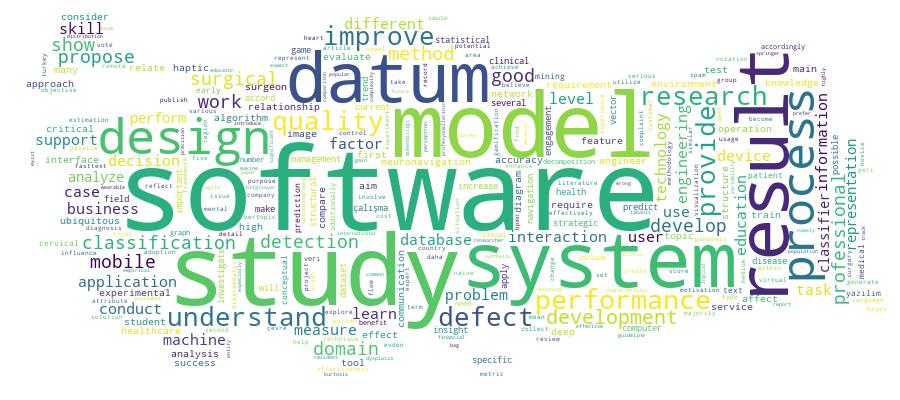
Competency Cloud
48 results
Scholarly Output Search Results
Now showing 1 - 10 of 48
Article Covid-19 Salgını Sırasında Evden Çalışma: Türk Yazılım Profesyonellerinin Deneyimleri(2021) Tokdemir, GulBu çalışma, Covid-19 salgını sırasında yazılım profesyonellerinin evden çalışma deneyimlerini araştırmaktadır. Bir anket aracılığıyla, bu tür çalışma ortamlarının özellikleriyle ilişkili olarak evden çalışmanın zorlukları incelenmiştir. Ayrıca, iki değişkenli analiz yoluyla, ev tabanlı çalışma özellikleri ile üretkenlik arasındaki ilişki araştırılmıştır. Bu çalışmanın sonuçları, yazılım profesyonellerinin pandemi döneminde daha uzun saatler çalıştıklarını ve evden çalışma ortamına adapte olmanın çoğunlukla kolay olduğunu göstermektedir. Evden çalışma ortamlarında ev işleri ve çocukların en önemli kesinti nedeni olduğu bildirilmiştir. Ayrıca yazılım profesyonelleri için öğleden sonraları ve sabahların en verimli çalışma aralıkları olduğu belirtilmiştir.Conference Object An Experimental Study on Decomposition: Process First or Structure First?(2019) Çetinkaya, Anıl; Suloğlu, Selma; Kaya, M. Çağrı; Karamanlıoğlu, Alper; Tokdemir, Gül; Doğru, Ali H.This article explores the answer to the question of considering the process or the structure dimensions earlier, in software development where decomposition is a preferred technique for top-down model construction. In this research, an experimental study was conducted to observe which software modeling practice is more convenient: process or structural modeling, for the beginning. The study was conducted in different courses that include software modeling where students work within groups to model a system with predefined requirements. The students used Business Process Modeling Notation and Component-Oriented Software Engineering Modeling Language modeling tools. Observations based on the results are analyzed and discussed. The results seem to prioritize the process dimension.Conference Object Topic-Aware Multi-Class Classification for Financial Complaints: Comparing BERTopic With Classical Machine Learning Algorithms(Institute of Electrical and Electronics Engineers Inc., 2025) Uguz, Sezer; Kumbasar, Mert; Tokdemir, GulIn today's digital world, customers can utilize a variety of communication channels, such as business emails, consumer forms, feedback platforms, and dedicated complaint websites, to communicate their complaints. This study compares the performance of the supervised Bidirectional Encoder Representations from Transformers for Topic Modeling (BERTopic) with traditional machine learning algorithms, including Random Forest (RF), Support Vector Machines (SVM), Logistic Regression (LR), Naive Bayes (NB), K-nearest Neighbors (KNN), and eXtreme Gradient Boosting (XGBoost), for multi-class classification of financial customer complaints. The dataset consists of 16,715 balanced training data and 3,808 test data across five different categories, with the financial complaint data. Experimental results demonstrate that traditional machine learning models, particularly XGBoost, SVM, and LR, achieved the highest classification performance with accuracy rates close to 88%. BERTopic showed a competitive performance with an accuracy of 82.48%. The results suggest that while BERTopic offers interpretability advantages through topic modeling techniques, traditional algorithms provide higher accuracy. This study highlights the promising potential for future financial text analysis and customer complaint classification using hybrid methods, which could lead to more detailed, topic-aware classification approaches. © 2025 IEEE.Article Citation - WoS: 19Citation - Scopus: 27Software Professionals During the Covid-19 Pandemic in Turkey: Factors Affecting Their Mental Well-Being and Work Engagement in the Home-Based Work Setting(Elsevier Science inc, 2022) Tokdemir, GulWith the COVID-19 pandemic, strict measures have been taken to slow down the spread of the virus, and consequently, software professionals have been forced to work from home. However, home based working entails many challenges, as the home environment is shared by the whole family simultaneously under pandemic conditions. The aim of this study is to explore software professionals' mental well-being and work engagement and the relationships of these variables with job strain and resource-related factors in the forced home-based work setting during the COVID-19 pandemic. An online cross-sectional survey based on primarily well-known, validated scales was conducted with software professionals in Turkey. The analysis of the results was performed through hierarchical multivariate regression. The results suggest that despite the negative effect of job strain, the resource related protective factors, namely, sleep quality, decision latitude, work-life balance, exercise predict mental well-being. Additionally, work engagement is predicted by job strain, sleep quality, and decision latitude. The results of the study will provide valuable insights to management of the software companies and professionals about the precautions that can be taken to have a better home-based working experience such as allowing greater autonomy and enhancing the quality of sleep and hence mitigating the negative effects of pandemic emergency situations on software professionals' mental well-being and work engagement. (C)& nbsp;2022 Elsevier Inc. All rights reserved.Master Thesis Makine Öğrenimi ile Siyanoakrilat Yapıştırıcı Ameliyatı Sonrası Varis Tekrarının Tahminine Yönelik Model Geliştirilmesi(2025) Ahmed, Ruaa Saad Ahmed; Tokdemir, GülVaris hastalığı, yaygın görülen bir vasküler bozukluk olup, sıklıkla siyanoakrilat yapıştırıcı tedavisi gibi minimal invaziv yöntemlerle tedavi edilmektedir. Ancak, nüks önemli bir sorun olmaya devam etmekte ve tedavi sonrası prognozun iyileştirilmesi için öngörücü modellerin geliştirilmesini zorunlu kılmaktadır. Bu çalışma, siyanoakrilat yapıştırıcı tedavisini takiben varis hastalığının nüksünü tahmin etmek amacıyla makine öğrenmesi tabanlı bir öngörü modeli oluşturmayı hedeflemektedir. Bu kapsamda, on yıllık bir dönemi kapsayan ve 430 hastaya ait ultrason raporları, kan test sonuçları ve kronik hastalık göstergelerini içeren bir veri seti bir tıp merkezinden temin edilmiştir. Veri ön işleme sürecinde eksik veriler tamamlanmış, SMOTE ve SMOTEENN yöntemleri kullanılarak dengesiz veri sınıfları dengelenmiştir. Öznitelik seçimi için RFE yöntemi uygulanmış ve karar ağaçları tabanlı önem sıralaması hesaplanmıştır. Çalışmada lojistik regresyon, karar ağaçları, destek vektör makineleri, Random Forest, XGBoost ve CatBoost gibi farklı sınıflandırıcılar eğitilmiş ve test edilmiştir. Eğitim ve test aşamaları için veriler %80 eğitim, %20 test olarak bölünmüş ve 5 katlı çapraz doğrulama yöntemi kullanılmıştır. Model performansı doğruluk (accuracy), kesinlik (precision), duyarlılık (recall), F1-skoru ve ROC-AUC gibi değerlendirme metrikleri ile ölçülmüştür. Elde edilen vii sonuçlar, CatBoost ve XGBoost yöntemlerinin diğer sınıflandırıcılara kıyasla çok daha yüksek performans gösterdiğini ortaya koymaktadır. Venöz ölçümler, kronik hastalık göstergeleri ve belirli kan test parametreleri, klinik karar sürecini iyileştirebilecek en önemli öngörücü değişkenler arasında yer almaktadır. Geliştirilen model, yüksek riskli hastaların belirlenmesine yardımcı olarak erken müdahale stratejilerinin geliştirilmesini sağlayacaktır. Ancak, bu çalışmanın en önemli sınırlamalarından biri, yalnızca tek bir kuruma ait hasta verilerine dayanmasıdır. Gelecekteki çalışmalar, modelin daha geniş ve çeşitli veri kümeleri üzerinde doğrulanmasını sağlamalı ve tahmin doğruluğunu daha da iyileştirmek için derin öğrenme teknikleri ve çok modlu veri kaynaklarının entegrasyonunu araştırmalıdır. Bu araştırma, makine öğrenmesinin vasküler hastalık yönetimindeki potansiyelini vurgulamakta ve klinik uygulamalarda veri odaklı ilerlemelerin önünü açmaktadır.Conference Object Citation - WoS: 2Citation - Scopus: 1An Experimental Study on Decomposition: Process First or Structure First(Springer international Publishing Ag, 2019) Suloglu, Selma; Kaya, M. Cagri; Karamanlioglu, Alper; Tokdemir, Gul; Dogru, Ali H.; Cetinkaya, Anil; Cagri Kaya, M.This article explores the answer to the question of considering the process or the structure dimensions earlier, in software development where decomposition is a preferred technique for top-down model construction. In this research, an experimental study was conducted to observe which software modeling practice is more convenient: process or structural modeling, for the beginning. The study was conducted in different courses that include software modeling where students work within groups to model a system with predefined requirements. The students used Business Process Modeling Notation and Component-Oriented Software Engineering Modeling Language modeling tools. Observations based on the results are analyzed and discussed. The results seem to prioritize the process dimension.Article Citation - WoS: 2The Effect of Population and Tourism Factors on Covid-19 Cases in Italy: Visual Data Analysis and Forecasting Approach(Wiley, 2022) Ozyer, Baris; Ozyer, Gulsah Tumuklu; Tokdemir, Gul; Uguz, Sezer; Yaganoglu, MeteAt the beginning of 2020, the new coronavirus disease (Covid-19), a deadly viral illness, is declared as a public health emergency situation by WHO. Consequently, it is accepted as pandemic that affected millions of people worldwide. Italy is one of the most affected countries by Covid-19 disease among the world. In this article, our main goal is to investigate the effect of intensity of Covid-19 cases based on the population size and tourism factors in certain regions of Italy by visual data analysis. The regions of Lombardia, Veneto, Campania, Emilia-Romagna, Piemonte are the top five regions covering 58.50% of the total Covid-19 cases diagnosed in Italy. It has been shown by visual data analysis that population and tourism factors play an important role in the spread of Covid-19 cases in these five regions. In addition, a prediction model was created using Bi-LSTM and ARIMA algorithms to forecast the number of Covid-19 cases occurring in these five regions in order to take early action. We can conclude that these northern regions have been affected mostly by Covid-19 and the distribution of the resident population and tourist flow factors affected the number of Covid-19 cases in Italy.Article Citation - WoS: 3Citation - Scopus: 9Two Majority Voting Classifiers Applied To Heart Disease Prediction(Mdpi, 2023) Karadeniz, Talha; Maras, Hadi Hakan; Tokdemir, Gul; Ergezer, HalitTwo novel methods for heart disease prediction, which use the kurtosis of the features and the Maxwell-Boltzmann distribution, are presented. A Majority Voting approach is applied, and two base classifiers are derived through statistical weight calculation. First, exploitation of attribute kurtosis and attribute Kolmogorov-Smirnov test (KS test) result is done by plugging the base categorizer into a Bagging Classifier. Second, fitting Maxwell random variables to the components and summating KS statistics are used for weight assignment. We have compared state-of-the-art methods to the proposed classifiers and reported the results. According to the findings, our Gaussian distribution and kurtosis-based Majority Voting Bagging Classifier (GKMVB) and Maxwell Distribution-based Majority Voting Bagging Classifier (MKMVB) outperform SVM, ANN, and Naive Bayes algorithms. In this context, which also indicates, especially when we consider that the KS test and kurtosis hack is intuitive, that the proposed routine is promising. Following the state-of-the-art, the experiments were conducted on two well-known datasets of Heart Disease Prediction, namely Statlog, and Spectf. A comparison of Optimized Precision is made to prove the effectiveness of the methods: the newly proposed methods attained 85.6 and 81.0 for Statlog and Spectf, respectively (while the state of the heart attained 83.5 and 71.6, respectively). We claim that the Majority Voting family of classifiers is still open to new developments through appropriate weight assignment. This claim is obvious, especially when its simple structure is fused with the Ensemble Methods' generalization ability and success.Article Citation - WoS: 11Citation - Scopus: 12Diagnosis of Osteoarthritic Changes, Loss of Cervical Lordosis, and Disc Space Narrowing on Cervical Radiographs With Deep Learning Methods(Turkish Joint Diseases Foundation, 2022) Tokdemir, Gul; Ureten, Kemal; Atalar, Ebru; Duran, Semra; Maras, Hakan; Maras, YukselObjectives: In this study, we aimed to differentiate normal cervical graphs and graphs of diseases that cause mechanical neck pain by using deep convolutional neural networks (DCNN) technology. Materials and methods: In this retrospective study, the convolutional neural networks were used and transfer learning method was applied with the pre-trained VGG-16, VGG-19, Resnet-101, and DenseNet-201 networks. Our data set consisted of 161 normal lateral cervical radiographs and 170 lateral cervical radiographs with osteoarthritis and cervical degenerative disc disease. Results: We compared the performances of the classification models in terms of performance metrics such as accuracy,Conference Object A Mobile Application Flow Representation for Mutual Understanding of It and Healthcare Professionals(2013) Bilgen, S.; Tokdemir, G.; Cagiltay, N.E.; Yildiz, E.; Özcebe, E.; Erturan, Y.N.Ever since mobile applications were developed and became popular, they have started to take part in almost every field of our lives. Healthcare is one of the most popular fields that mobile applications have become a part of. However, development of mobile healthcare applications requires an inter-disciplinary work on which people from different domains should communicate. To do so efficiently, mobile application instructions should be provided as clearly as possible so that mutual understanding can be achieved. This study, aims to provide a methodology to provide the common grounds for healthcare and IT specialists so that to improve the satisfaction level of all the stakeholders of the system from the provided IT services and the end-user interfaces. In other words, by providing a better communication medium for the stakeholders during the design phase, we believe that software development process will be improved, so do their satisfaction from the developed system. © 2013 Springer-Verlag.
