
Tunçağıl, Gülce
Loading...
Profile URL
Name Variants
Gümüşlü Tunçağıl, Gülce & Tunçağıl, Gülce Gümüşlü
Job Title
Dr. Öğr. Üyesi
Email Address
ggumuslu@cankaya.edu.tr
Main Affiliation
Hukuk
Status
Current Staff
Website
ORCID ID
Scopus Author ID
Turkish CoHE Profile ID
Google Scholar ID
WoS Researcher ID
Files
Sustainable Development Goals
 1
1NO POVERTY
1
Research Products
 2
2ZERO HUNGER
0
Research Products
 3
3GOOD HEALTH AND WELL-BEING
0
Research Products
 4
4QUALITY EDUCATION
2
Research Products
 5
5GENDER EQUALITY
0
Research Products
 6
6CLEAN WATER AND SANITATION
0
Research Products
 7
7AFFORDABLE AND CLEAN ENERGY
0
Research Products
 8
8DECENT WORK AND ECONOMIC GROWTH
2
Research Products
 9
9INDUSTRY, INNOVATION AND INFRASTRUCTURE
0
Research Products
 10
10REDUCED INEQUALITIES
1
Research Products
 11
11SUSTAINABLE CITIES AND COMMUNITIES
0
Research Products
 12
12RESPONSIBLE CONSUMPTION AND PRODUCTION
0
Research Products
 13
13CLIMATE ACTION
0
Research Products
 14
14LIFE BELOW WATER
0
Research Products
 15
15LIFE ON LAND
0
Research Products
 16
16PEACE, JUSTICE AND STRONG INSTITUTIONS
3
Research Products
 17
17PARTNERSHIPS FOR THE GOALS
1
Research Products

This researcher does not have a Scopus ID.

This researcher does not have a WoS ID.
No records found in other affiliations.

Scholarly Output
17
Articles
11
Views / Downloads
1988/3724
Supervised MSc Theses
1
Supervised PhD Theses
0
WoS Citation Count
0
Scopus Citation Count
0
Patents
0
Projects
0
WoS Citations per Publication
0.00
Scopus Citations per Publication
0.00
Open Access Source
12
Supervised Theses
1
| Journal | Count |
|---|---|
| Çankaya Üniversitesi Hukuk Fakültesi Dergisi | 3 |
| Hacettepe Hukuk Fakültesi Dergisi | 2 |
| Bahçeşehir Üniversitesi Hukuk Fakültesi Dergisi | 1 |
| Çankaya Üniversitesi 10. Yılında MÖHUK Sempozyumu | 1 |
| II. Uluslararası Kadın ve Hukuk Sempozyumu | 1 |
Current Page: 1 / 3
Scopus Quartile Distribution
Quartile distribution chart data is not available
Competency Cloud
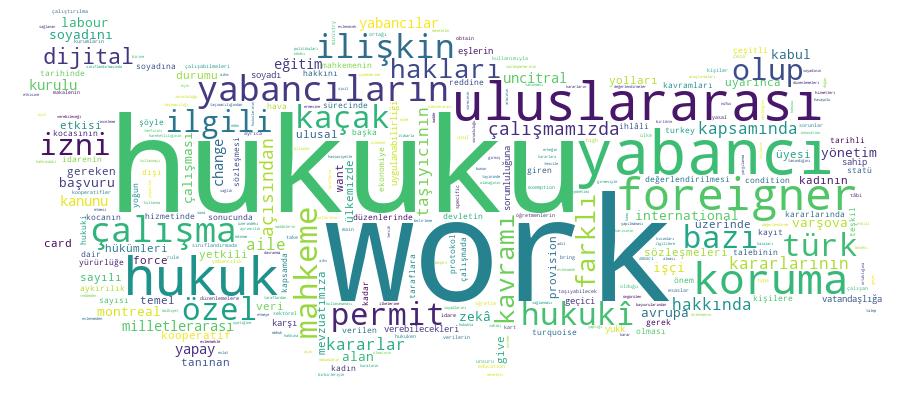
17 results
Scholarly Output Search Results
Now showing 1 - 10 of 17
Article The Changes and Innovations of the New International Labour Force Law about the Working of Foreigners in Turkey(2017) Gümüşlü Tunçağıl, GülceInternational Labour Force Law entries into force on 13 August 2016 and changed the previous act named the Law on Work Permits of Foreigners. This law’s aims are to determine and implement the policies on international labour; regulate the principles and procedures on work permit and work permit exemptions given to the foreigners. Foreigners can only work in some professions which are not prohibited. The main rule is that foreigners who want to work at Turkey shall obtain a work permit from the Ministry of Labour and Social Security. But this main rule has an exception that the relevant foreigners can take the work permit exemptions to work. Some applications can be submitted through the authorised agent (this is the new provision brought by the new law). Besides, foreigners working at some services that require vocational qualifications shall obtain the pre-authorisation. For instance, if a foreigner wants to work as an instructor at university, it should be necessary to take this from the Council of Higher Education or if a foreigner wants to work as a teacher at private high school, Ministry of National Education gives this authorisation. This is one of the changes brought with the new law. The other changes are about the types of work permit. The conditions, entitled persons, the terms of durations of the four types of work permit are changed. This Law contains the specific provisions about working of the foreign students and the foreigners being within the scope of international protection. And also this law has specific provisions for the foreigners working in the free zones. The last change that should be mentioned is the implementation of Turquoise Card; the foreigners given this card have also same rights as Turkish citizens. The aim of this is to draw qualified manpower to Turkey.Article Türk Hukuku Uyarınca Yabancılık Unsuru Taşıyan Birlikte Var Olma Sözleşmesinden Doğan Borç İlişkilerine Uygulanacak Hukukun Tayini(2024) Tunçağıl, Gülce Gümüşlü; Esendal, NihanIn general, the fact that trademarks containing the same or similar signs or names can exist in the same market is primarily among the reasons for rejection in trademark registration. However, the safe way for two competing trademarks to continue their commercial life in the same market is for them to conclude a coexistence agreement. A coexistence agreement is a contract in which the rights of two trademarks owners on the same or similar trademarks are mutually determined and recognized, and in which they can exist together in a certain market or markets. The parties can peacefully coexist in different markets by agreeing on geographical limitations for certain goods and services, without violating each other’s area. For example, a fabric brand registered in Turkey and a bag brand registered in France with the same name conclude this contract with each other. In this example, the foreign element is the registration of the trademarks in different countries. In our study, it is aimed to determine the law to be applied in case the disputes arising from the coexistence agreement containing the foreign element are brought before the competent international Turkish court.Article Decisions of the European Court of Human Rights on Certain Issues Regarding Nationality(Istanbul Univ, 2021) Tuncagil, Gulce GumusluSovereign states shall decide who will acquire or maintain their nationality. Thus, the issue on acquisition and loss of nationality of a State falls within the exclusive competence of this State. In other words, the issue of nationality, in principle, is a reserved domain of states. States shall determine their conditions about acquiring and losing their nationality in their internal laws. However, fulfilment of the stipulated conditions in internal law does not mean that person has an absolute right for acquisition of nationality because states have discretionary power. This discretionary power should be used by States in accordance with international law. The terms of international law consists of international conventions, customary international law and the principles of law generally recognized. The main international document that adopted the right to a nationality as a human right is the United Nations Declaration of Human Rights (1948). Besides this, some of the conventions relating to nationality issues are from 12 April, The Hague Convention on Certain Questions relating to the Conflict of Nationality Laws (1930) and the European Convention on Nationality (6 November, 1997). In our paper, firstly, the articles on the right to nationality and loss and deprivation of nationality in these international legal documents will be examined briefly. After that, in our study, the approaches of the European Court of Human Rights to the decisions about loss of nationality against a person's will and the denial of naturalization requests are going to be examined. Notwithstanding the European Convention on Human Rights (ECHR) does not contain any provision on the right to a nationality.in the past, the European Commission of Human Rights rejected cases concerning loss or deprivation of citizenship or denial of naturalization request on the grounds of incompatible ratione materiae. The ECrtHR changed its judicial opinion about this issue.Conference Object Hava Aracının Kullanım Hakkını Elde Etmeye Dair Özel Hukuk Sözleşmelerinin Tescile Etkisi(2019) Sirmen, Sedat; Gümüşlü Tunçağıl, GülceArticle Evlenmede Eşlerin Farklı Vatandaşlığa Sahip Olmasının Aile Soyadı Üzerindeki Etkisine İlişkin Bazı Aihm Kararlarının Değerlendirilmesi(2024) Tunçağıl, Gülce GümüşlüEvlenmenin kadın veya erkeğin soyadına etkisi üzerine her devletin hukuki düzenlemeleri farklı olabilmektedir. Bazı ulusal hukuk düzenlerinde, kadının kocasının soyadını alması kuralının kabul edildiğini; bazı hukuk düzenlerinde ise birbirleriyle evlenecek kişilere aile soyadlarını belirleme (örneğin ilgili taraflarca aile soyadı olarak kadının soyadının kullanılması) imkânı tanındığını görmekteyiz. Hem kadının kocasının soyadını kullanma zorunluluğu hem kocanın evlenmekle karısının soyadını kullanmayı tercih etmesi ve bunun üzerine kocanın evlenmeden önceki soyadını kullanamaması hususlarının taraflara eşit davranma ve taraflardan birine ayrımcılık yapılmaması ilkelerine aykırılık teşkil edip etmeyeceği AİHM’in önüne gelmiştir. Çalışmamızda eşlerin farklı vatandaşlığa sahip olmalarının aile soyadına etkisi üzerine verilen ulusal mahkeme kararlarının ve bu mahkeme kararlarının dayandığı kanuni düzenlemelerin Avrupa İnsan Hakları Mahkemesi (AİHM) tarafından Avrupa İnsan Hakları Sözleşmesi’nde (AİHS) yer alan bazı haklara aykırılık oluşturup oluşturulmadığının değerlendirildiği kararlar ele alınacaktır.Book Ülkelerarası Evlat Edinme ve İnsan Hakları(2019) Gümüşlü Tunçağıl, GülceConference Object Aile İkamet İzni ve Kadın Eşin Durumu(Türkiye Barolar Birliği Yayınları, 2019) Gümüşlü Tunçağıl, GülceArticle Dijital Ekonomiye İlişkin Hukukî Meseleler Hakkındaki Uncitral Sınıflandırmasında Yer Alan Yapay Zekâ ve Veri Kısımları Üzerine Değerlendirmeler(2024) Tunçağıl, Gülce GümüşlüUNCITRAL, 2023 yılında dijital ekonomiyle ilgili hukukî sorunlar üzerine bir sınıflandırma çalışması yayınlamıştır. Bu sınıflandırmada yapay zekâ, veri, dijital değerler, çevrim içi platformlar ve blockchain dâhil dağıtılmış defter sistemleri terimlerinin ana unsurları tanımlanmış; ilgili teknolojilerin ve uygulamaların dağıtımı ve kullanımıyla ilgili aktörler, yasal ilişkiler ve yasal sorunlar ile dijital ortamda mevcut UNCITRAL metinlerinin uygulanabilirliği değerlendirilmiştir. Çalışmamızda dijital ekonomi kavramı, iktisadî veya sosyo-ekonomik boyutu açısından ele alınmayacak olup, hukukî boyutuyla ele alınacaktır. Bu boyut içinde ilgili kavram ele alınırken, esas olarak UNCITRAL Sınıflandırması ve ilgili olduğu ölçüde yer yer başka uluslararası kurumların çalışmaları değerlendirilecektir. Bu makalenin amacı, UNCITRAL’in sınıflandırmada yer verdiği dijital ekonomiye ilişkin tüm alt başlıkları değil, yapay zekâ ve veri kavramları ile yapay zekâ ve verilerin kullanımı ile işleme sürecinde yer alan taraflara, bunların kullanımında ortaya çıkan ve yabancılık unsuru taşıyabilecek hukukî ilişkilere dair bakış açısı sunmaktır. Bu doğrultuda UNCITRAL Sınıflandırmasının yanında bazı uluslararası kurumların yapmış olduğu çalışmalar da göz önünde bulundurulacaktır. Ayrıca yapay zekânın ve verilerin oluşturulmasıyla ve kullanımıyla irtibatlı tüm hukuk dallarına (örneğin ceza hukuku, idare hukuku gibi) değinilmeyecek olup, yabancılık unsuru taşıyabilecek özel hukuk ilişkileri açısından sınırlandırma yapılmıştır.Article Yabancıların Türkiye’de Eğitim Hizmetinde Çalışması(2019) Tunçağıl, Gülce GümüşlüYabancıların Türkiye’de eğitim hizmetinde çalışabilmeleri, başta 13 Ağustos 2016 tarihinde yürürlüğe giren Uluslararası İşgücü Kanunu (UİK) olmak üzere, diğer ilgili sektörel hukukî düzenlemelere tâbi tutulmuştur. UİK, 2003 tarihli 4817 sayılı Yabancıların Çalışma İzinleri Hakkında Kanunu (YÇİHK) yürürlükten kaldırmıştır. Çalışmamızda yabancı öğretim elemanlarının ve yabancı öğretmenlerin Türkiye’de çalışabilmeleri için kabul edilen usul ve esaslar, YÇİHK ile UİK karşılaştırılarak tespit edilmiştir. Şöyle ki, çalışma izni vermede yetkili makam veya ön izin alınma usulü gibi konularda UİK ile değişikliğe gidilmiştir. Ayrıca, yabancı öğretim elemanları ile yabancı öğretmenlerin Türkiye’de çalışabilmelerine ilişkin usul ve esaslar, tâbi oldukları UİK ve sektörel düzenlemelere göre de farklılık arz etmektedir.Article YUKK Kapsamında İdarî Makamların Uluslararası Koruma ve Geçici Koruma Hakkında Verebilecekleri Kararlar Ve Bu Kararlara Karşı Başvuru Yolları(2025) Tanrıbilir, Feriha Bilge; Tunçağıl, Gülce Gümüşlü4.4.2013 tarihli ve 6458 sayılı Yabancılar ve Uluslararası Koruma Kanunu (YUKK)’nun yürürlüğe girmesiyle birlikte “uluslararası koruma” ve “geçici koruma” kavramları da mevzuatımıza girmiş oldu. Ülkemizde yaşanılan yoğun nüfus hareketliliğinin sonucunda koruma talep eden yabancıların sayısı artmaktadır. Gerek uluslararası mahkeme kararlarında gerek ulusal mahkeme kararlarında uluslararası koruma başvurularından uluslararası koruma sürecinin sona ermesine kadar geçen evrede koruma sağlanan kişilere ev sahibi devletin karar ve işlemlerine karşı etkili başvuru yollarının açık olması ve adil yargılanma olanağının sağlanması üzerinde hassasiyetle durulmaktadır. Bu itibarla mevzuatımıza göre uluslararası koruma sürecinde idarenin verebileceği kararlar ile yaptığı işlemler hakkında ilgililere tanınan başvuru yolları önem taşımaktadır. Bu önem uyarınca çalışmamızda YUKK kapsamında idarenin uluslararası koruma ve geçici koruma hakkında verebilecekleri kararlar ve öngörülen başvuru yolları inceleme konusu yapılmıştır.