
Köse, Aslı
Loading...
Profile URL
Name Variants
Göncü Köse, Aslı & Köse, Asli Göncü & Göncü-köse, Aslı & Göncü, Aslı & Goncu Kose, Asli & Kose, Asli G. K. & Kose, Asli Goncu & Göncü-Köse, Aslı & Goncu-Kose, Asli
Job Title
Prof. Dr.
Email Address
agoncu@cankaya.edu.tr
Main Affiliation
02.04. Psikoloji
Psikoloji
02. Fen-Edebiyat Fakültesi
01. Çankaya Üniversitesi
Psikoloji
02. Fen-Edebiyat Fakültesi
01. Çankaya Üniversitesi
Status
Current Staff
Website
ORCID ID
Scopus Author ID
Turkish CoHE Profile ID
Google Scholar ID
WoS Researcher ID
Files
Sustainable Development Goals
 1
1NO POVERTY
0
Research Products
 2
2ZERO HUNGER
0
Research Products
 3
3GOOD HEALTH AND WELL-BEING
0
Research Products
 4
4QUALITY EDUCATION
1
Research Products
 5
5GENDER EQUALITY
1
Research Products
 6
6CLEAN WATER AND SANITATION
0
Research Products
 7
7AFFORDABLE AND CLEAN ENERGY
0
Research Products
 8
8DECENT WORK AND ECONOMIC GROWTH
0
Research Products
 9
9INDUSTRY, INNOVATION AND INFRASTRUCTURE
1
Research Products
 10
10REDUCED INEQUALITIES
0
Research Products
 11
11SUSTAINABLE CITIES AND COMMUNITIES
0
Research Products
 12
12RESPONSIBLE CONSUMPTION AND PRODUCTION
0
Research Products
 13
13CLIMATE ACTION
0
Research Products
 14
14LIFE BELOW WATER
0
Research Products
 15
15LIFE ON LAND
0
Research Products
 16
16PEACE, JUSTICE AND STRONG INSTITUTIONS
5
Research Products
 17
17PARTNERSHIPS FOR THE GOALS
0
Research Products

Documents
14
Citations
241
h-index
8

Documents
29
Citations
207
No records found in other affiliations.

Scholarly Output
37
Articles
22
Views / Downloads
3522/3635
Supervised MSc Theses
0
Supervised PhD Theses
0
WoS Citation Count
151
Scopus Citation Count
175
Patents
0
Projects
0
WoS Citations per Publication
4.08
Scopus Citations per Publication
4.73
Open Access Source
10
Supervised Theses
0
| Journal | Count |
|---|---|
| Current Psychology | 4 |
| Türk Psikoloji Dergisi | 2 |
| Türk Psikoloji Yazıları | 2 |
| Dusunen Adam: The Journal of Psychiatry and Neurological Sciences | 1 |
| European Management Journal | 1 |
Current Page: 1 / 5
Scopus Quartile Distribution
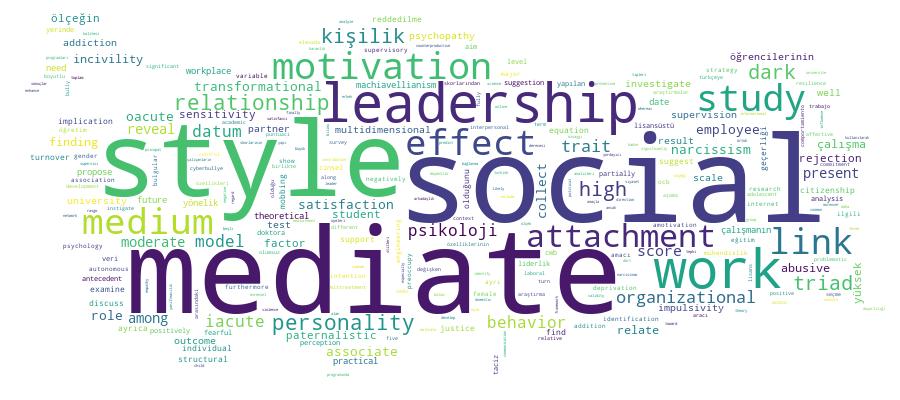
Competency Cloud
37 results
Scholarly Output Search Results
Now showing 1 - 10 of 37
Article Citation - WoS: 3Citation - Scopus: 6Relationships of Domestic Violence With Bullying, Silencing-The Resilience, and Self-Efficacy: Moderating Roles of Stress-Coping Strategies(Springer, 2023) Karakus, Cansu; Goncu-Kose, AsliThe present study aimed to investigate the relationships of Child Exposure to Domestic Violence (CEDV) with bullying, silencing-the-self (STS) behaviors, resilience, and self-efficacy. In addition, moderating effects of stress-coping strategies in the relationships of CEDV with the outcome variables were examined. Data were collected from 569 adolescents aged between 14 and 17. The findings showed that CEDV was positively related to bullying and STS and it was negatively associated with resilience, overall self-efficacy, academic and emotional self-efficacy. Optimistic style and seeking social support moderated the relationship between CEDV and resilience. Also, the self-confident style, seeking social support, and optimistic style moderated the associations between CEDV and self-efficacy. Findings are discussed in terms of theoretical and practical contributions as well as directions for future research.Conference Object Effects of the Dark Triad on Ocbs and Cwbs: Mediating Roles of Incivility Towards Different Targets(John Wiley & Sons Ltd, 2023) Civit, Selinay; Kose, Asli GoncuArticle Bölüm Seçimine Göre Karanlık Üçlü ve Büyük Beşli Kişilik Özelliklerinin İncelenmesi(2020) Ekren, Buse; Göncü-köse, AslıKaranlık Üçlü (KÜ) kişilik özellikleri, birbirleriyle ilişkili kişilik özelliklerinden Makyavelizm, narsisizm ve psikopatiyi kapsamaktadır ve araştırmalar KÜ kişilik özelliklerinde yüksek skor alan bireylerin bu kişilik özelliklerine uygun olan ödüllere/çıktılara ulaşmalarını sağlayacak meslekler seçme eğiliminde olduklarını göstermektedir. Bu bulgular ve önermeyle uyumlu olarak, KÜ kişilik özelliklerinin üniversite öğrencilerinin bölüm tercihlerini etkileyeceği önerilmektedir. Önceki araştırmalar Büyük Beşli (BB) kişilik özelliklerinin de eğitim tercihlerini etkilediğini göstermektedir. Bu çalışmanın temel amacı, kariyer seçimlerinde bu kişilik özelliklerine bağlı olarak yapılan öz-seçimlerin etkili olup olmadığını araştırmaktır. Veri, Türkiye’de yedi farklı alanda (psikoloji, hukuk, iktisat/işletme, mühendislik, siyaset bilimi, tıp ve eğitim bilimleri) henüz eğitime başlamış 659 (359 kadın) üniversite öğrencisinden toplanmıştır. Grupların değişkenlerdeki ortalamaları KÜ ve BB kişilik özelliklerinin bağımlı değişken olduğu 2 (cinsiyet)×7 (bölüm) varyans analizi yöntemiyle karşılaştırılmıştır. Sonuçlar, iktisat/işletme ve mühendislik öğrencilerinin Makyavelizm skorlarının psikoloji öğrencilerinin skorlarından daha yüksek olduğunu; ayrıca, mühendislik, iktisat/işletme ve siyaset bilimi öğrencilerinin psikopati skorlarının psikoloji öğrencilerinin skorlarından yüksek olduğunu göstermiştir. Psikoloji öğrencilerinin nevrotizm skorlarının, mühendislik, iktisat/işletme ve siyaset bilimi öğrencilerinin skorlarından daha yüksek olduğu bulunmuştur. Hukuk ve eğitim fakültesi öğrencilerinin nevrotiklik skorları da mühendislik ve iktisat/işletme öğrencilerinin skorlarından daha yüksektir. Son olarak, sonuçlar deneyime açıklık ve dürüstlük kişilik özellikleri için bölüm ve cinsiyetin etkileşim etkisinin olduğunu göstermiştir. Bulgular, kuramsal ve uygulamaya yönelik çıkarımlar ile gelecekteki araştırmalar için öneriler bağlamında tartışılmıştır.Book Part Fifty Shades of Darth Vaders in Organizations: An Overview of Destructive Leadership(2021) Ok, A. Başak; Göncü Köse, Aslı; Toker Gültaş, YoncaArticle Citation - WoS: 7Citation - Scopus: 8Mediating Processes in the Relationships of Abusive Supervision With Instigated Incivility, Cwbs, Ocbs, and Multidimensional Work Motivation(Springer, 2023) Onaran, Sami Okan; Goncu-Kose, AsliWe examined how abusive supervision (AS) affected instigated workplace incivility, counterproductive work behaviors (CWBs), organizational citizenship behaviors (OCBs), and multidimensional work motivations (MWMs), in line with the Job Demands-Resources Model and Social Exchange Theory. We suggested that employees' identification with their workgroup moderates the link between AS and instigated incivility toward coworkers and that organizational identification partially mediates the association of AS with CWBs and OCBs. Furthermore, we hypothesized positive correlations between AS and external regulation as well as amotivation, consistent with the Self-Determination Theory. Finally, we predicted that job-related affective well-being would fully mediate the link between AS and autonomous work motivations while only partially mediating the link between AS and amotivation. Online surveys were used to collect data from 519 white-collar workers. The data revealed that AS was linked to a higher level of incivility toward coworkers. Furthermore, it was linked to both CWBs and OCBs, both directly and indirectly through organizational identification. Organizational identification mediated the associations between AS and MWMs as well. Finally, job-related affective well-being mediated the links of AS with external regulation, amotivation, and autonomous work motivations. Theoretical and practical implications of the findings are discussed as well as suggestions for future research.Book Part Beyond the Bully: Exploring the Surprising Performance-Related Outcomes of Abusive Supervision(Nova Science Publishers, Inc., 2024) Tokat, T.; Çivit, S.; Göncü-Köse, A.The common definitions of leadership include positive qualities such as vision, ethics, responsibility, respect, and trustworthiness. However, recent studies revealed an increase in unethical behaviors performed by organizational leaders, prompting academics to investigate the harmful types and impacts of leadership. One area of focus has been abusive supervision, which was found to have both positive and negative effects on organizational outcomes including subordinate and supervisor performance. While the harmful effects on subordinates have been a major focus in studies on abusive supervision, some scholars suggested that supervisors’ abusive behaviors may yield temporary functional results and be used as a strategy for leaders to improve work performance. To illustrate, researchers demonstrated the positive association between abusive supervision and work performance when subordinates attribute abusive behaviors to an effort to increase motivation rather than an intention to harm the employee (Li et al., 2022; Liao et al., 2021; Tepper et al., 2015). However, there is limited knowledge about these destructive behaviors’ impact on supervisors. One of these few studies showed that engaging in abusive supervisory behavior was positively correlated with supervisors’ recovery levels. Moreover, abusive supervisory behavior indirectly contributed to increased work engagement through its positive effect on the recovery level (Qin et al., 2018). The present chapter provides a comprehensive overview of the effects of abusive supervision on work performance, outlining both the negative and positive work-, employee-, and supervisor-related outcomes. Additionally, this chapter unfolds potential directions for future research regarding the relationships of abusive supervision with in-role and extra-role performance. Finally, we present practical recommendations for leaders and organizations to minimize the detrimental effects of abusive supervision. The literature findings will be presented in conjunction with various theoretical explanations, concepts, and propositions. © 2024 by Nova Science Publishers, Inc.Conference Object Difficulties of Finding Funding Opportunities and Strategies for Using Available Funding Options(John Wiley & Sons Ltd, 2024) Kose, Asli GoncuArticle An Investigation of the Differences in the Dark Triad and the Big Five Personality Traits Across Majors(2019) Göncü Köse, Aslı; Ekren, BuseThe Dark Triad (DT) personality traits include interrelated personality constructs which are Machiavellianism, narcissism, and psychopathy, and research has shown that individuals who are high on the DT personality traits tend to choose occupations that provide outcomes compatible with these traits. Supporting this reasoning, the DT is suggested to have impacts on major choices of university students. Previous research has also shown that the Big Five (BF) personality traits influenced educational choices. The main aim of the current study was to examine whether or not self-selection based on these personality characteristics predicted career choices. Data was collected from 659 (359 female) newly enrolled students in seven academic majors (i.e., psychology, law, economics/business, engineering, political science, medicine, and education) in Turkey. Mean scores of the groups were compared using two (gender) by seven (major) analysis of variance with the DT and BF personality traits as the dependent variables. The results revealed that Machiavellianism scores of economics/business and engineering students were significantly higher than those of psychology students. In addition, psychopathy scores of engineering, economics/business, and political science students were higher than those of psychology students. Neuroticism scores of students from psychology departments were higher than those of engineering, economics/business, and political science students. Law and education students’ neuroticism scores were also higher than those of students from engineering and economics/business departments. Finally, interaction effects of major and gender were significant for openness to experience and conscientiousness. The findings are discussed regarding theoretical and practical implications along with suggestions for future research.Conference Object Do Religiosity & Locus of Control Moderate Attachment Styles and Belief in Love Myths(John Wiley & Sons Ltd, 2024) Aygen, Ecem; Gunay, Beyza; Kose, Asli GoncuConference Object Mediating Roles of Locus of Control and Impression Management in the Links of Big Five With Altruism(John Wiley & Sons Ltd, 2023) Karakus, Cansu; Kose, Asli Goncu