
Güneş, Oğuz
Loading...
Profile URL
Name Variants
Güneş, Oğuz & Gunes, Oguz & Güneş, O. & Güneş, Oğuz & Güneş, Oğuz & Güneş, Oğuz
Job Title
Yrd. Doç. Dr.
Email Address
ogunes@cankaya.edu.tr
Main Affiliation
06.05. İnşaat Mühendisliği
06. Mühendislik Fakültesi
01. Çankaya Üniversitesi
06.05. İnşaat Mühendisliği
İnşaat Mühendisliği
06. Mühendislik Fakültesi
01. Çankaya Üniversitesi
06. Mühendislik Fakültesi
01. Çankaya Üniversitesi
06.05. İnşaat Mühendisliği
İnşaat Mühendisliği
06. Mühendislik Fakültesi
01. Çankaya Üniversitesi
Status
Former Staff
Website
ORCID ID
Scopus Author ID
Turkish CoHE Profile ID
Google Scholar ID
WoS Researcher ID
Sustainable Development Goals
 1
1NO POVERTY
0
Research Products
 2
2ZERO HUNGER
0
Research Products
 3
3GOOD HEALTH AND WELL-BEING
0
Research Products
 4
4QUALITY EDUCATION
1
Research Products
 5
5GENDER EQUALITY
0
Research Products
 6
6CLEAN WATER AND SANITATION
0
Research Products
 7
7AFFORDABLE AND CLEAN ENERGY
0
Research Products
 8
8DECENT WORK AND ECONOMIC GROWTH
0
Research Products
 9
9INDUSTRY, INNOVATION AND INFRASTRUCTURE
0
Research Products
 10
10REDUCED INEQUALITIES
0
Research Products
 11
11SUSTAINABLE CITIES AND COMMUNITIES
3
Research Products
 12
12RESPONSIBLE CONSUMPTION AND PRODUCTION
0
Research Products
 13
13CLIMATE ACTION
0
Research Products
 14
14LIFE BELOW WATER
0
Research Products
 15
15LIFE ON LAND
0
Research Products
 16
16PEACE, JUSTICE AND STRONG INSTITUTIONS
0
Research Products
 17
17PARTNERSHIPS FOR THE GOALS
0
Research Products

This researcher does not have a Scopus ID.

This researcher does not have a WoS ID.
No records found in other affiliations.

Scholarly Output
7
Articles
6
Views / Downloads
284/23
Supervised MSc Theses
0
Supervised PhD Theses
0
WoS Citation Count
64
Scopus Citation Count
95
Patents
0
Projects
0
WoS Citations per Publication
9.14
Scopus Citations per Publication
13.57
Open Access Source
1
Supervised Theses
0
| Journal | Count |
|---|---|
| RILEM Bookseries | 2 |
| 8th International Conference on Structural Analysis of Historical Constructions (SAHC) -- OCT 15-17, 2012 -- Wroclaw, POLAND | 1 |
| Advances in Materials Science and Engineering | 1 |
| Construction and Building Materials | 1 |
| International Journal of Physical Sciences | 1 |
Current Page: 1 / 2
Scopus Quartile Distribution
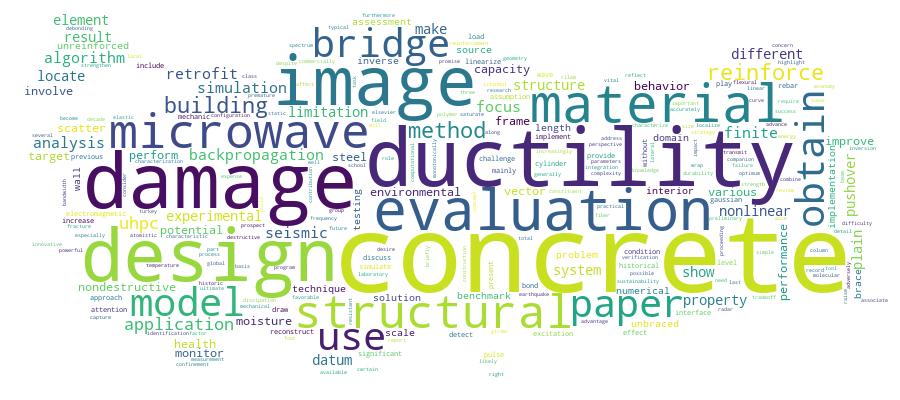
Competency Cloud
7 results
Scholarly Output Search Results
Now showing 1 - 7 of 7
Conference Object Performance-Based Seismic Evaluation and Retrofitting of Historic Unreinforced Concrete Wall Buildings With Interior Steel Frames(Dolnoslaskie Wydawnictwo Edukacyjne-dwe, 2012) Gunes, Oguz; Güneş, Oğuz; Gunes, Burcu; Sozenoglu, Ismet; İnşaat MühendisliğiPerformance-based seismic evaluation of historical constructions is a challenge due to the difficulty of their structural analysis that accurately captures their nonlinear behavior. This paper focuses on the use of 3-D nonlinear finite element method for static pushover analysis of unreinforced concrete (URC) wall buildings with interior steel frames for seismic evaluation and retrofit design. Three such historical school buildings with different levels of structural complexity were modeled in detail using advanced finite element programs to obtain their linear and nonlinear behavior under monotonically increasing lateral loads. The capacity curves obtained from pushover analyses were used for performance evaluation using the Capacity Spectrum Method. Retrofit design verification for one of the buildings was performed using the same approach. The results show that despite its involved modeling process and computational expense, pushover analysis of buildings with URC/URM elements using 3-D nonlinear finite element method can become a powerful practical tool for improved seismic performance evaluation and retrofit design.Article Simulation-based microwave imaging of plain and reinforced concrete for nondestructive evaluation(2012) Güneş, Oğuz; Büyüköztürk, OralThe focus of this paper is the implementation of a backpropagation algorithm as a potential solution for the inverse source problem for microwave imaging of plain and reinforced concrete targets. The data used in imaging was obtained from numerical simulation of far-field microwave scattering by concrete targets using typical frequency bandwidth of commercially available radar systems. A finite difference-time domain (FD-TD) technique was used for the simulations. Electromagnetic (EM) properties of concrete for various moisture conditions were obtained from a previous study. A total of four simulations were performed using a Gaussian pulse wave excitation for dry and moisture saturated concrete cylinders with and without a rebar at the center. The reflected and transmitted fields were recorded along two measurement lines. Images reconstructed using the backpropagation algorithm showed the potential of the method for concrete non destructive testing (NDT) while drawing attention to its limitations mainly due to the linearizing assumptions made in the algorithm's formulation.Article Structural health monitoring and damage assessment Part II: Application of the damage locating vector (DLV) method to the ASCE benchmark structure experimental data(2012) Gunes, Burcu; Gunes, OguzThis paper builds on the review of structural health monitoring (SHM) and damage assessment approaches provided in a companion paper by presenting an application of the damage locating vector (DLV) approach to the experimental (Phase II) data obtained from the experimental benchmark structure of the IASC-ASCE task group on SHM, which is a laboratory (scaled) size steel frame. Different damage conditions were simulated in the frame for braced and unbraced configurations, and the DLV technique was used to detect and localize damage. The damage identification results were presented and the successes and limitations of the DLV method in detecting and locating the simulated damages were discussed.Article Citation - Scopus: 2Microwave Imaging of Plain and Reinforced Concrete for Ndt Using Backpropagation Algorithm(2012) Güneş, O.; Büyüköztürk, O.The focus of this paper is implementation of backpropagation algorithm as a solution for the inverse source problem for microwave imaging of plain and reinforced concrete targets for nondestructive evaluation (NDE). The data used in imaging was obtained from numerical simulation of microwave scattering by concrete targets using a finite difference-time domain (FD-TD) technique. Electromagnetic (EM) properties of concrete were obtained from previous experimental research. Simulations were performed using a Gaussian pulse wave excitation for dry concrete cylinders with and without a rebar at the center. Images reconstructed using the backpropagation algorithm showed the potential of the method for concrete NDE while drawing attention to its limitations mainly due to the linearizing assumptions in the algorithm's formulation. © RILEM 2013.Article Citation - WoS: 15Citation - Scopus: 19Use of Uhpc in Bridge Structures: Material Modeling and Design(Hindawi Ltd, 2012) Yesilmen, Seda; Gunes, Burcu; Ulm, Franz-Joseph; Gunes, OguzUltra-high-performance concrete (UHPC) is a promising new class of concrete material that is likely to make a significant contribution to addressing the challenges associated with the load capacity, durability, sustainability, economy, and environmental impact of concrete bridge infrastructures. This paper focuses on the material modeling of UHPC and design of bridge girders made of UHPC. A two-phase model used for modeling the behavior of UHPC was briefly discussed, and the model was implemented in a preliminary design case study. Based on the implemented design and the reported use of UHPC in bridge applications, the advantages, limitations, and future prospects of UHPC bridges were discussed, highlighting the need for innovative research and design to make optimum use of the favorable properties of the material in bridge structures.Article Citation - WoS: 49Citation - Scopus: 64Ductility of Frp-Concrete Systems: Investigations at Different Length Scales(Elsevier Sci Ltd, 2013) Lau, Denvid; Tuakta, Chakrapan; Bueyuekoeztuerk, Oral; Gunes, Oguz; Büyüköztürk, OralFiber reinforced polymer (FRP) materials have been increasingly used in the last two decades to improve various structural characteristics of reinforced concrete (RC) bridges, buildings and other structures. Ductility of the resulting FRP-concrete system plays an important role in structural performance, especially in certain applications such as earthquake resistant design of structures, where ductility and energy dissipation play a vital role. Wrapping RC columns with FRP has been shown to generally result in significant increase in ductility due to the confinement of concrete by the FRP. Other applications such as flexural strengthening of beams involve tradeoffs between ductility and the desired load capacity. Furthermore, environmental factors may adversely affect the FRP-concrete bond raising concerns about the ductility of the system due to possible premature failure modes. Characterization of these effects requires the use of more involved mechanics concepts other than the simple elastic or ultimate strength analyses. This paper focuses on characterizing ductility of the FRP-concrete systems at different length scales using a combined experimental/computational mechanics approach. Effects of several parameters on ductility, including constituent material properties and their interfaces, FRP reinforcement geometry at the macro- and meso-level, and atomistic structure at the molecular level are discussed. Integration of this knowledge will provide the basis for improved design strategies considering the ductility of FRP-concrete systems from a global as well as local perspective including interface bond behavior under various mechanical and environmental conditions. (C) 2012 Elsevier Ltd. All rights reserved.Article Citation - Scopus: 10Nondestructive Testing of Materials and Structures: Proceedings of Ndtms-2011, Istanbul, Turkey, May 15-18, 2011(2012) Büyüköztürk, O.; Taşdemir, M.A.; Güneş, O.; Akkaya, Y.