
Gülkan, Hakkı Polat
Loading...

Profile URL
Name Variants
Gulkan, H. Polat
Gulkan, Polat
Gülkan, Polat
Gülkan, Hakkı Polat
Gülkan, P.
Gülkan, Hakkı Polat
Polat, Gülkan
Gulkan, P.
Gülkan, Hakkı Polat
Gülkan, Hakkı Polat
Gulkan, Polat
Gülkan, Polat
Gülkan, Hakkı Polat
Gülkan, P.
Gülkan, Hakkı Polat
Polat, Gülkan
Gulkan, P.
Gülkan, Hakkı Polat
Gülkan, Hakkı Polat
Job Title
Prof. Dr.
Email Address
Main Affiliation
06.05. İnşaat Mühendisliği
06. Mühendislik Fakültesi
01. Çankaya Üniversitesi
06.05. İnşaat Mühendisliği
İnşaat Mühendisliği
06. Mühendislik Fakültesi
01. Çankaya Üniversitesi
06. Mühendislik Fakültesi
01. Çankaya Üniversitesi
06.05. İnşaat Mühendisliği
İnşaat Mühendisliği
06. Mühendislik Fakültesi
01. Çankaya Üniversitesi
Status
Former Staff
Website
ORCID ID
Scopus Author ID
Turkish CoHE Profile ID
Google Scholar ID
WoS Researcher ID
Sustainable Development Goals
11
SUSTAINABLE CITIES AND COMMUNITIES

7
Research Products
3
GOOD HEALTH AND WELL-BEING

0
Research Products
9
INDUSTRY, INNOVATION AND INFRASTRUCTURE

0
Research Products
6
CLEAN WATER AND SANITATION

0
Research Products
14
LIFE BELOW WATER

0
Research Products
12
RESPONSIBLE CONSUMPTION AND PRODUCTION

0
Research Products
8
DECENT WORK AND ECONOMIC GROWTH

0
Research Products
1
NO POVERTY

0
Research Products
4
QUALITY EDUCATION

0
Research Products
5
GENDER EQUALITY

0
Research Products
10
REDUCED INEQUALITIES

0
Research Products
16
PEACE, JUSTICE AND STRONG INSTITUTIONS

0
Research Products
15
LIFE ON LAND

0
Research Products
7
AFFORDABLE AND CLEAN ENERGY

0
Research Products
13
CLIMATE ACTION

0
Research Products
17
PARTNERSHIPS FOR THE GOALS

0
Research Products
2
ZERO HUNGER

0
Research Products

This researcher does not have a Scopus ID.

This researcher does not have a WoS ID.

Scholarly Output
27
Articles
15
Views / Downloads
2588/165
Supervised MSc Theses
0
Supervised PhD Theses
0
WoS Citation Count
141
Scopus Citation Count
183
WoS h-index
8
Scopus h-index
9
Patents
0
Projects
0
WoS Citations per Publication
5.22
Scopus Citations per Publication
6.78
Open Access Source
3
Supervised Theses
0
| Journal | Count |
|---|---|
| Earthquake Spectra | 5 |
| Structural Engineering and Mechanics | 2 |
| 15 WCEE | 2 |
| Disaster Risk and Vulnerability Mitigation through Mobilizing Communities and Partnerships | 1 |
| Earthquake Data in Engineering Seismology | 1 |
Current Page: 1 / 4
Scopus Quartile Distribution
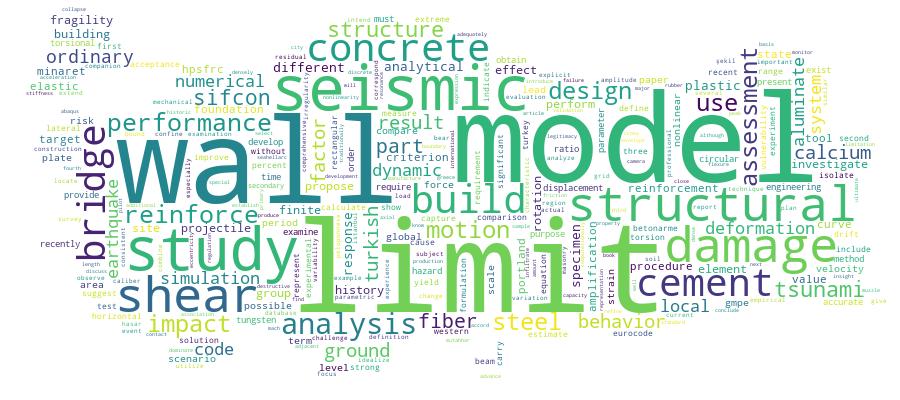
Competency Cloud
27 results
Scholarly Output Search Results
Now showing 1 - 10 of 27
Article High-velocity impact of large caliber tungsten projectiles on ordinary Portland and calcium aluminate cement based HPSFRC and SIFCON slabs. Part I: experimental investigations(Techno-Press, 2011) Polat, Gülkan; Korucu, HasanImpact experiments have been carried out on concrete slabs. The first group was traditionally manufactured, densely reinforced concrete targets, and the next were ordinary Portland and calcium aluminate cement based HPSFRC (High performance steel fiber reinforced concrete) and SIFCON (Slurry infiltrated concrete) targets. All specimens were hit by anti-armor tungsten projectiles at a muzzle velocity of over 4 Mach causing destructive perforation. In Part I of this article, production and experimental procedures are described. The first group of specimens were ordinary CEM I 42.5 R cement based targets including only dense reinforcement. In the second and third groups, specimens were produced using CEM I 42.5 R cement and Calcium Aluminate Cement (CAC40) with ordinary reinforcement and steel fibers 2 percent in volume. In the fourth group, SIFCON specimens including 12 percent of steel fibers without reinforcement were tested. A high-speed camera was used to capture impact and residual velocities of the projectile. Sample tests were performed to obtain mechanical properties of the materials. In the companion Part II of this study, numerical investigations and simulations performed will be presented. Few studies exist that examine high-velocity impact effects on CAC40 based HPSFRC targets, so this investigation gives an insight for comparison of their behavior with Portland cement based and SIFCON specimensEditorial Citation - WoS: 22Citation - Scopus: 26A Dispassionate View of Seismic-Hazard Assessment(Seismological Soc Amer, 2013) Gulkan, PolatArticle Citation - WoS: 2Citation - Scopus: 2Site-Structure Resonance as a Proxy for Structural Damage(Earthquake Engineering Research inst, 2011) Lang, Dominik H.; Schwarz, Jochen; Gulkan, PolatSince 1992, the reconnaissance teams of the German Task Force for Earthquakes have undertaken numerous field missions to disaster areas after strong earthquakes worldwide. During these missions, a unique database of damage cases has been collected, which serves as the basis for examining whether site-structure resonance effects contribute to building damage. The selected buildings that partly experienced slight to moderate damage during a recent major event have been experimentally tested in order to identify their structural parameters and to allow a calibration of the structural building models. In addition, instrumental noise recordings were made directly at the building sites to derive the ranges of predominant site periods. By correlating the ranges of predominant site periods with the building's capacity curves, representing the inelastic displacement behavior under lateral effects, a quick survey procedure has been developed to estimate the impact of agreements between periods of the site and the structure contributing to structural earthquake damage. [DOI: 10.1193/1.3651403]Article Buildings Subjected to Recurring Earthquakes: A Tale of Three Cities(2011) Bayhan, Beyhan; Polat, GülkanThree different buildings built according to the same design have experienced three different near-field strong ground motions over a period of 11 years in three different cities in Turkey. The input motion was known for each because strong-motion sensors were located adjacent or close to the buildings. We examine the performance of the five-story, reinforced concrete-frame buildings. Bidirectional nonlinear time history and nonlinear static analyses on 3-D analytical models are performed. The principal focus is to assess whether the analytical model of the buildings could indicate column-beam damage consistent with that observed at the sites after the earthquakes. Results illustrate that nonlinear time history analyses are capable of indicating the occurrence of shear failure in captive columns; however, they overestimate the global damage. The overestimation is greater where the building sustained a pulse-type motion without significant distress. It appears that difference between visual observations and analytical results persists.Article Citation - WoS: 4Citation - Scopus: 6High-Velocity Impact of Large Caliber Tungsten Projectiles on Ordinary Portland and Calcium Aluminate Cement Based Hpsfrc and Sifcon Slabs. Part Ii: Numerical Simulation and Validation(Techno-press, 2011) Gulkan, P.; Korucu, H.We present the numerical implementation, simulation, and validation of the high-velocity impact experiments that have been described in the companion article. In this part, numerical investigations and simulations performed to mimic the tests are presented. The experiments were analyzed by the explicit integration-based software ABAQUS for improved simulations. Targets were modeled with a damaged plasticity model for concrete. Computational results of residual velocity and crater dimensions yielded acceptable results.Conference Object Seismic behavior of a four-legged masonry minaret(2012) Kazaz, İ.; Akansel, V.; Gülkan, Polat; Kazaz, E.The four-legged Minaret of Sheikh Mutahhar Mosque has been constructed in the early 16th century during the Aq Qoyunlu Period in Diyarbakır, Turkey, which is located in the second most hazardous zone of the Turkish Seismic Zones Map. This is a special structure, because the minaret body has been placed on four cylindrical stone columns. Therefore, this minaret is seemingly vulnerable though it has survived for five centuries. We use the square cross sectioned minaret as a possible large-scale seismograph to examine the possible limits of ground motion that must have affected it without causing its collapse. In order to investigate the likely seismic performance and strength of the four-legged minaret, a model, which is very close to real structure, was generated with explicit dynamic code LS-DYNA. The developed model takes into account the material nonlinearities and the interface friction and contact behavior between the masonry units. It was displayed that the amplitude of the ground motion in Diyarbakır could not be 0.15g.Article Citation - WoS: 17Citation - Scopus: 26Seismic Risk Assessment and Mitigation in the Antakya-Maras Region (Seramar): Empirical Studies on the Basis of Ems-98(Earthquake Engineering Research inst, 2013) Abrahamczyk, Lars; Schwarz, Jochen; Langhammer, Tobias; Genes, M. Cemal; Bikce, Murat; Kacin, Selcuk; Gulkan, PolatThe main objective of the SERAMAR project has been to utilize current tools for earthquake risk assessment and to establish a unique partnership between universities, professional associations, and local governments, which might serve as a model for similar future activities in Turkey and adjacent areas. In order to reach this goal, a thorough microzonation survey program combined with vulnerability and social preparedness studies in anticipation of a damaging seismic event were conducted. The paper is focused on activities related to surveying building stock and classifying and evaluating through the use of different levels of consideration. Empirical risk scenarios and casualty estimations are carried out for different levels of consideration under scenario earthquakes similar in size to historic events. Preliminary findings of the pilot phase are reported in terms of credible building performance and casualty estimates. For empirical studies, the building vulnerabilities are expressed in terms of vulnerability classes of EMS-98.Article Citation - WoS: 8Citation - Scopus: 9Dynamic Shear Force Amplification in Regular Frame-Wall Systems(Wiley-blackwell, 2016) Kazaz, Ilker; Gulkan, PolatA parametric study is conducted to investigate the dynamic shear amplification factor (DAF) in low-to-mid-rise frame-wall systems in which the reinforcement curtailment along the height matches the required code strength. The level of frame-wall interaction is varied by changing the wall index, defined as the ratio of the total wall area to the floor plan area, in a generic frame-wall system, and its correlation with the DAF is investigated. Wall index values ranging in the 0.2% to 2% interval are selected. Walls with lengths of 3m, 5m and 8m are used in the design of model buildings of 4, 8 and 12 stories. Shear-flexure beam continuum formulation is used in design and modeling. The global behavior is analyzed using nonlinear response history procedure using spectrum compatible ground motions. It is found that the primary source of amplification is the level of inelastic demand on the system. Walls designed for code-specified force reduction factor R=6 experienced an average base shear force amplification in the order of 1.64 with standard deviation of 0.19 with respect to design shear force. Amplification diminishes with decreasing R. An expression for the dynamic amplification factor as a function of the number of stories and force reduction factor R is proposed. Copyright (C) 2015 John Wiley & Sons, Ltd.Article Citation - WoS: 9Citation - Scopus: 14Evaluation of Tsunami Scenarios for Western Peloponnese, Greece(Ist Nazionale Di Oceanografia E Di Geofisica, 2014) Yalciner, A. C.; Gulkan, P.; Dilmen, D. I.; Aytore, B.; Ayca, A.; Insel, I.; Zaytsev, A.Tsunami hazard assessment of the eastern part of the Mediterranean Sea is the current interest of the countries having, a coastline in this region. Considering today's increasing population on the coasts and historical tsunamis, it is essential to estimate the probable tsunami risk, which might occur, to be able to mitigate the risk before the actual tsunami event happens. For this purpose, European Union funded project., SEAHELLARC is formed to develop a methodology and tools for seismic and tsunami safety and enhance the protection of coastal areas in the western part of Peloponnese in Greece by simultaneous observations and evaluation of onshore and offshore data. In this paper, we present the tsunami simulations of characteristics of possible tsunami source scenarios for the Pylos-Zakynthos-Filiatra and Kyparissia regions, located at western part of Greece. We use NAMIDANCE tsunami simulation and visualization tool to estimate extreme but possible tsunami wave effects in these regions. In the simulations the tsunami arrival times, maximum positive and negative amplitudes are computed, plotted, compared and discussed for the coastal areas of Zakynthos, Filiatra, Kyparissia and Pylos. Furthermore, a detailed mapping of the bathymetric features is performed to define possible landslides and lithological variations at the marine bottom. The uppermost sediments are mapped by sub-bottom profiling, while possible faults are identified by multi-channel reflection mapping at the western Peloponnese. This paper also builds upon the background of a seismic hazard assessment for the region to draw several credible tsunami occurrence scenarios that have been numerically simulated.Article Süneklik Düzeyi Yüksek Betonarme Perdelerdeki Hasar Sınırları(2012) Kazak, İlker; Gülkan, Hakkı PolatHalen geçerli olan Deprem Yönetmeliğinde önerilen birim şekil değiştirme hasar sınır değerleri, teknik literatürde mevcut önde gelen çalışmalardan alınmakla birlikte, bu değerlerin yer değiştirmeye dayalı tasarım ve değerlendirme yöntemlerinde kullanılan analitik araç ve yöntemlerle performans düzeyini tanımlamak için uygun olup olmadığı tam olarak smanmamıştır. Düzlem kesitlerin deformasyondan sonra da düzlem kaldığına dayanan moment-eğrilik hesaplamaları, özellikle betonarme perdeler için sorun teşkil etmektedir. Dolayısıyla önerilen hasar sınır değerlerinin betonarme perdeler için geçerliliğinin araştırılması için kapsamlı bir çalışmaya ihtiyaç duyulduğu görülmektedir. Bu çalışma iyi kalibre edilmiş bir sonlu eleman modelleme yaklaşımı kullanarak dikdörtgen kesitli betonarme perdelerin ötelenme, kesit dönmesi ve eğriliği, perde uçlarındaki beton ve donatı birim şekil değiştirmeleri arasındaki ilişkiyi incelemektedir. Deprem Yönetmeliğinde ve bazı diğer hesap kılavuzlarında verilen şekil değiştirme ile ilgili hükümlerin geçerliği irdelenmektedir. Perde elemanları için mevcut değerlerden daha doğru olduğuna inanılan modelleme parametreleri ve kabul kıstasları teklif edilmektedir.

- «
- 1 (current)
- 2
- 3
- »