
Güleç, Ulaş
Loading...
Profile URL
Name Variants
Güleç, U. & Gulec, Ulas
Job Title
Öğr. Gör.
Email Address
Main Affiliation
Bilgisayar Mühendisliği
Status
Former Staff
Website
ORCID ID
Scopus Author ID
Turkish CoHE Profile ID
Google Scholar ID
WoS Researcher ID
Sustainable Development Goals
 1
1NO POVERTY
0
Research Products
 2
2ZERO HUNGER
0
Research Products
 3
3GOOD HEALTH AND WELL-BEING
0
Research Products
 4
4QUALITY EDUCATION
2
Research Products
 5
5GENDER EQUALITY
0
Research Products
 6
6CLEAN WATER AND SANITATION
0
Research Products
 7
7AFFORDABLE AND CLEAN ENERGY
0
Research Products
 8
8DECENT WORK AND ECONOMIC GROWTH
0
Research Products
 9
9INDUSTRY, INNOVATION AND INFRASTRUCTURE
0
Research Products
 10
10REDUCED INEQUALITIES
0
Research Products
 11
11SUSTAINABLE CITIES AND COMMUNITIES
1
Research Products
 12
12RESPONSIBLE CONSUMPTION AND PRODUCTION
0
Research Products
 13
13CLIMATE ACTION
0
Research Products
 14
14LIFE BELOW WATER
0
Research Products
 15
15LIFE ON LAND
0
Research Products
 16
16PEACE, JUSTICE AND STRONG INSTITUTIONS
0
Research Products
 17
17PARTNERSHIPS FOR THE GOALS
0
Research Products

This researcher does not have a Scopus ID.

This researcher does not have a WoS ID.
No records found in other affiliations.

Scholarly Output
20
Articles
5
Views / Downloads
1360/768
Supervised MSc Theses
1
Supervised PhD Theses
0
WoS Citation Count
116
Scopus Citation Count
159
Patents
0
Projects
0
WoS Citations per Publication
5.80
Scopus Citations per Publication
7.95
Open Access Source
4
Supervised Theses
1
| Journal | Count |
|---|---|
| CEUR Workshop Proceedings -- 12th Turkish National Software Engineering Symposium, UYMS 2018 -- 10 September 2018 through 12 September 2018 -- Istanbul -- 139255 | 3 |
| CEUR Workshop Proceedings -- 10th Turkish National Software Engineering Symposium, UYMS 2016 -- 24 October 2016 through 26 October 2016 -- Canakkale -- 124653 | 2 |
| 26th Systems, Software and Services Process Improvement (EuroSPI) Conference -- SEP 18-20, 2019 -- Edinburgh, SCOTLAND | 2 |
| CEUR Workshop Proceedings | 1 |
| CEUR Workshop Proceedings -- 11th Turkish National Software Engineering Symposium, UYMS 2017 -- 18 October 2017 through 20 October 2017 -- Alanya -- 131664 | 1 |
Current Page: 1 / 3
Scopus Quartile Distribution
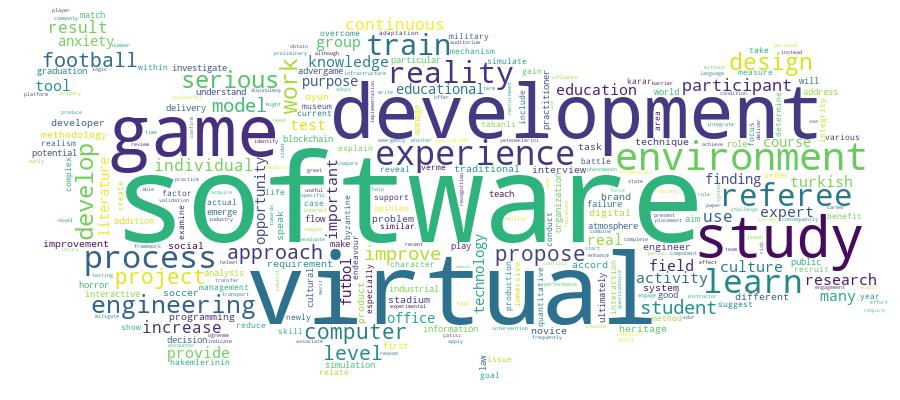
Competency Cloud
20 results
Scholarly Output Search Results
Now showing 1 - 10 of 20
Article Engagement and Brand Recall in Software Developers: an Eye-Tracking Study on Advergames(Mdpi, 2024) Akcan, Duygu; Yilmaz, Murat; Gulec, Ulas; Ilgin, Hueseyin EmreAdvergames represent a novel product placement strategy that surpasses traditional advertising methods by fostering interaction between brands and their target audiences. This study investigates the unique engagement opportunities provided by video games, focusing mainly on the 'flow experience', an intensified state of immersion frequently encountered by players of computer games. Such immersive experiences have the potential to significantly influence a player's perception, offering a new avenue for advertisements to impact and engage audiences effectively. The primary objective of this research was to examine the influence of advergames on players who are deeply immersed in the gaming experience, with a specific focus on the subsequent effects on brand recognition over time. The study involved 44 software developers, who were evenly divided into two groups for the experiment. Both groups were exposed to an identical gaming environment with the task of locating a designated product within the game. However, one group interacted with an enhanced version of the game, which included additional stimuli-such as dynamic music, an engaging narrative, time constraints, a competitive leaderboard, and immersive voice acting-to intensify the gaming experience. The experiment strategically placed various products within the game, and their detectability was assessed using eye-tracking technology. Following gameplay, participants completed questionnaires that measured their experience with flow state and brand recall. The data were analyzed using the Mann-Whitney U test and correlation analysis to facilitate comparisons. The findings indicated that the product associated with the primary task achieved the highest recall rate between both groups. Furthermore, eye-tracking technology identified the areas in the game that attracted the most attention, revealing a preference for mid- and high-level placements over lower-level ones.Article Citation - WoS: 33Citation - Scopus: 43A 3d Virtual Environment for Training Soccer Referees(Elsevier Science Bv, 2019) Isler, Veysi; O'Connor, Rory V.; Clarke, Paul M.; Gulec, Ulas; Yilmaz, MuratEmerging digital technologies are being used in many ways by and in particular virtual environments provide new opportunities to gain experience on real-world phenomena without having to live the actual real-world experiences. In this study, a quantitative research approach supported by expert validation interviews was conducted to determine the availability of virtual environments in the training of soccer referees. The aim is to design a virtual environment for training purposes, representing a real-life soccer stadium to allow the referees to manage matches in an atmosphere similar to the real stadium atmosphere. At this point, the referees have a chance to reduce the number of errors that they make in real life by experiencing difficult decisions that they encounter during the actual match via using the virtual stadium. In addition, the decisions and reactions of the referees during the virtual match were observed with the number of different fans in the virtual stadium to understand whether the virtual stadium created a real stadium atmosphere for the referees. For this evaluation, Presence Questionnaire (PQ) and Immersive Tendencies Questionnaire (ITQ) were applied to the referees to measure their involvement levels. In addition, a semi-structure interview technique was utilized in order to understand participants' opinions about the system. These interviews show that the referees have a positive attitude towards the system since they can experience the events occurred in the match as a first person instead of watching them from camera as a third person. The findings of current study suggest that virtual environments can be used as a training tool to increase the experience levels of the soccer referees since they have an opportunity to decide about the positions without facing the real-world risks.Conference Object Citation - WoS: 13Citation - Scopus: 16Cengo: a Web-Based Serious Game To Increase the Programming Knowledge Levels of Computer Engineering Students(Springer international Publishing Ag, 2019) Yalcin, Alihan Dogus; O'Connor, Rory V.; Clarke, Paul M.; Gulec, Ulas; Yilmaz, Murat; O’Connor, Rory V.In recent years there has been an increased use of serious games to help increase the level of knowledge and experience of individuals working in different domains. In particular serious games for educational purposes have been used in many domains including software engineering and computer science [1]. Hence, this study proposes a quantitative research approach to increase the programming knowledge levels of the first-year undergraduate students at computer engineering departments. For this aim, a responsive web platform was developed to teach the syntax and logic of the C programming language by using game elements. This environment provided students with an ability to independently investigate the C programming language continuously since the platform is always accessible. To better understand the effectiveness of the designed environment, 10 first-year computer engineering students were selected as a pilot experimental group. According to the results obtained from the user tests, this game can be used as an educational tool, which supports the traditional training methods, to increase the knowledge levels of students about the syntax and logic of the C programming language.Conference Object Citation - WoS: 11Citation - Scopus: 13Adopting Virtual Reality as a Medium for Software Development Process Education(Assoc Computing Machinery, 2018) Isler, Veysi; O'Connor, Rory, V; Clarke, Paul; Gulec, Ulas; Yilmaz, MuratSoftware development is a complex process of collaborative endeavour which requires hands-on experience starting from requirement analysis through to software testing and ultimately demands continuous maintenance so as to mitigate risks and uncertainty. Therefore, training experienced software practitioners is a challenging task. To address this gap, we propose an interactive virtual reality training environment for software practitioners to gain virtual experience based on the tasks of software development. The goal is to transport participants to a virtual software development organization where they experience simulated development process problems and conflicting situations, where they will interact virtually with distinctive personalities, roles and characters borrowed from real software development organizations. This PhD in progress paper investigates the literature and proposes a novel approach where participants can acquire important new process knowledge. Our preliminary observations suggest that a complementary VR-based training tool is likely to improve the experience of novice software developers and ultimately it has a great potential for training activities in software development organizations.Article Citation - WoS: 7Citation - Scopus: 10A Literature Survey: Is It Necessary To Develop a New Software Development Methodology for Virtual Reality Projects(Graz Univ Technolgoy, inst information Systems Computer Media-iicm, 2017) Güleç, Ulaş; Gulec, Ulas; Yilmaz, Murat; Yılmaz, Murat; Isler, Veysi; Bilgisayar Mühendisliği; Yazılım MühendisliğiSoftware development is a complex human endeavour with high failure rates. Although a variety of software development methodologies have been proposed to improve the software development process, there is no universal model for all software development organizations. Virtual reality (VR) is an emerging trend especially for the gaming industry, which should prepare itself for VR development. The goal of this study is to explore potential software development activities and determine whether designing a new software development methodology for VR projects is an important topic for software development organizations working on VR software development. For this purpose, a literature survey has been completed and 71 academic studies have been examined in detail. This study shows that no work is being conducted in the field of developing a new methodology for VR projects. However, the study does show that there are similar endeavours in the field of human computer interaction (HCI), such as game development methodology.Conference Object Conference Object Factors That Raise the Reality of the Virtual Office Environment Designed To Educate Software Development Processes(CEUR-WS, 2018) Güleç, Ulaş; Güleç, U.; Yılmaz, M.; Yılmaz, Murat; İşler, V.; Bilgisayar Mühendisliği; Yazılım MühendisliğiSoftware Development Virtual Reality (SDVR) is an interactive virtual reality (VR) experience based on the tasks of software development starting from requirement analysis through software testing. The SDVR experience transports participants to a virtual world of a software development organization where they experience development problems and conflicting situations. In SDVR, the participant takes on the role of a new software developer being recruited into software development firm who should work alongside with five virtual characters, played by artificial intelligence. The purpose of this study is to explain the properties of the virtual office environment where the participants can experience software development processes in real office conditions. In order for people to gain experience, the simulated software development process should include the atmosphere and dynamism of the actual office environment. For this reason, the factors affecting the atmosphere of the virtual office environment are presented in the light of the opinions of the experts working in the field of software engineering. According to the results of this study, it is revealed that such a virtual office environment is a useful tool that can be used in the training of individuals who will work in software development field.Conference Object Citation - WoS: 30Citation - Scopus: 36Overcoming Public Speaking Anxiety of Software Engineers Using Virtual Reality Exposure Therapy(Springer-verlag Berlin, 2017) Gulec, Ulas; Gozcu, Mert Ali; O'Connor, Rory V.; Clarke, Paul M.; Nazligul, Merve Denizci; Yilmaz, Murat; O’Connor, Rory V.Public speaking anxiety is a type of social phobia, which might be commonly seen in novice software engineers. It is usually triggered by a fear of social performance especially when the performer is unfamiliar with the audience. Today, many software engineering activities (e.g. code inspection, peer review, daily meetings, etc.) require social gatherings where individuals need to present their work. However, novice software engineers may not be able to reduce their performance anxiety during their course of education. In this study, we propose a virtual reality approach to construct a practice environment for improving novice software engineers' pubic speaking experiences. Consequently, we examine the effects of virtual reality intervention on the public speaking experience of six novice software engineers from a computer engineering department. We designed a virtual auditorium to simulate the presentation delivery environment and findings suggest that using this infrastructure for training purposes can reduce presenter anxiety levels - which is consistent with related published studies. We believe that this virtual auditorium environment can deliver benefits for students and practitioners alike in terms of addressing the anxiety that is often associated with early stage career presenters.Article Citation - WoS: 9Citation - Scopus: 16A Serious Game for Improving the Decision Making Skills and Knowledge Levels of Turkish Football Referees According To the Laws of the Game(Springer international Publishing Ag, 2016) Gulec, Ulas; Yilmaz, MuratDigital game-based learning environments provide emerging opportunities to overcome learning barriers by combining newly developed technologies and traditional game design. This study proposes a quantitative research approach supported by expert validation interviews to designing a game-based learning framework. The goal is to improve the learning experience and decision-making skills of soccer referees in Turkey. A serious game was developed and tested on a group of referees (N = 54). The assessment results of these referees were compared with two sample t-test and the Wilcoxon signed-ranked test for both the experimental group and the control group. The findings of the current study confirmed that a game-based learning environment has greater merit over the paper-based alternatives.Conference Object Citation - Scopus: 2Digital Storytelling on a Virtual Heritage Museum With Believable Agents(Ieee, 2021) Kalan, Kaan; Dikbayir, Hasan Saygin; Merdivanli, Ogulcan; Degirmenci, Utku Mert; Clarke, Paul M.; Gulec, Ulas; Yilmaz, MuratThe preservation of cultural heritage plays a very important role in terms of the sustainability of societies since culture is one of the most important phenomena that hold individuals together. However, although the protection of cultural heritage is a very important issue for societies, there are serious problems in the accuracy of information or access to information due to the verbal or written communication of the subjects that need to be conveyed. In particular, there is a serious decrease in the sense of belonging in individuals due to the inability to transfer cultural heritage to the younger generations correctly. At this point, the aim of the study is to teach individuals the Turkish horror culture by experiencing them in a realistic environment with various different stories in a virtual reality-based gamified system instead of teaching them in writing or verbally. For this purpose, a 3D virtual museum was developed within the scope of the study, inspired by real characters and areas, and it was aimed for individuals to learn Turkish horror culture elements through tasks in different scenarios. The developed system was tested by 5 experts in the field as a preliminary study and the realism level of the created system was measured with the comments of the experts. According to the findings, it has been determined that the level of realism offered by the designed virtual environment is sufficient to explain the Turkish horror culture to individuals.