
Arpali, Serap
Loading...

Profile URL
Name Variants
Arpali, S.A.
Altay Arpalı, Serap
Arpali, Serap Altay
Arpali, Serap A.
Altay, Serap
Arpali, S. A.
Arpali, Serap Altay
Arpali, Serap Altay
Arpali, Serap Altay
Altay Arpalı, Serap
Arpali, Serap Altay
Arpali, Serap A.
Altay, Serap
Arpali, S. A.
Arpali, Serap Altay
Arpali, Serap Altay
Arpali, Serap Altay
Job Title
Dr. Öğr. Üyesi
Email Address
Main Affiliation
06.02. Elektronik ve Haberleşme Mühendisliği
06. Mühendislik Fakültesi
01. Çankaya Üniversitesi
06.02. Elektronik ve Haberleşme Mühendisliği
Elektronik ve Haberleşme Mühendisliği
06. Mühendislik Fakültesi
01. Çankaya Üniversitesi
06. Mühendislik Fakültesi
01. Çankaya Üniversitesi
06.02. Elektronik ve Haberleşme Mühendisliği
Elektronik ve Haberleşme Mühendisliği
06. Mühendislik Fakültesi
01. Çankaya Üniversitesi
Status
Former Staff
Website
ORCID ID
Scopus Author ID
Turkish CoHE Profile ID
Google Scholar ID
WoS Researcher ID
Sustainable Development Goals
SDG data is not available

This researcher does not have a Scopus ID.

This researcher does not have a WoS ID.

Scholarly Output
29
Articles
19
Views / Downloads
1759/655
Supervised MSc Theses
1
Supervised PhD Theses
0
WoS Citation Count
395
Scopus Citation Count
414
WoS h-index
9
Scopus h-index
11
Patents
0
Projects
0
WoS Citations per Publication
13.62
Scopus Citations per Publication
14.28
Open Access Source
4
Supervised Theses
1
| Journal | Count |
|---|---|
| Journal of Modern Optics | 4 |
| Optical Review | 2 |
| Applied Physics B | 2 |
| CLEO: Science and Innovations, CLEO_SI 2013 -- CLEO: Science and Innovations, CLEO_SI 2013 -- 9 June 2013 through 14 June 2013 -- San Jose, CA -- 100548 | 1 |
| Conference on Lasers and Electro-Optics (CLEO) -- JUN 09-14, 2013 -- San Jose, CA | 1 |
Current Page: 1 / 5
Scopus Quartile Distribution
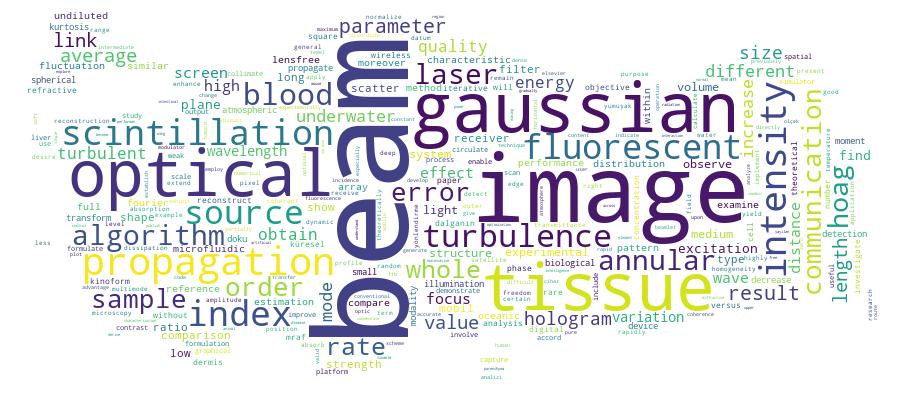
Competency Cloud
29 results
Scholarly Output Search Results
Now showing 1 - 10 of 29
Conference Object Citation - WoS: 2Citation - Scopus: 3Ber for Higher Order Laser Modes in Optical Wireless Underwater Communications(Ieee, 2016) Arpali, Serap Altay; Baykal, Yahya; Arpali, CaglarAverage bit error rate () of an underwater optical communication system is analyzed for higher order laser beams. For this purpose, the effects of oceanic turbulence parameters and link parameters on single mode higher order laser beams are investigated.Article A comparison of iterative Fourier transform algorithms for image quality estimation(Optical Soc Japan, 2018) Alsaka, Dina Yaqoob; Arpali, Çağlar; Arpali, Serap AltayA comparison was established between two iterative Fourier transform algorithms (IFTAs), such as the original Gerchberg–Saxton (GS) and the mixed-region amplitude freedom (MRAF) algorithms, for the hologram reconstruction of different target images through the full reference image quality estimation (IQE) and pixel homogeneity in the Fourier plane presented theoretically and experimentally. The comparison was applied depending upon both algorithms based on a computer-generated hologram (CGH) implemented utilizing a reflective phase-modulated liquid-crystal spatial light modulator (LC-SLM) to obtain the digital kinoform holograms of the desired intensity distributions. These digital holograms were applied to reconstruct the intensity patterns for 852 nm, which represents a laser beam source. The theoretical and experimental results of the reconstructed patterns obtained using the MRAF algorithm were found to be smoother and better than the patterns obtained using the GS algorithm. Unmodulated light beam (dc term) is removed from the reconstructed patterns attributed to digital kinoform holograms of MRAF algorithm as an alternative to the theoretical and experimental results without using any additional optic equipment at the light path. Moreover, this paper discussed the full reference objective quality estimations, such as mean square error (MSE), peak signal-to-noise ratio (PSNR), structural content (SC), normalized absolute error (NAE), normalized cross correlation (NK), and homogeneity of pixels, through the contrast (Cont) and inverse difference moment (IDM) for numerical and experimental results. According to the two desired intensity distributions processed theoretically and experimentally, the results of MRAF algorithm were found to be in the highly accurate recovered phase, the quality of image was enhanced, and the dc term was decreased. Image quality estimation of full reference objective relay on the feedback algorithms experimental attestation has not been implemented yet.Article Propagation Characteristics of Higher-Order Annular Gaussian Beams in Oceanic Turbulence(Institute of Physics, 2025) Arpali, S.A.; Arpali, Ç.; Baykal, Y.This study aims to explore the propagation characteristics of higher-order annular Gaussian (HOAG) beams in oceanic turbulence. We provide an analytical derivation of the average intensity at the receiver plane based on excitation from a HOAG source field. Additionally, we conduct a detailed analyses of various beam intensity moments including kurtosis parameter, power-in-the-bucket (PIB) and the beam size variation. As oceanic turbulence strength increases, the HOAG beam gradually transforms into a pure Gaussian beam. As the strength of turbulence increases, PIB values for all modes of HOAG beams gradually decrease in an exponential manner until they stabilize, exhibiting behavior similar to that of Gaussian beams. It is also observed that modes of HOAG beams having larger mode numbers carry less energy to the receiver compared to lower-order modes as turbulence strength increases. Analyses of the kurtosis parameter for HOAG beams indicate that during propagation over intermediate distances, there is a tendency for more beam energy to be distributed toward the wings rather than to the center. In contrast, at longer distances, the beam redistributes its energy, resulting in a lower energy concentration in the wings compared to the center. This research can enhance our understanding of the effects of higher-order laser beams, thereby potentially facilitating longer communication distances in underwater wireless optical communication technologies. © 2025 IOP Publishing Ltd.Article Citation - WoS: 77Citation - Scopus: 73Simulator for General-Type Beam Propagation in Turbulent Atmosphere(Optical Soc Amer, 2006) Arpali, Caglar; Yazicioglu, Canan; Eyyuboglu, Halil Tanyer; Arpali, Serap Altay; Baykal, YahyaA simulator is designed in MATLAB code which gives the propagation characteristics of a general-type beam in turbulent atmosphere. When the required source and medium parameters are entered, the simulator yields the average intensity profile along the propagation axis in a video format. In our simulator, the user can choose the option of a "user defined beam" in which the source and medium parameters are selected as requested by the user by entering numerical values in the relevant menu boxes. Alternatively, the user can proceed with the option of "pre-defined beam" in which the average intensity profiles of beams such as annular, cos-Gaussian, sine-Gaussian, cosh-Gaussian, sinh-Gaussian, their higher-order counterparts and flat-topped can be observed as they propagate in a turbulent atmosphere. Some samples of the simulator output are presented. (c) 2006 Optical Society of AmericaConference Object Citation - WoS: 5Citation - Scopus: 6Propagation of Optical Flat-Topped Gaussian Beams in Satellite Links(Ieee, 2009) Kamacioglu, Canan; Arpali, Serap A.; Baykal, Yahya; Yazgan, ErdemPropagation of optical flat-topped Gaussian beams in earth-satellite optical communication links is investigated where part of the link is turbulent atmosphere. Flat-topped Gaussian source field is obtained by superposing many Gaussian beams of different source size. Starting with the flat-topped Gaussian incidence at the earth surface, the average intensity at the satellite is formulated by using the extended Huygens Fresnel principle. For the structure constant variation versus height, Hufnagel-Valley model is employed in the vertical and slant paths. The received average intensity is numerically calculated and the effects of the source and medium parameters on the received average intensity profile are examined for different zenith angles. In earth-satellite optical communications links, the advantages of using flat-topped Gaussian beams as compared to Gaussian beams are scrutinized.Article Citation - WoS: 48Citation - Scopus: 50High-Throughput Screening of Large Volumes of Whole Blood Using Structured Illumination and Fluorescent On-Chip Imaging(Royal Soc Chemistry, 2012) Arpali, Serap Altay; Arpali, Caglar; Coskun, Ahmet F.; Chiang, Hsin-Hao; Ozcan, AydoganUndiluted blood samples are difficult to image in large volumes since blood constitutes a highly absorbing and scattering medium. As a result of this limitation, optical imaging of rare cells (e.g., circulating tumour cells) within unprocessed whole blood remains a challenge, demanding the use of special microfluidic technologies. Here we demonstrate a new fluorescent on-chip imaging modality that can rapidly screen large volumes of absorbing and scattering media, such as undiluted whole blood samples, for detection of fluorescent micro-objects at low concentrations (for example <= 50-100 particles/mL). In this high-throughput imaging modality, a large area microfluidic device (e.g., 7-18 cm(2)), which contains for example similar to 0.3-0.7 mL of undiluted whole blood sample, is directly positioned onto a wide-field opto-electronic sensor-array such that the fluorescent emission within the microchannel can be detected without the use of any imaging lenses. This microfluidic device is then illuminated and laterally scanned with an array of Gaussian excitation spots, which is generated through a spatial light modulator. For each scanning position of this excitation array, a lensfree fluorescent image of the blood sample is captured using the opto-electronic sensor-array, resulting in a sequence of images (e.g., 144 lensfree frames captured in similar to 36 s) for the same sample chip. Digitally merging these lensfree fluorescent images based on a maximum intensity projection (MIP) algorithm enabled us to significantly boost the signal-to-noise ratio (SNR) and contrast of the fluorescent micro-objects within whole blood, which normally remain undetected (i.e., hidden) using conventional uniform excitation schemes, involving plane wave illumination. This high-throughput on-chip imaging platform based on structured excitation could be useful for rare cell research by enabling rapid screening of large volume microfluidic devices that process whole blood and other optically dense media.Article Citation - WoS: 28Citation - Scopus: 28Bit Error Rates for General Beams(Optical Soc Amer, 2008) Arpali, Serap Altay; Eyyuboglu, Halil T.; Baykal, YahyaIn order to analyze the effect of beam type on free space optical communication systems, bit error rate (BER) values versus signal-to-noise ratio (SNR) are calculated for zero order and higher order general beam types, namely for Gaussian, cos-Gaussian, cosh-Gaussian, and annular beams. BER analysis is based on optical scintillation using log-normal distribution for the intensity, which is valid in weak atmospheric turbulence. BERs for these beams are plotted under variations of propagation length, source size, wavelength of operation, and order of the beam. According to our graphical outputs, at small source sizes and long propagation distances, the smallest BER value is obtained for the annular beam. On the other hand, at large source size and small propagation distance, the smallest BER value is obtained for the cos-Gaussian beam, Moreover, our study of the order of the beam shows that higher order beams have lower BER values than the zero order beams at longer propagation distances. But this drop compared with the order seems to be incremental. (c) 2008 Optical Society of AmericaConference Object High-Throughput Screening of Blood Samples Based on Structured Illumination On-Chip Imaging(IEEE, 2013) Arpali, Serap; Arpali, S.A.; Arpali, Çağlar; Arpali, C.; Coskun, A.F.; Chiang, H.-H.; Ozcan, A.; Mekatronik Mühendisliği; Elektronik ve Haberleşme MühendisliğiWe demonstrate a high-throughput fluorescent on-chip imaging platform, using structured illumination that can rapidly screen large volumes of scattering media such as undiluted whole blood samples (e.g., ~ 0.3-0.7 mL) for detection of fluorescent micro-objects at low concentrations (e.g.,≤50-100 particles/mL). This imaging modality might especially be useful for rare cell applications involving whole blood samples, such as detection of circulating tumor cells. © 2013 OSA.Master Thesis Performance analysis of mobile IPv4 with and without route optimization(2003) Altay, SerapPerformance Analysis of Mobile IPv4 With and Without Route Optimization Altay, Serap Ms, Department of Computer Engineering Supervisor: Asst. Prof. Gülsün Töreci May 2003, 92 pages The support of mobility in the modern communications network is becoming essential and important with the development of mobile devices. Mobile Internet Protocol is built on IPv4. Mobile IP has been proposed by IETF (Internet Engineering Task Force) to support portable IP addresses on Internet. In the basic Mobile IP protocol, datagrams destined for the mobile node are sent from wired or wireless hosts. These datagrams have to travel through the home agent when mobile node is away from home. On the other hand, the datagrams sent from mobile hosts to wired host can be sent directly. This asymmetric routing, called "Triangle Routing". On the other hand, when the destination node is very close to mobile host, this creates a problem. Solving of the problem "Triangle Routing" is one appealing topic in mobile IP. IETF proposed extension part of the basic mobile IP, called "Route Optimization" to address this problem. IPv4 has already been widely deployed. Moreover, it will most probably dominate the Internet for a long time. Therefore, in this thesis implemented mobile IPv4 with and without route optimization in OMNeT++. Simulations have already been done to justify the modification.Article Beam Shaping on a Fluorescent On-Chip Imaging System(IOP Publishing Ltd, 2026) Arpali, Caglar; Arpali, Serap AltayThe fluorescent on-chip imaging system differs from a conventional fluorescent microscope in terms of the imaging method because the sample is directly placed on the imaging sensor (i.e., charge-coupled device (CCD)). While this imaging modality presents several advantages, including a wide field of view and rapid scanning speed, it can be difficult to detect certain particles in dense and scattering environments, such as whole blood and tissue. These difficulties lead to a decreased signal-to-noise ratio (SNR) in the captured images, influenced by both the medium's light-transmitting capability and the excitation techniques used. In this paper, we quantitatively examine the effect of beam shaping techniques on a fluorescent on-chip imaging system from the SNR perspective. An experimental comparison is conducted between a Gaussian beam and plane-wave illumination generated by a novel phase modulation schema using our developed imaging platform. The results indicate that the Gaussian beam produces higher SNR images than plane waves when detecting fluorescent particles in a microchannel. Gaussian beam's higher energy confinement ability enhances the image quality of on-chip fluorescent imaging systems, particularly involving scattering-like medium limitations.

- «
- 1 (current)
- 2
- 3
- »