Bilgilendirme: Kurulum ve veri kapsamındaki çalışmalar devam etmektedir. Göstereceğiniz anlayış için teşekkür ederiz.
 

Erenoğlu, Ekin Ayşe

Loading...
Profile Picture
Name Variants
Özşuca Erenoğlu, Ekin Ayşe
Erenoğlu, Ekin Ayşe Özşuca
Özşuca, Ekin Ayşe
Ozsuca, Ekin Ayse
Job Title
Dr. Öğr. Üyesi
Email Address
aozsuca@cankaya.edu.tr
Main Affiliation
03.06. Uluslararası Ticaret ve Finansman
Uluslararası Ticaret ve Finansman
03. İktisadi ve İdari Birimler Fakültesi
01. Çankaya Üniversitesi
Status
Current Staff
Website
Scopus Author ID
Turkish CoHE Profile ID
Google Scholar ID
WoS Researcher ID

Sustainable Development Goals

11

SUSTAINABLE CITIES AND COMMUNITIES
SUSTAINABLE CITIES AND COMMUNITIES Logo

0

Research Products

3

GOOD HEALTH AND WELL-BEING
GOOD HEALTH AND WELL-BEING Logo

2

Research Products

9

INDUSTRY, INNOVATION AND INFRASTRUCTURE
INDUSTRY, INNOVATION AND INFRASTRUCTURE Logo

2

Research Products

6

CLEAN WATER AND SANITATION
CLEAN WATER AND SANITATION Logo

0

Research Products

14

LIFE BELOW WATER
LIFE BELOW WATER Logo

0

Research Products

12

RESPONSIBLE CONSUMPTION AND PRODUCTION
RESPONSIBLE CONSUMPTION AND PRODUCTION Logo

0

Research Products

8

DECENT WORK AND ECONOMIC GROWTH
DECENT WORK AND ECONOMIC GROWTH Logo

15

Research Products

1

NO POVERTY
NO POVERTY Logo

7

Research Products

4

QUALITY EDUCATION
QUALITY EDUCATION Logo

4

Research Products

5

GENDER EQUALITY
GENDER EQUALITY Logo

4

Research Products

10

REDUCED INEQUALITIES
REDUCED INEQUALITIES Logo

7

Research Products

16

PEACE, JUSTICE AND STRONG INSTITUTIONS
PEACE, JUSTICE AND STRONG INSTITUTIONS Logo

0

Research Products

15

LIFE ON LAND
LIFE ON LAND Logo

0

Research Products

7

AFFORDABLE AND CLEAN ENERGY
AFFORDABLE AND CLEAN ENERGY Logo

0

Research Products

13

CLIMATE ACTION
CLIMATE ACTION Logo

0

Research Products

17

PARTNERSHIPS FOR THE GOALS
PARTNERSHIPS FOR THE GOALS Logo

5

Research Products

2

ZERO HUNGER
ZERO HUNGER Logo

0

Research Products
This researcher does not have a Scopus ID.
Documents

0

Citations

0

Scholarly Output

21

Articles

15

Views / Downloads

3137/2926

Supervised MSc Theses

0

Supervised PhD Theses

0

WoS Citation Count

24

Scopus Citation Count

34

WoS h-index

2

Scopus h-index

2

Patents

0

Projects

0

WoS Citations per Publication

1.14

Scopus Citations per Publication

1.62

Open Access Source

14

Supervised Theses

0

JournalCount
Eastern European Economics2
Business and Management Studies: An International Journal2
Ankara Üniversitesi SBF Dergisi2
Business & Management Studies: An International Journal1
Current Debates on Social Sciences Human Studies 11
Current Page: 1 / 4

Scopus Quartile Distribution

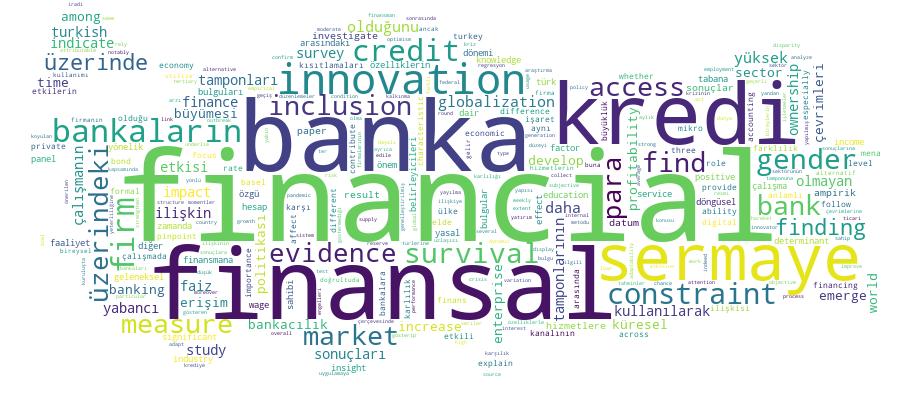
Competency Cloud

GCRIS Competency Cloud

Scholarly Output Search Results

Now showing 1 - 10 of 21
  • Article
    Firm Survival in Times of Crisis: Do Innovation and Financing Constraints Matter? Insights from the COVID-19 Pandemic
    (2023) Özşuca, Ekin Ayşe
    Utilizing survey data collected over three rounds, this paper investigates the impact of pre-COVID innovation performance, innovation type, sources of knowledge, and the moderating role of financial constraints on survival following the outbreak of COVID-19. The findings pinpoint a strong and positive link between firm survival and innovation, especially process innovation, confirming the ability of innovators to adapt to new conditions as a determinant of survival. Moreover, relying on internal knowledge is found to increase the chance of survival and adaptability to times of crisis. The results further indicate that access to finance strengthens the positive impact of innovation on firm survival/adaptation.
  • Book Part
    Financial Inclusion and Legal Gender Discrimination: New Evidence from Developing Countries
    (Ijopec Publication, 2018) Özşuca Erenoğlu, Ekin Ayşe; Şiriner, İsmail; Kılıçkan, Zişan Yardım
  • Article
    Türkiye’de Banka Sermaye Tamponları, Kredi Büyümesi Ve İş Çevrimleri
    (2018) Özşuca, Ekin Ayşe
    Bu çalışmada, Türkiye’de faaliyet gösteren bankaların sermaye tamponlarının iş çevrimleri ve kredi büyümesi ile ilişkisi 2002-2017 dönemi için üç aylık veriler kullanılarak incelenmiştir. Tahminler sistem genelleştirilmiş momentler metodu kullanılarak yapılmış ve söz konusu etkilerin bankaların faaliyet türlerine göre farklılık gösterip göstermediği ayrıca test edilmiştir. Elde edile sonuçlara göre, Türkiye’de banka sermaye tamponları iş çevrimlerine karşı döngüsel hareket etmektedir.Ancak bu bulgu yatırım ve kalkınma bankaları için geçerli değildir. Diğer yandan, bankalara özgü özelliklerle ilgili panel regresyon sonuçlarına göre, büyüklük, karlılık ve risk ticari bankaların sermaye tamponlarının anlamlı belirleyicileri olarak ortayaçıkmaktadır. Aynı zamanda, bankacılık sektörünün yapısı ve 2008 küresel finansal krizinin banka sermaye tamponları üzerinde etkili olduğu gözlenmiştir. Sermaye tamponlarının bankaların kredi arzı üzerindeki etkisine dair bulgular ise ters yönlü bir ilişkiye işaret etmektedir. Çalışmanın bulguları, banka sermaye yeterliliğine ilişkin düzenlemeler ile Basel III uzlaşısı kapsamında önerilen ve yakın zamanda uygulamaya koyulan döngüsel sermaye tamponuna dair sonuçları bakımından önem taşımaktadır
  • Article
    Citation - WoS: 13
    Citation - Scopus: 22
    Gender Gap in Financial Inclusion: Evidence From Mena
    (Univ Oviedo, 2019) Ozsuca, Ekin Ayse
    This study aims to analyze the gender dimension of financial inclusion in MENA countries. Using the World Bank's 2017 Global Findex Database, it explores the underlying factors of gender differences in formal financial services usage via Fairlie decomposition method. The findings of the study indicate that a significant portion of the disparity in financial inclusion is attributable to employment, while age and tertiary education are also found as contributing factors to the financial inclusion gap. Another notable finding is that upper income quintiles contribute positively to the gender gap, indeed to a greater extent compared to lower income groups.
  • Article
    Fınancıalınclusıon In Turkey: Evıdence From Indıvıduallevel Data
    (2019) Özşuca, Ekin
    Using individual level data from the World Bank Global Findex for 2017, this study analyzes the levelof financial inclusion and explores its main determinants in Turkey. In particular, it explores how individualcharacteristics (i.e. gender, age, income, education) are associated with the usage of formal financial servicesand impinge on the perceived barriers to account ownership among financially excluded individuals in Turkey.The results of the study indicate that being man, older, richer and more educated increases the likelihood ofhaving a formal account and formal saving. Moreover, mobile banking is found to be driven by identicalindividual characteristics with that of other traditional formal financial services usage. As regards with the mainobstacles for not having a formal account, each one of the individual attributes seems to be significant inexplaining different voluntary and involuntary self-reported barriers behind financial exclusion. The findingsare of remarkable importance for designing policies to promote financial inclusion in Turkey.
  • Article
    Türkiye’de Frmaların Finansmana Erişiminin Belirleyicileri Nelerdir
    (2020) Özşuca, Ekin Ayşe
    Özel sektörün iktisadi büyüme ve istihdam yaratmadaki inkar edilemez rolü göz önünde bulundurulduğunda, finansal sektör ile finansal olmayan özel sektör arasındaki ilişkinin incelenmesi önem kazanmaktadır. Ancak bu öneme rağmen, bulgular Türk firmalarının resmi finansal hizmetlere erişimkonusunda engellerle karşılaştıklarını ortaya koymaktadır. Bu doğrultuda, bu çalışma Türkiye’deki işletmeler tarafından finansmana erişime ilişkin belirleyicilere yönelik yeni ampirik bulgular sunmaktadır. Türk firmalarının kredi kısıtlamaları olup olmadığını ortaya koymak amacıyla bu araştırma, özellikle firmanın finansmana erişim gücünü etkileyebilecek bazı firma düzeyindeki özellikleri araştırmaktadır. Ampirik analizler, 2019 mali yılı için Dünya Bankası İşletme Anketi’nden alınan mikro seviye verilere dayanmaktadır. Üç farklı kredi kısıtlaması ölçüsü hesaplanmıştır; bunlardan bir tanesi algıya dayalı bir subjektif değişken ve diğer ikisi ise resmi finansal hizmetlerin kullanımına ve kredi kısıtlamalarına ilişkin doğrudan bilgiye dayanan objektif değişkenlerdir. Krediye ilişkin hem subjektif hem objektif değişkenleri kullanmak firma özellikleri arasındaki başlıca belirleyicilerin ne dereceye kadar alternatif kredi kısıtlaması ölçüleri ile sınıflandırılan işletmeler arasında farklılık gösterdiğinin değerlendirilmesini sağlamaktadır. Genel olarak araştırmanın sonuçları firmanın yaşının, mevcut yöneticinin deneyimlerinin, mülkiyette kadın/yabancı katılımının ve ihracatçı durumunun firmanın finansmana erişimiyle önemli derecede bağlantılı olduğunu göstermektedir. Sonuçlar, alternatif kredi göstergelerine bağlı alt kategoriler arasındaki kredi durumuna ilişkin altta yatan firma seviyesindeki faktörlerde bazı değişiklikler olduğunu açıkça ortaya koymuştur. Araştırmanın bulguları, firmaların kredi kısıtlamaları durumunun ve Türkiye’deki banka-firma bağının iyileştirilmesine yönelik politikanın geliştirilmesi bakımından oldukça önemlidir.
  • Article
    Citation - WoS: 2
    Citation - Scopus: 2
    Gender Gap in Digital Financial Inclusion Across Generations
    (Springer, 2025) Özşuca, Ekin Ayşe
    This paper analyzes and measures the contributing factors that explain variation in access to digital finance between men and women across different age groups for developing countries. The findings indicate that the gap is the largest for the working age population. The largest part of the gap is attributable to employment, while secondary education and income level are also found as significant contributors to the disparity. Notably, tertiary education acts towards closing the gap for young adults. © 2025 Elsevier B.V., All rights reserved.
  • Book Part
    Credit Dynamics in Turkey: An Insight Bank Loans Tendency Survey
    (Bilgin Kültür Sanat Yayınları, 2018) Özşuca Erenoğlu, Ekin Ayşe; Karacagil, Zeynel; Anaz, Efecan
  • Other
    Can Us Wage Increases Be Regarded as A\rleading Indicator for Bond Rates
    (2020) Acar, Elif Oznur; Özşuca, Ekin Ayşe
    After the subprime meltdown, the Federal Reserve focused its attention on US non-\rfarm payroll data in order to pave the way for its fund rate hikes. As time went by,\rthe Federal Reserve deemed particularly one sub-component of this data, namely the\rincrements on average weekly wage growth as a proxy for in\ration and thus a plausible\rexplanation for raising the interest rates. In that aspect, we decide to elaborate on this\rissue further and examine whether this implemented strategy indeed had a re\rection in\rthe real market. For doing so, we intend to determine whether there is any causality\rrelation in either direction between US average weekly wage increases and 10-year\rTreasury Bond rates. We utilize the Toda-Yamamoto causality approach and come\rup with a statistically signicant result between wages and bond rates. For robustness,\rwe also consider the unemployment rate and consumption expenditures as independent\rvariables.