
Yılmaz, Murat
Loading...
Profile URL
Name Variants
Yilmaz, M. & Yılmaz, M. & Yilmaz, Murat & Yılmaz, Murat
Job Title
Dr. Öğr. Üyesi
Email Address
Main Affiliation
Yazılım Mühendisliği
Status
Former Staff
Website
ORCID ID
Scopus Author ID
Turkish CoHE Profile ID
Google Scholar ID
WoS Researcher ID
Sustainable Development Goals
 1
1NO POVERTY
0
Research Products
 2
2ZERO HUNGER
0
Research Products
 3
3GOOD HEALTH AND WELL-BEING
2
Research Products
 4
4QUALITY EDUCATION
2
Research Products
 5
5GENDER EQUALITY
0
Research Products
 6
6CLEAN WATER AND SANITATION
0
Research Products
 7
7AFFORDABLE AND CLEAN ENERGY
1
Research Products
 8
8DECENT WORK AND ECONOMIC GROWTH
0
Research Products
 9
9INDUSTRY, INNOVATION AND INFRASTRUCTURE
7
Research Products
 10
10REDUCED INEQUALITIES
0
Research Products
 11
11SUSTAINABLE CITIES AND COMMUNITIES
1
Research Products
 12
12RESPONSIBLE CONSUMPTION AND PRODUCTION
0
Research Products
 13
13CLIMATE ACTION
0
Research Products
 14
14LIFE BELOW WATER
0
Research Products
 15
15LIFE ON LAND
0
Research Products
 16
16PEACE, JUSTICE AND STRONG INSTITUTIONS
0
Research Products
 17
17PARTNERSHIPS FOR THE GOALS
0
Research Products

This researcher does not have a Scopus ID.

This researcher does not have a WoS ID.
No records found in other affiliations.

Scholarly Output
73
Articles
21
Views / Downloads
2222/296
Supervised MSc Theses
0
Supervised PhD Theses
0
WoS Citation Count
607
Scopus Citation Count
759
Patents
0
Projects
0
WoS Citations per Publication
8.32
Scopus Citations per Publication
10.40
Open Access Source
17
Supervised Theses
0
| Journal | Count |
|---|---|
| CEUR Workshop Proceedings -- 12th Turkish National Software Engineering Symposium, UYMS 2018 -- 10 September 2018 through 12 September 2018 -- Istanbul -- 139255 | 6 |
| 24th European Conference on Systems, Software and Services Process Improvement (EuroSPI) -- SEP 06-08, 2017 -- Tech Univ Ostrava, Ostrava, CZECH REPUBLIC | 4 |
| Journal of Universal Computer Science | 3 |
| 23rd European Conference on Systems, Software and Services Process Improvement (EuroSPI) -- SEP 14-16, 2016 -- Graz, AUSTRIA | 3 |
| 25th European Conference on Systems, Software and Services Process Improvement (EuroSPI) -- SEP 05-07, 2018 -- Bilbao, SPAIN | 3 |
Current Page: 1 / 10
Scopus Quartile Distribution
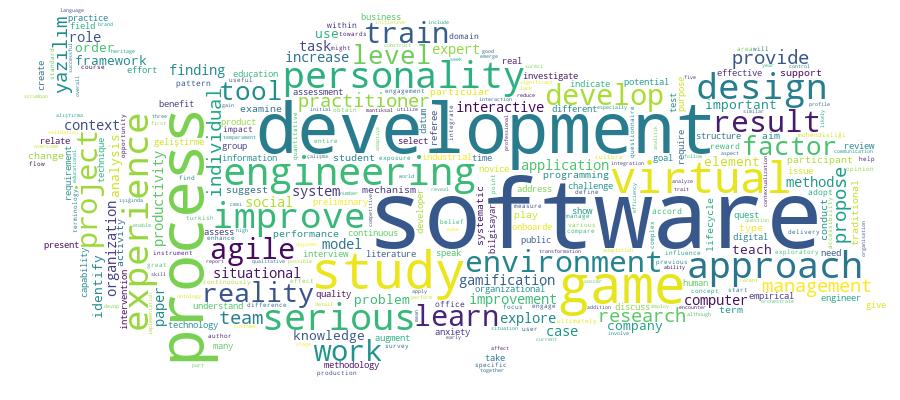
Competency Cloud
73 results
Scholarly Output Search Results
Now showing 1 - 10 of 73
Conference Object Citation - WoS: 4Citation - Scopus: 10Software Development Overall Efficiency Improvement in a Cmmi Level 5 Organization Within the Scope of a Case Study(Ieee, 2018) Gungor, Deniz; Kuru, Yasemin Yigit; Metin, Ozgun Onat; Yilmaz, Murat; Orgun, PinarDue to globalization and increase in the level of technology requirements, managing expectation and customer demand for software development projects becomes more challenging. Therefore, the notion of quality and productivity gain importance for software development. In order to improve the quality and productivity, CMMI capability model has been widely adopted within software development organizations. This paper presents an overall software efficiency improvement project, which is implemented within the scope of organizational performance management which covers all process areas of CMMI level 5. Within the scope of the project, our organization targeted software productivity increase and it is achieved by improving code creation productivity of the organization. The result of the paper can be a reference for other organizations in software development industry seeking to improve software productivity by using the level of CMMI 5 maturity.Conference Object Sanal Ofis Ortaminda Kod Gözden Geçirme ile Kod Degerlendirmesi(CEUR-WS, 2016) Kaymak, M.; Yılmaz, Murat; Namiduru, M.; Tüzün, E.; Yilmaz, M.; Yazılım MühendisliğiConference Object Citation - WoS: 24Citation - Scopus: 29Interactive Three-Dimensional Virtual Environment To Reduce the Public Speaking Anxiety Levels of Novice Software Engineers(inst Engineering Technology-iet, 2019) Yilmaz, M.; Gulec, U.; Yilmaz, A. E.; Isler, V.; O'Connor, R. V.; Clarke, P.; Nazligul, M. Denizci; Denizci Nazligul, M.Software engineering is a set of activities that rely not only on the technical tasks but also require abilities focused on social duties such as daily meetings and product introduction presentations. However, engineers may experience elevated levels of anxiety when required to present their work in an unfamiliar environment. More specifically, they may suffer from public speaking anxiety even though they are supposed to be effective in those social tasks as well as in their engineering activities. Fortunately, previous studies suggest that the virtual exposure intervention is an effective strategy to reduce public speaking anxiety. In this study, an interactive three-dimensional virtual environment similar to real classrooms and auditoriums was developed to examine whether this might decrease the anxiety levels of novice software engineers. To compare the traditional and virtual exposure intervention, the sample set was divided equally into two groups including one experimental group and one control group. For 4 weeks, the virtual exposure intervention was conducted in the experimental group, whereas the cognitive behaviour therapy-based psychoeducation was used in the control group. The findings from authors' study illustrate that the virtual exposure intervention may represent an alternative solution to the traditional interventions for software engineers seeking to overcome public presentation anxiety.Article Citation - WoS: 33Citation - Scopus: 43A 3d Virtual Environment for Training Soccer Referees(Elsevier Science Bv, 2019) Isler, Veysi; O'Connor, Rory V.; Clarke, Paul M.; Gulec, Ulas; Yilmaz, MuratEmerging digital technologies are being used in many ways by and in particular virtual environments provide new opportunities to gain experience on real-world phenomena without having to live the actual real-world experiences. In this study, a quantitative research approach supported by expert validation interviews was conducted to determine the availability of virtual environments in the training of soccer referees. The aim is to design a virtual environment for training purposes, representing a real-life soccer stadium to allow the referees to manage matches in an atmosphere similar to the real stadium atmosphere. At this point, the referees have a chance to reduce the number of errors that they make in real life by experiencing difficult decisions that they encounter during the actual match via using the virtual stadium. In addition, the decisions and reactions of the referees during the virtual match were observed with the number of different fans in the virtual stadium to understand whether the virtual stadium created a real stadium atmosphere for the referees. For this evaluation, Presence Questionnaire (PQ) and Immersive Tendencies Questionnaire (ITQ) were applied to the referees to measure their involvement levels. In addition, a semi-structure interview technique was utilized in order to understand participants' opinions about the system. These interviews show that the referees have a positive attitude towards the system since they can experience the events occurred in the match as a first person instead of watching them from camera as a third person. The findings of current study suggest that virtual environments can be used as a training tool to increase the experience levels of the soccer referees since they have an opportunity to decide about the positions without facing the real-world risks.Conference Object Citation - WoS: 10Citation - Scopus: 11Towards a Serious Game To Teach Iso/Iec 12207 Software Lifecycle Process: an Interactive Learning Approach(Springer-verlag Berlin, 2015) Yilmaz, Murat; O'Connor, Rory V.; Aydan, UfukISO/IEC 12207 training is a key element to provide an ability to software development organizations for selecting a set of required processes, measuring the performance of these processes, and continuously improving them. Traditionally, such training is either performed by an expert individual to the software quality management personnel most likely in form of a seminar in a classroom environment. This may also be given by a qualified professional, such as a registered auditor. However, software requirements are usually subject to change, and therefore such training is not enough to teach the substantial details of the entire standard. This has led to increased reports of complications, which demotivates organization to use this standard. To improve the quality of traditional training, a 3D serious game was proposed. The preliminary idea here is that the training is utilized as a game that employs 3D office landscape to provide a realistic virtual environment for ensuring that the training will be based in a real-world-like environment. Before building a prototype for our serious game, we consulted five industrial experts whose works are related with ISO standards. To give these practitioners an opportunity to explore the conceptual design and raise some potential problems, the semi-structured interview method was used. Based on the suggestions of experts, proposed model of the serious game were revised. Taken together, initial results suggest that a serious game for teaching ISO/IEC 12207 should be useful for individuals who are interested in learning more about the standard.Conference Object Citation - WoS: 3Citation - Scopus: 3Towards a Quest-Based Contextualization Process for Game-Based Learning(Acad Conferences Ltd, 2014) Yılmaz, Murat; Yilmaz, Murat; Saran, Murat; Saran, Murat; O'Connor, Rory; Yazılım Mühendisliği; Bilgisayar MühendisliğiThis study proposes a quest-based contextualization (QBC) process, which transforms part of a traditional lecture into a well-defined questing structure. The goal is to create a learning experience by using a systematic game-based questing approach. The QBC procedure is a set of sequential tasks defined by the game designer to reflect the instructional objectives of the course. It is formed as an interaction perspective from which a game system can be materialized, and which aims to improve the quality of the game flow and the user experience in a game-based learning environment. We claim that a game-based contextualization process can be used to restructure a traditional lecture in terms of educational quests. In particular, it was hypothesized that the design of such a quest-line should be constructed as a questing structure based on the chain of events, which are extracted from lecture notes. In the formulation of this design, the key events were discussed in an interview with an expert (i.e. content specialist) from a target field. This interview was transcribed, and further analyzed using an iterative qualitative approach as an interpretive analysis technique where an inductive proposition is considered for contextualization of data. This research used a thematic analysis methodology to explore the situations, which are suitable for questing and might be expandable into categories. Furthermore, questable points from the data were captured and situational elements and conversational key points were rigorously categorized. After building the initial mapping, we conducted a second interview with the same area expert to refine our preliminary findings. To evaluate our approach from the game design perspective, we sought advice from a small group of game design experts and practitioners who are recognized knowledgeable individuals in educational game development. Based on the opinion of four game design experts, the questing structure was revised and several game elements, such as extra battles, puzzles, and achievements, were added to support the elements of fun. Three of the experts argued that the proposed questing structure was highly educational, while the fourth claimed that such an improvement was partially important. These findings, while preliminary, suggested that a well-defined questing structure should be useful to improve the quality of a game-based learning environment.Conference Object Towards a Serious Game to Teach ISO/IEC 12207 Software Lifecycle Process: An interactive learning approach(2015) Aydan, Ufuk; Yılmaz, Murat; O’Connor, Rory V.ISO/IEC 12207 training is a key element to provide an ability to software development organizations for selecting a set of required processes, measuring the performance of these processes, and continuously improving them. Traditionally, such training is either performed by an expert individual to the software quality management personnel most likely in form of a seminar in a classroom environment. This may also be given by a suitability qualified professional, such as a registered auditor. However, software requirements are usually subject to change, and therefore such training is not enough to teach the substantial details of the entire standard. This has led to increased reports of complications, which demotivates organization to use this standard. To improve the quality of training, a 3D serious game was proposed for the software practitioners. The preliminary idea here is that the game employs 3D office landscape to provide a realistic virtual environment ensuring that the training will be based on real word like situations. Before building a prototype for our serious game, we consulted five industrial experts whose works are related with ISO standards. To give these practitioners an opportunity to explore the conceptual design and raise some potential problems, the semi-structured interview method was used. Based on the suggestions of experts, dynamics and mechanics of the proposed game were updated. Taken together, initial results suggest that a serious game for teaching ISO/IEC 12207 should be useful for individuals who are interested to learn more about the standard.Editorial Citation - WoS: 2Citation - Scopus: 2Guest Editorial: Gamification and Persuasive Games for Software Engineering(inst Engineering Technology-iet, 2019) O'Connor, Rory V.; Colomo-Palacios, Ricardo; Clarke, Paul; Yilmaz, MuratConference Object Citation - Scopus: 7An Exploration of Individual Personality Types in Software Development(Springer Verlag, 2014) O'Connor, R.V.; Clarke, P.; Yilmaz, M.Previous research - using conventional psychometric questionnaires - has highlighted the importance of aligning compatible personality types in software development teams. However, there does not exist a dedicated, robust questionnaire instrument for revealing the pertinent personality types for software development practitioners. This study analyzes the validity and reliability of a 70-item (context dependent) personality-profiling questionnaire particularly developed to assess personality types of software practitioners. A systematic process of validation, using an iterative approach to questionnaire development, was employed. The questions were developed both with a qualitative analysis of interview data, and based on the opinions of expert reviewers who revised the items through a set of examination. To investigate how stable the questions and reproducible the results, we measured test-retest reliability of the instrument, yielding satisfactory results. The present study provided evidence for the construct validity of the instrument. Ultimately, an initial comparison of the results delivered by the instrument demonstrated positive correlations with the findings acquired with well-known personality assessment instrument, i.e. the big five personality questionnaire. © Springer-Verlag Berlin Heidelberg 2014.Article Engagement and Brand Recall in Software Developers: an Eye-Tracking Study on Advergames(Mdpi, 2024) Akcan, Duygu; Yilmaz, Murat; Gulec, Ulas; Ilgin, Hueseyin EmreAdvergames represent a novel product placement strategy that surpasses traditional advertising methods by fostering interaction between brands and their target audiences. This study investigates the unique engagement opportunities provided by video games, focusing mainly on the 'flow experience', an intensified state of immersion frequently encountered by players of computer games. Such immersive experiences have the potential to significantly influence a player's perception, offering a new avenue for advertisements to impact and engage audiences effectively. The primary objective of this research was to examine the influence of advergames on players who are deeply immersed in the gaming experience, with a specific focus on the subsequent effects on brand recognition over time. The study involved 44 software developers, who were evenly divided into two groups for the experiment. Both groups were exposed to an identical gaming environment with the task of locating a designated product within the game. However, one group interacted with an enhanced version of the game, which included additional stimuli-such as dynamic music, an engaging narrative, time constraints, a competitive leaderboard, and immersive voice acting-to intensify the gaming experience. The experiment strategically placed various products within the game, and their detectability was assessed using eye-tracking technology. Following gameplay, participants completed questionnaires that measured their experience with flow state and brand recall. The data were analyzed using the Mann-Whitney U test and correlation analysis to facilitate comparisons. The findings indicated that the product associated with the primary task achieved the highest recall rate between both groups. Furthermore, eye-tracking technology identified the areas in the game that attracted the most attention, revealing a preference for mid- and high-level placements over lower-level ones.