
Akan, Aslı
Loading...
Profile URL
Name Variants
Er Akan, A.
Er Akan, Aslı
Akan, Aslı Er
Akan, Asli Er
Er Akan, Aslı
Er Akan, Aslı
Akan, Aslı Er
Akan, Asli Er
Er Akan, Aslı
Job Title
Prof. Dr.
Email Address
aslierakan@cankaya.edu.tr
Main Affiliation
Mimarlık
Status
Current Staff
ORCID ID
Scopus Author ID
Turkish CoHE Profile ID
Google Scholar ID
WoS Researcher ID
Files
Sustainable Development Goals
13
CLIMATE ACTION

0
Research Products
8
DECENT WORK AND ECONOMIC GROWTH

3
Research Products
3
GOOD HEALTH AND WELL-BEING

0
Research Products
15
LIFE ON LAND

0
Research Products
17
PARTNERSHIPS FOR THE GOALS

0
Research Products
14
LIFE BELOW WATER

0
Research Products
4
QUALITY EDUCATION

2
Research Products
11
SUSTAINABLE CITIES AND COMMUNITIES

10
Research Products
6
CLEAN WATER AND SANITATION

0
Research Products
10
REDUCED INEQUALITIES

0
Research Products
9
INDUSTRY, INNOVATION AND INFRASTRUCTURE

2
Research Products
12
RESPONSIBLE CONSUMPTION AND PRODUCTION

1
Research Products
2
ZERO HUNGER

0
Research Products
1
NO POVERTY

0
Research Products
7
AFFORDABLE AND CLEAN ENERGY

1
Research Products
5
GENDER EQUALITY

0
Research Products
16
PEACE, JUSTICE AND STRONG INSTITUTIONS

0
Research Products

This researcher does not have a Scopus ID.

Documents
10
Citations
52

Scholarly Output
32
Articles
18
Views / Downloads
3164/14356
Supervised MSc Theses
10
Supervised PhD Theses
0
WoS Citation Count
52
Scopus Citation Count
57
WoS h-index
4
Scopus h-index
4
Patents
0
Projects
0
WoS Citations per Publication
1.63
Scopus Citations per Publication
1.78
Open Access Source
15
Supervised Theses
10
Google Analytics Visitor Traffic
| Journal | Count |
|---|---|
| Online Journal of Art and Design | 3 |
| Journal of Building Engineering | 2 |
| Mühendislik ve Mimarlık Bilimlerinde Güncel Araştırmalar | 2 |
| Drvna industrija | 1 |
| Gazi Üniversitesi Mühendislik Mimarlık Fakültesi Dergisi | 1 |
Current Page: 1 / 4
Scopus Quartile Distribution
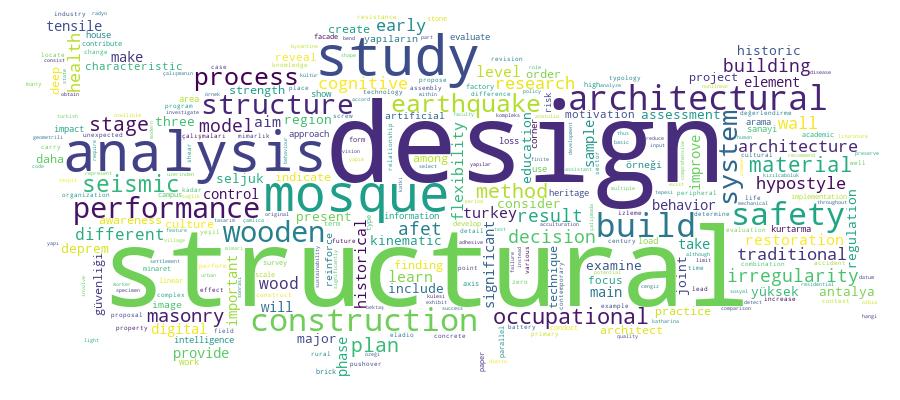
Competency Cloud
32 results
Scholarly Output Search Results
Now showing 1 - 10 of 32
Article Citation - WoS: 3Citation - Scopus: 3Tensile Performance of Traditional and Modern Corner Joints in Wooden Structures(Zagreb Univ, Fac Forestry, 2022) Atar, Musa; Gode, Fazli; Kucuktuvek, Mustafa; Akan, Asli Er; Ormecioglu, Hilal Tugba; Keskin, HakanCorner joints are critical points of wooden structures not only in furniture construction but also in traditional wooden architecture, especially in constructions without nails. This study was performed to determine the effects of particular factors such as the axis of assembly, types of material, and adhesive on the tensile performance of various modern and traditional types of wooden corner joints. For this purpose, various corner joint specimens were prepared with three different wooden materials: Scots pine (Pinus sylvestris Lipsky) wood, Lombardy poplar (Populus nigra Lipsky) wood, and Medium Density Fibreboard (MDF) using two different adhesives: polyvinyl acetate (PVAc) and polyurethane (Desmodur-VTKA) glues; and five different wooden joint types: dowel, tongue-and-groove, half-blind dovetail, screw, and eccentric screw joints. Tensile performance tests, vertical and parallel to the axis of assembly, were carried out according to ASTM D 1037 guidelines. Experiments indicated that, while the tensile performance of MDF specimen connected with a screw and PVAc adhesive was the highest under loading parallel to the axis of assembly (4592 N); it was the lowest under loading parallel to the axis of assembly in MDF specimen connected with tongue-and-groove joint and PVAc adhesive (260 N), respectively. As a result, it may be advantageous to apply screwed joints in corners for high tensile strength in parallel to the axis of the assembly.Article Earthquake Safety of Masonry and Reinforced Concrete Buildings(2021) Er Akan, Aslı; Ünay, Ali İhsan; Örmecioğlu, Hilal Tuğba; Er, ArzuIn this study firstly residential building typologies of some small-scale cities in earthquake prone areas of Turkey are investigated and 4-storey masonry residential buildings is proposed instead of multi-story reinforced concrete apartment blocks for these cities. Here, it is aimed to enliven the use of masonry again in these regions. To achieve this aim it is necessary to verify the fact that it is possible to construct a four-story residential building with masonry bearing walls instead of reinforced concrete beam and column skeleton system keeping the existing plan scheme in other words without changing its architectural characteristics. In order to do this, 3D models are created to compare the behaviours of the masonry building and reinforced concrete building. The behavioural investigation of the two models is performed in the finite element platform with the help of SAP 2000. Finally it is certified that this proposal is successfully efficient.Article Citation - WoS: 3Citation - Scopus: 4Towards an Earthquake-Resistant Architectural Design With the Image Classification Method(Taylor & Francis Ltd, 2024) Akan, Asli Er; Bingol, Kaan; Ormecioglu, Hilal Tugba; Er, Arzu; Ormecioglu, Tevfik OguzArchitectural design is an interdisciplinary process which involves multiple stages that are interconnected. In this process, it is common for major decisions to be changed during the final stage, the analysis of the structural system. After making substantial corrections, the architect has to revisit the early stages, the preliminary project. This back-and-forth process can result in significant losses in time and cost. The proposed Irregularity Control Assistant (IC-Assistant) aims to provide architects with feedback on the conformity of structural system decisions to the irregularities defined in the Turkish Building Earthquake Code (TBEC-2018), using image processing methods at the early stages of the design process. The IC-Assistant was preliminarily created to evaluate the torsional irregularity of plan organization using deep learning methods. In this study, the results of the IC-Assistant were verified by structural analysis with the Prota-Structure program. The novelty of this study is the use of the image-classification method in earthquake-resistant architectural design. Up to this point, the method has been mainly used in facial recognition systems. This method minimizes time, human error, and cost losses and includes awareness of load bearing and earthquake resistance as inputs in the early stages of architectural design.Master Thesis Betonarme Binalarda Gerçekleştirilen Güçlendirme Projelerinin Mimari Projeler Üzerindeki Etkileri(2025) Sevindik, Turgay; Akan, Aslı ErTürkiye'nin aktif tektonik kuşak üzerinde yer alması, mevcut yapı stoğunun yüksek düzeyde sismik tehlikeye maruz kalmasına neden olmaktadır. Son yıllarda yaşanan yıkıcı depremler, yapıların önemli bir bölümünün güncel deprem yönetmeliklerine uygun inşa edilmediğini ve taşıyıcı sistem performanslarının yetersiz kaldığını açıkça göstermiştir. Bu durum, yalnızca yapısal güvenlik açısından değil; aynı zamanda afetlere dirençli kentleşme politikaları bakımından da ciddi bir tehdit oluşturmaktadır. Düşük malzeme kalitesi, yetersiz işçilik ve denetim eksiklikleri gibi niteliksel sorunlar da yapıların sismik dayanımını olumsuz etkilemektedir. Ekonomik kısıtlar ve toplumsal dinamikler göz önünde bulundurulduğunda, mevcut yapı stoğunun tamamının yıkılıp yeniden inşası kısa vadede uygulanabilir değildir. Bu nedenle, deprem güvenliğini artırmaya yönelik güçlendirme stratejileri, sürdürülebilir yapı yönetimi kapsamında öncelikli bir çözüm alanı olarak öne çıkmaktadır. Güçlendirme yöntemleri, yalnızca taşıyıcı sistemlerin rijitliğini ve enerji sönümleme kapasitesini artırmakla kalmaz; aynı zamanda yapıların bütüncül performansını da iyileştirmeyi hedefler. Yapı mühendisliğindeki teknolojik gelişmeler ve sayısal analiz teknikleri, yapı davranışının daha doğru modellenmesine ve müdahale kararlarının bilimsel temellere dayandırılmasına olanak sağlamaktadır. Bununla birlikte, betonarme yapıların güçlendirilmesi yalnızca mühendislik disiplini çerçevesinde ele alınmamalıdır. Bu müdahaleler, yapıların özgün mimari karakteri, mekânsal organizasyonu, estetik nitelikleri ve kullanıcı konforu üzerinde doğrudan ve dolaylı etkiler yaratmaktadır. Dolayısıyla, mimari tasarım ile yapısal müdahalelerin disiplinler arası ve bütüncül bir yaklaşımla değerlendirilmesi gerekmektedir. Güçlendirme projeleri, teknik bir zorunluluğun ötesinde; mimari sürekliliğin korunması, kent estetiğinin gözetilmesi ve mekânsal kaliteye katkı sağlanması açısından da kritik öneme sahiptir. Bu tez çalışması, betonarme yapıların güçlendirme projelerinin mimari tasarım üzerindeki etkilerini çok yönlü olarak analiz etmeyi amaçlamaktadır. Araştırmada farklı güçlendirme yöntemlerinin mimari nitelikler üzerindeki etkileri ortaya konulmuş, bu etkilerin yapısal performansla ilişkisi değerlendirilmiş ve disiplinler arası bir entegrasyon modeli geliştirilmiştir. Bulgular, mimari ve yapısal kararların eşgüdümlü olarak ele alındığı; güvenlik, estetik bütünlük ve mekânsal kalitenin birlikte gözetildiği bir güçlendirme yaklaşımının gerekliliğini ortaya koymaktadır. Çalışma, yapıların hem teknik hem de mimari açıdan daha dirençli, yaşanabilir ve sürdürülebilir biçimde yeniden işlevlendirilmesine katkı sunmayı hedeflemektedir. Anahtar Kelimeler: Betonarme yapı, Güçlendirme stratejileri, Mimari tasarım, Deprem güvenliği, Disiplinler arası yaklaşım, Sürdürülebilir yapı dönüşümüMaster Thesis Yıkım ve Söküm İşlerinde Karşılaşılan İş Güvenliği Problemleri ve Çözüm Önerileri(2025) Gündüz, Muhammed Yasir; Akan, Aslı ErBu çalışma, Türkiye'de kentsel dönüşüm süreçlerinde yürütülen yıkım ve söküm faaliyetlerinde iş sağlığı ve güvenliği (İSG) alanındaki sorunları ortaya koymaktadır. Özellikle 1999 Marmara Depremi'nden sonra riskli yapıların artışıyla birlikte, kentsel dönüşüm projeleri hız kazanmış ve öncelikli gündem maddesi olmuştur. Ancak bu süreç yalnızca yapıların yenilenmesiyle sınırlı kalmamış; sosyal, ekonomik, çevresel ve hukuki boyutlarıyla karmaşık ve çok katmanlı bir yapıya bürünmüştür. Çalışmada, yıkım projelerinde karşılaşılan başlıca sorunlar arasında planlama eksiklikleri, hukuki belirsizlikler, finansman yetersizlikleri, teknik riskler ve çevresel etkiler öne çıkarılmaktadır. İSG açısından özellikle düşme ve göçük vakaları, elektrik ve gaz kaynaklı kazalar ile asbest maruziyeti en önemli riskler olarak belirlenmiştir. Sonuç olarak, kentsel dönüşüm projelerinin başarıya ulaşabilmesi; yıkım süreçlerinin güvenli, planlı ve sürdürülebilir bir biçimde yürütülmesine bağlıdır. Aksi takdirde, sürecin sağlıklı ilerlemesi ve istenen amaçlara ulaşılması ciddi şekilde riske girecektir.Book Part 18. ve 19. Yüzyıl Kuramcılarının Gözüyle ‘Mimarlıkta Hata’(2020) Er Akan, Aslı; Ömercioğlu, Hilal TuğbaMaster Thesis The Effect of Managers Leadership Styles on the Formation of an Occupational Safety Culture: an Application on Occupational Safety Leadership(2024) Dündar, Yasin; Akan, Aslı ErHer alanda önemli bir yeri olan liderlik konusunun İş Sağlığı ve Güvenliği gibi çok boyutlu ve multidisipliner bir alandan ayrı düşünülmesine imkân yoktur. Yapılan araştırmalar, fiziki koşulların iyileştirilmesi ve koruyucu ekipmanların geliştirilmesi hususunda alınan önlemlerin tek başına yeterli olmadığını bunun yerine 'güvenlik kültürü' ve 'güvenlik liderliği' kavramlarına daha çok odaklanılması gerektiğini göstermektedir. Bu araştırmada, Ankara ilinde bulunan bir fabrikada 393 çalışana, iş güvenliği farkındalıklarını ve yöneticilerinin iş güvenliği liderliğini değerlendirebilecekleri ölçekleri içeren bir anket çalışması yapılmıştır. Çalışma ile güvenlik kültürünün oluşmasında ve çalışanların iş güvenliği uygulamalarını benimsemesinde yöneticilerin liderlik özellikleri ve davranışlarının önemli etkisinin olduğu ortaya konulmuştur. Ayrıca literatürde yeni sayılan 'Güvenlik Liderliği' ve 'Güvenlik Odaklı Liderlik' kavramlarının anlaşılması sağlanarak yönetici pozisyonundaki kişilerin iş güvenliği odaklarını ve liderlik özelliklerini geliştirmeye yönelik öneriler oluşturulması hedeflenmiştir.Article An innovative safety education method for architectural faculties to promote a culture of prevention in line with a “Vision Zero approach”(2022) Akan, Aslı Er; Yeşilbağ, Damla; Alevsaçanlar, Yeliz; Karaman, Gülşah D.Occupational safety and health (OHS) education in universities has an important role in developing and improving safety cultures in the workplace. Safety education is essential for improving necessary OSH skills, culture and knowledge, so do architects, urban planners, interior architects whose duties are regarded as the design, planning and execution of construction projects in high-risk sectors. As a consequence, there has been increasing recognition that safety education courses in the architecture faculties should have participative learning methods and resources. In order to increase preparedness for any potential future health crises parallel to the “Vision Zero” approach in work-related deaths, a new EU Strategic Framework was announced by the European Commission. The course described and proposed here aimed to raise awareness about OHS by teaching risks related to working environments, basic issues, basic legislation within the scope of OHS. It also aimed to cover professional liability with respect to OHS, and risks and hazards in the construction sector, as well as helping participants to analyze and evaluate the risks in workplace. This article’s primary objective is to identify an innovative safety education model of the “occupational health and safety course” with a “Vision Zero” approach.Article Artificial intelligence applications in earthquake resistant architectural design: Determination of irregular structural systems with deep learning and ImageAI method(2020) Bingöl, Kaan; Er Akan, Aslı; Ömercioğlu, Hilal Tuğba; Er, ArzuAlthough the architectural design process is carried out with the collaboration of experts who are experienced in many different areas from the main preferences to the detailing stage, the major decisions such as plan organization, mass design etc. are taken by the architect. Computer Aided Design (CAD) programs are generally effective after the major decisions of the design are taken. For this reason, it is common for the main decisions, taken during the design process, to be changed during the analysis of the structural system. In order to prevent this, in the early stages of architectural design, earthquake system awareness and structural system design should be included as an design input; as, the failure of the structural system which did not considered well in the architectural design phase leads to unexpected revisions in the implementation project phase and thus leads to serious losses in both time and cost. The aim of this study is to create an Irregularity Control Assistant (IC Assitant) that can provide architects general information about the appropriateness of structural system decisions to earthquake regulations in the early stages of design process by using the deep learning and image processing methods. In this way, correct decisions will be made in the early stages of the design and unexpected revisions that may occur during the implementation project phase will be prevented.Book Part Bir Cengiz Bektaş Yapısı: Olbia Sosyal Özeği(IVPE Yayınevi, 2020) Ömercioğlu, Hilal Tuğba; Er Akan, Aslı; Şanlı, İrem; Şekerci, Yaren
