
Selçuk, Seda
Loading...
Profile URL
Name Variants
Selcuk, Seda
Selcuk, S.
Yesilmen, Seda
Yesilmen, S.
Selcuk, S.
Yesilmen, Seda
Yesilmen, S.
Job Title
Doç. Dr.
Email Address
sselcuk@cankaya.edu.tr
Main Affiliation
İnşaat Mühendisliği
Status
Current Staff
Website
ORCID ID
Scopus Author ID
Turkish CoHE Profile ID
Google Scholar ID
WoS Researcher ID
Files
Sustainable Development Goals
11
SUSTAINABLE CITIES AND COMMUNITIES

2
Research Products
3
GOOD HEALTH AND WELL-BEING

1
Research Products
9
INDUSTRY, INNOVATION AND INFRASTRUCTURE

1
Research Products
6
CLEAN WATER AND SANITATION

0
Research Products
14
LIFE BELOW WATER

0
Research Products
12
RESPONSIBLE CONSUMPTION AND PRODUCTION

1
Research Products
8
DECENT WORK AND ECONOMIC GROWTH

0
Research Products
1
NO POVERTY

0
Research Products
4
QUALITY EDUCATION

0
Research Products
5
GENDER EQUALITY

0
Research Products
10
REDUCED INEQUALITIES

0
Research Products
16
PEACE, JUSTICE AND STRONG INSTITUTIONS

0
Research Products
15
LIFE ON LAND

0
Research Products
7
AFFORDABLE AND CLEAN ENERGY

1
Research Products
13
CLIMATE ACTION

1
Research Products
17
PARTNERSHIPS FOR THE GOALS

0
Research Products
2
ZERO HUNGER

0
Research Products

Documents
12
Citations
468
h-index
7

Documents
13
Citations
443

Scholarly Output
10
Articles
8
Views / Downloads
41/0
Supervised MSc Theses
1
Supervised PhD Theses
0
WoS Citation Count
351
Scopus Citation Count
410
WoS h-index
7
Scopus h-index
7
Patents
0
Projects
0
WoS Citations per Publication
35.10
Scopus Citations per Publication
41.00
Open Access Source
4
Supervised Theses
1
| Journal | Count |
|---|---|
| 2024 International Conference on Smart Systems and Technologies -- OCT 16-18, 2024 -- Osijek, CROATIA | 1 |
| ACI Materials Journal | 1 |
| Advances in Materials Science and Engineering | 1 |
| Case Studies in Construction Materials | 1 |
| Cement and Concrete Composites | 1 |
Current Page: 1 / 2
Scopus Quartile Distribution
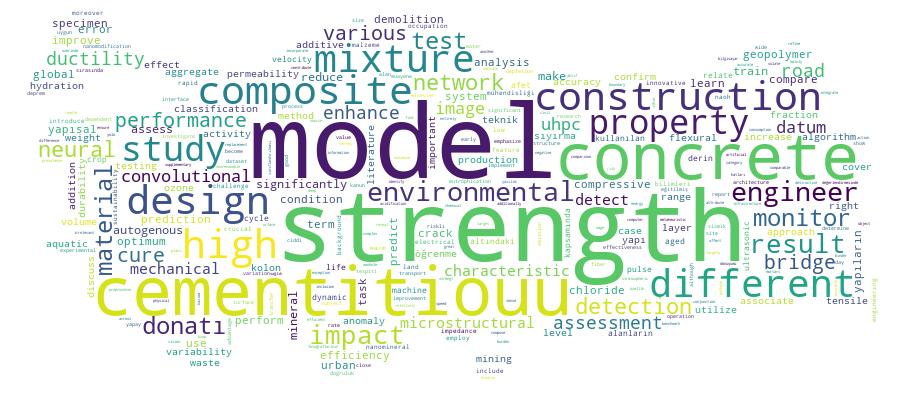
Competency Cloud
10 results
Scholarly Output Search Results
Now showing 1 - 10 of 10
Article Citation - Scopus: 3Strength Prediction of Engineered Cementitious Composites With Artificial Neural Networks(MIM RESEARCH GROUP, 2021) Yesilmen, S.Engineered Cementitious composites (ECC) became widely popular in the last decade due to their superior mechanical and durability properties. Strength prediction of ECC remains an important subject since the variation of strength with age is more emphasized in these composites. In this study, mix design components and corresponding strengths of various ECC designs are obtained from the literature and ANN models were developed to predict compressive and flexural strength of ECCs. Error margins of both models were on the lower side of the reported error values in the available literature while using data with the highest variability and noise. As a result, both models claim considerable applicability in all ECC mixture types. © 2021 MIM Research Group. All rights reserved.Article Citation - WoS: 12Citation - Scopus: 16A Metaheuristic-Guided Machine Learning Approach for Concrete Strength Prediction With High Mix Design Variability Using Ultrasonic Pulse Velocity Data(Elsevier, 2023) Selcuk, S.; Tang, P.Assessment of concrete strength in existing structures is a common engineering problem. Several attempts in the literature showed the potential of ML methods for predicting concrete strength using concrete properties and NDT values as inputs. However, almost all such ML efforts based on NDT data trained models to predict concrete strength for a specific concrete mix design. We trained a global ML-based model that can predict concrete strength for a wide range of concrete types. This study uses data with high variability for training a metaheuristic-guided ANN model that can cover most concrete mixes used in practice. We put together a dataset that has large variations of mix design components. Training an ANN model using this dataset introduced significant test errors as expected. We optimized hyperparameters, architecture of the ANN model and performed feature selection using genetic algorithm. The proposed model reduces test errors from 9.3 MPa to 4.8 MPa.Article Citation - WoS: 25Citation - Scopus: 29Efficiency of Convolutional Neural Networks (Cnn) Based Image Classification for Monitoring Construction Related Activities: a Case Study on Aggregate Mining for Concrete Production(Elsevier, 2022) Yesilmen, Seda; Tatar, BahadirMonitoring construction activities is an important task for efficiency in construction site opera-tions thus the topic received a fair amount of attention in the literature. Optimizing construction site operations by monitoring and detecting various tasks is dependent on the size of the con-struction field, which determines the tools that can be used for the job. A monitoring task can be performed with high efficiency through image classification algorithms by training the algorithms to detect construction machinery. If the area of monitoring is larger, such as the task of detecting construction related operations in a large infrastructural construction, using drone images might become inefficient. We aimed to take a first step towards a cost-efficient monitoring system specifically for construction activities that cover large territories. Consequently, satellite image classification has been performed for construction machinery detection in this study. We utilized different versions of well-established convolutional neural network architectures as backbone for the transfer learning method and their performances are evaluated. Finally, the best performing models are determined as DenseNet161 and ResNet101 with 0.919 and 0.903 test accuracies, respectively. DenseNet161 model was discussed in terms of its accuracy and efficiency in a case study to detect illegal aggregate mining activity through the basin of Thamirabarani River.Article Citation - WoS: 7Citation - Scopus: 8Life Cycle Assessment of Geopolymer Materials Utilizing Construction and Demolition Waste(Academic Press Inc Elsevier Science, 2025) Unsal, Zeynep; Ekinci, Mehmet Ozkan; Ilcan, Huseyin; Sahin, Oguzhan; Selcuk, Seda; Sahmaran, MustafaThis study assessed the environmental impacts of construction and demolition waste (CDW)-based geopolymers. For analysis, the cradle-to-gate system boundary was established. Two different geopolymer mixtures were evaluated: one composed entirely of CDW-based precursors-(CDW100), and another incorporating supplementary cementitious materials-(SCMs) as a 20 % replacement of CDW-based precursors-(CDW80SCM20). Raw materials were sourced from a diverse range of demolition waste. NaOH and Ca(OH)2 were employed as activators. Additionally, a cementitious mixture with comparable strength was included in the analysis as a benchmark for comparison with the geopolymers. The results of the impact analyses revealed that CDW80SCM20 had a greater environmental impact across various categories compared to CDW100. The relatively higher environmental impacts of the CDW80SCM20 mixture are largely attributed to the transport-related environmental burdens associated with the inclusion of SCMs. The largest differences were for land occupation and global warming, at 30.8 % and 16.9 %, respectively. Moreover, the results indicated that the environmental impacts of the CDW-based mortars were significantly lower than those of the cementitious system, with the exception of aquatic eutrophication and ozone layer depletion. The increase in ozone layer depletion is mainly associated with the production of NaOH via the chlor-alkali process, which contributes to emissions affecting stratospheric ozone. The advantages of geopolymers in terms of environmental impact made it possible to reduce the effects of global warming by 48.1 %, aquatic acidification by 22.1 %, land occupation by 45.2 %, and nonrenewable energy consumption by 1.83 %. However, aquatic eutrophication and ozone layer depletion were found to be higher compared to cementitious mortar.Article Citation - WoS: 47Citation - Scopus: 60Physical and Chemical Actions of Nano-Mineral Additives on Properties of High-Volume Fly Ash Engineered Cementitious Composites(Amer Concrete inst, 2016) Al-Najjar, Y.; Yesilmen, S.; Al-Dahawi, Majeed; Sahmaran, M.; Yildirim, G.; Lachemi, M.; Amleh, L.; Majeed Al-Dahawi, A.Unlike conventional concrete, the material design process for engineered cementitious composites (ECC) involves micromechanics-based design theory, paving the way for the use of high volumes of fly ash (HVFA) as a major component. Using high volumes of fly ash (up to 85% weight fraction of cement) in ECC mixtures enables improved tensile ductility (approximately a 3% increase in long-term tensile strain) with reduced crack widths, although it also leads to significantly reduced early-age compressive and tensile strength and chloride ion resistance. However, nanomineral additives are known to improve mechanical strength and durability of HVFA systems. The study emphasizes the effects of different fly ash (FA)/cement ratios on various properties (hydration and microstructural characteristics, transport and mechanical properties) of ECC mixtures designed with different mineral additives. Experimental results confirm that although different optimum levels can be selected to favor various ECC properties, optimum weight fraction of FA is dependent on the mechanism of nanomodification (that is, type of modifier). The optimum level of fly ash weight fraction that yields the highest rate of improvement through nanomodification of ECC varies for different mechanical and transport properties.Master Thesis Afet Risk Altındaki Alanların Dönüşümü Planı Kapsamında Yapısal Sağlık Değerlendirmesinde Kullanılan Kolon Kazıma Fotoğraflarının Derin Öğrenme ile Sınıflandırılması(2025) Demir, Can; Selçuk, SedaAktif sismik fay hatları üzerinde yer alan Türkiye, sürekli olarak ciddi deprem risklerine maruz kalmaktadır. 1999 Marmara Depremi'nin ardından, mevcut yapı stoğunun yapısal bütünlüğü ve dayanıklılığı kamuoyunun önemli bir endişesi haline gelmiş ve bu durum ciddi düzenleyici önlemlerin alınmasını beraberinde getirmiştir. Bu bağlamda, 2012 yılında yürürlüğe giren 6306 sayılı Afet Riski Altındaki Alanların Dönüştürülmesi Hakkında Kanun, depreme karşı dayanıksız yapıların tespiti ve yenilenmesi için hukuki ve teknik bir çerçeve oluşturmuştur. Bu kanun kapsamında yayımlanan Riskli Yapıların Tespitine İlişkin Esaslar (RYTİE), yapıların sismik performansının bilimsel ve teknik kriterlere dayalı olarak değerlendirilmesini amaçlamaktadır. RYTİE'ye göre, riskli yapı; malzeme bozulması, yapısal yetersizlik veya tasarım hataları nedeniyle deprem sırasında yıkılması veya ağır hasar görmesi muhtemel olan yapı olarak tanımlanmaktadır. Bu tür yapıların değerlendirilmesi, Kentsel Dönüşüm Başkanlığı tarafından lisanslandırılmış kuruluşlarca yapılmakta olup, beton karot alma, donatı sıyırma, Schmidt çekici ile yüzey sertliği testi ve donatı tarayıcı cihazlarla donatı tespiti gibi çeşitli deneysel ve gözlemsel yöntemleri içermektedir. Bu yöntemler arasında yer alan donatı sıyırma, betonarme elemanların iç donatı düzeninin doğrudan gözlemlenmesine olanak sağlayan yıkıcı bir muayene yöntemidir. Bu yöntem sayesinde kolon ve perde elemanlarının kenetlenme ve orta bölgelerinde kullanılan etriye tipi, çapı, aralığı ve kanca şekli ile boyuna donatı düzeni ve korozyon kaynaklı hasarlar ayrıntılı şekilde ortaya konulabilmektedir. Bu yöntemin uygun şekilde uygulanıp uygulanmadığı, lisanslı kuruluşlar tarafından hazırlanan teknik raporların Bakanlık mühendislerince incelenmesi sırasında denetlenmektedir. Ancak, bu işlemin yönetmeliklere tamamen uygun biçimde yürütülmesi zaman açısından verimsizliklere ve doğruluk sorunlarına yol açmakta ve insan hatasına açık bir süreç oluşturmaktadır. Bu tez çalışmasında, kolon donatı sıyırma görüntülerinin otomatik olarak değerlendirilmesine yönelik derin öğrenme tabanlı evrişimli sinir ağı (CNN) modellerinin sınıflandırma performansı araştırılmıştır. Özellikle transfer öğrenme temelli beş farklı önceden eğitilmiş CNN mimarisi—MobileNetV2, EfficientNetB0, ResNet50, DenseNet121 ve InceptionV3—çeşitli hiperparametre yapılandırmaları ile eğitilmiş ve karşılaştırmalı olarak değerlendirilmiştir. Her bir model, test doğruluğu, doğruluk (precision), duyarlılık (recall) ve F1-skoru gibi performans ölçütleri kullanılarak analiz edilmiş ve en başarılı mimari belirlenmiştir. Elde edilen sonuçlar, geleneksel muayene yöntemlerine alternatif olarak hızlı, doğru ve güvenilir yapay zekâ destekli bir karar destek sisteminin geliştirilebileceğini göstermektedir. Bu çalışma, yapısal mühendislik alanında yapay zekânın pratik uygulamalarına katkı sağlamayı amaçlamaktadır.Article Citation - WoS: 15Citation - Scopus: 19Use of Uhpc in Bridge Structures: Material Modeling and Design(Hindawi Ltd, 2012) Yesilmen, Seda; Gunes, Burcu; Ulm, Franz-Joseph; Gunes, OguzUltra-high-performance concrete (UHPC) is a promising new class of concrete material that is likely to make a significant contribution to addressing the challenges associated with the load capacity, durability, sustainability, economy, and environmental impact of concrete bridge infrastructures. This paper focuses on the material modeling of UHPC and design of bridge girders made of UHPC. A two-phase model used for modeling the behavior of UHPC was briefly discussed, and the model was implemented in a preliminary design case study. Based on the implemented design and the reported use of UHPC in bridge applications, the advantages, limitations, and future prospects of UHPC bridges were discussed, highlighting the need for innovative research and design to make optimum use of the favorable properties of the material in bridge structures.Conference Object Enhancing Road Anomaly Detection With Dynamic Cropping System: a YOLOv8 Integrated Approach(Institute of Electrical and Electronics Engineers Inc., 2024) Er, Taha Yasin; Selcuk, SedaEfficient and accurate detection of urban road anomalies such as potholes, manhole covers, and speed bumps is crucial for enhancing urban infrastructure and ensuring road safety. However, detecting these small-scale features using machine learning is significantly challenged by the high prevalence of negative data and the complex urban backgrounds in images. This study introduces an innovative approach utilizing a Dynamic Cropping System (DCS) in conjunction with the YOLOv8 convolutional neural network model to refine the detection of these road anomalies. The DCS method enhances detection accuracy by employing a YOLOv8- based model to identify a nd i solate r oad s urfaces w ithin i mages, t hereby minimizing irrelevant background information through targeted cropping.Article Citation - WoS: 135Citation - Scopus: 150Self-Healing Performance of Aged Cementitious Composites(Elsevier Sci Ltd, 2018) Yildirim, Gurkan; Khiavi, Arash Hamidzadeh; Yesilmen, Seda; Sahmaran, MustafaThis study investigates the autogenous self-healing capability of one-year-old engineered cementitious composites (ECC) with different mineral admixtures to understand whether self-healing performance in late ages is similar to that of early ages. Sound and severely pre-cracked specimens were subjected to different environmental conditions including water, air, "CO2-water," and "CO2-air" for one year plus 90 days of initial curing. Self-healing performance of ECC mixtures was assessed in terms of crack characteristics, electrical impedance testing, rapid chloride permeability testing and microstructural analysis. Laboratory findings showed that the presence of water is crucial for enhanced autogenous self-healing effectiveness, regardless of mixture composition. "CO2-water" curing resulted in the best self-healing performance of all curing conditions, which was confirmed with results from different performance tests throughout the experimental study. By further curing specimens under "CO2-water" (depending on the ECC mixture composition), cracks as wide as half a millimeter (458 mu m) were easily closed by autogenous self-healing within only 30 days of further curing, and all cracks closed completely after 90 days. Because high levels of CO2 emission are a global problem, the effectiveness of "CO2-water" curing in closing microcracks of aged cementitious composites specimens through autogenous self-healing can help reduce the increasing pace of CO2 release. The results of this study clearly suggest that late-age autogenous self-healing rates of ECC specimens can be significantly enhanced with proper further environmental conditioning and mixture design. (C) 2018 Elsevier Ltd. All rights reserved.Article Citation - WoS: 110Citation - Scopus: 125Nano-Modification To Improve the Ductility of Cementitious Composites(Pergamon-elsevier Science Ltd, 2015) Yesilmen, Seda; Al-Najjar, Yazin; Balav, Mohammad Hatam; Sahmaran, Mustafa; Yildirim, Gurkan; Lachemi, MohamedEffect of nano-sized mineral additions on ductility of engineered cementitious composites (ECC) containing high volumes of fly ash was investigated at different hydration degrees. Various properties of ECC mixtures with different mineral additions were compared in terms of microstructural properties of matrix, fiber-matrix interface, and fiber surface to assess improvements in ductility. Microstructural characterization was made by measuring pore size distributions through mercury intrusion porosimetry (MIP). Hydration characteristics were assessed using thermogravimetric analysis/differential thermal analysis (TGA/DTA), and fiber-matrix interface and fiber surface characteristics were assessed using scanning electron microscopy (SEM) through a period of 90 days. Moreover, compressive and flexural strength developments were monitored for the same period. Test results confirmed that mineral additions could significantly improve both flexural strength and ductility of ECC, especially at early ages. Cheaper Nano-CaCO3 was more effective compared to nano-silica. However, the crystal structure of CaCO3 played a very important role in the range of expected improvements. (C) 2015 Elsevier Ltd. All rights reserved.
