
Qadri, Shah Sultan Mohiuddin
Loading...
Profile URL
Name Variants
Qadri, Syed Shah Sultan Mohiuddin & Sultan Mohiuddin Qadri, S.S. & Qadri, S.S.S.M.
Job Title
Dr. Öğr. Üyesi
Email Address
syedshahsultan@cankaya.edu.tr
Main Affiliation
Endüstri Mühendisliği
Status
Current Staff
Website
ORCID ID
Scopus Author ID
Turkish CoHE Profile ID
Google Scholar ID
WoS Researcher ID
Sustainable Development Goals
 1
1NO POVERTY
0
Research Products
 2
2ZERO HUNGER
0
Research Products
 3
3GOOD HEALTH AND WELL-BEING
0
Research Products
 4
4QUALITY EDUCATION
1
Research Products
 5
5GENDER EQUALITY
0
Research Products
 6
6CLEAN WATER AND SANITATION
0
Research Products
 7
7AFFORDABLE AND CLEAN ENERGY
1
Research Products
 8
8DECENT WORK AND ECONOMIC GROWTH
0
Research Products
 9
9INDUSTRY, INNOVATION AND INFRASTRUCTURE
2
Research Products
 10
10REDUCED INEQUALITIES
0
Research Products
 11
11SUSTAINABLE CITIES AND COMMUNITIES
8
Research Products
 12
12RESPONSIBLE CONSUMPTION AND PRODUCTION
0
Research Products
 13
13CLIMATE ACTION
0
Research Products
 14
14LIFE BELOW WATER
0
Research Products
 15
15LIFE ON LAND
0
Research Products
 16
16PEACE, JUSTICE AND STRONG INSTITUTIONS
0
Research Products
 17
17PARTNERSHIPS FOR THE GOALS
1
Research Products

This researcher does not have a Scopus ID.

This researcher does not have a WoS ID.
No records found in other affiliations.

Scholarly Output
15
Articles
5
Views / Downloads
66/0
Supervised MSc Theses
1
Supervised PhD Theses
0
WoS Citation Count
8
Scopus Citation Count
29
Patents
0
Projects
0
WoS Citations per Publication
0.53
Scopus Citations per Publication
1.93
Open Access Source
3
Supervised Theses
1
| Journal | Count |
|---|---|
| Communications in Computer and Information Science | 3 |
| 2024 Innovations in Intelligent Systems and Applications Conference, ASYU 2024 -- 2024 Innovations in Intelligent Systems and Applications Conference, ASYU 2024 -- 16 October 2024 through 18 October 2024 -- Ankara -- 204562 | 2 |
| CIEES 2024 - IEEE International Conference on Communications, Information, Electronic and Energy Systems -- 5th IEEE International Conference on Communications, Information, Electronic and Energy Systems, CIEES 2024 -- 20 November 2024 through 22 November 2024 -- Hybrid, Veliko Tarnovo -- 205627 | 1 |
| European Transport - Trasporti Europei | 1 |
| IET Conference Proceedings -- 4th International Conference on Distributed Sensing and Intelligent Systems, ICDSIS 2023 -- 21 December 2023 through 23 December 2023 -- Dubai -- 202184 | 1 |
Current Page: 1 / 3
Scopus Quartile Distribution
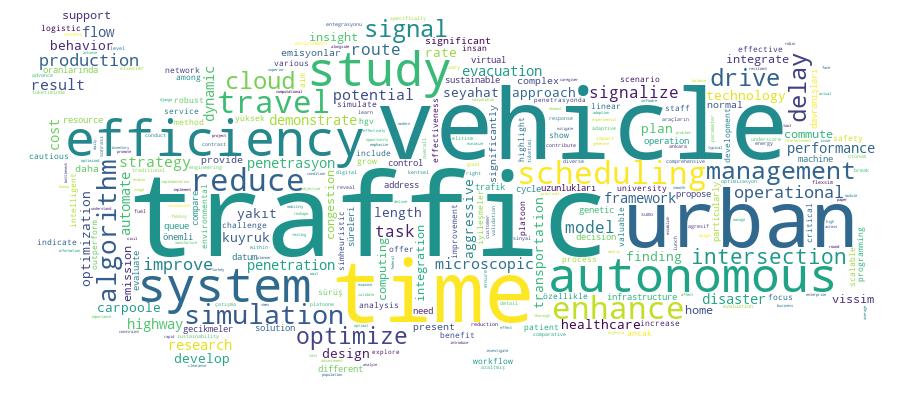
Competency Cloud
15 results
Scholarly Output Search Results
Now showing 1 - 10 of 15
Conference Object Citation - Scopus: 2Enhanced Task Scheduling in Iaas Cloud Environments Using Elitism-Based Genetic Algorithms(Institute of Electrical and Electronics Engineers Inc., 2024) Osama, M.; Sultan Mohiuddin Qadri, S.S.; Shams Malick, R.A.; Shahid, M.F.; Dawood, K.Cloud computing (CC) is a modern commercial model that enables customers to acquire large amounts of virtual resources on demand. Among the various service models in CC, Infrastructure as a Service (IaaS) provides Virtual Machines (VMs) and data centers. Efficient task scheduling, which maps cloud tasks to VMs, is key to optimizing data center performance and reducing energy consumption. Given the heterogeneous nature and computational intensity of these tasks, meta-heuristic methods are often employed for scheduling. This research proposes an enhanced Genetic Algorithm (GA) that integrates an Elitism-Based strategy with Conditional Parameter Tuning to improve convergence speed and solution quality. The elitism approach preserves top-performing solutions across generations, while conditional parameter tuning dynamically adjusts algorithm parameters based on population diversity and fitness levels. Experimental evaluations on Amazon EC2 show that the proposed method significantly outperforms traditional approaches in task completion time, resource utilization, and convergence efficiency. The results demonstrate the effectiveness of combining elitism with adaptive strategies to create a scalable, robust solution for task scheduling in high-demand cloud environments. © 2024 IEEE.Article Citation - WoS: 1Citation - Scopus: 4Assessing Traffic Performance: Comparative Study of Human and Automated Hgvs in Urban Intersections and Highway Segments(Univ Tun Hussein onn Malaysia, 2024) Almusawi, Ali; Albdairi, Mustafa; Qadri, Syed Shah Sultan MohiuddinThis study conducts a comparative analysis of traffic dynamics at urban signalized intersections and on highways, incorporating both human-operated and automated heavy goods vehicles (HGVs) using the PTV VISSIM simulation model. It examines the impacts of automated driving technologies on critical traffic performance metrics such as queue length, travel time, vehicle delay, emissions, and fuel consumption. Initial findings indicate that automation in HGVs enhances traffic flow, particularly by reducing queue lengths and vehicle delays. However, varying levels of automation from cautious to aggressive reveal complex trade-offs between operational efficiency and environmental impacts. On highways, automated HGVs demonstrate superior performance by reducing travel times and delays while increasing throughput compared to human-driven HGVs. These results underscore the operational benefits of automated HGVs under diverse traffic conditions and highlight their significant implications for transportation planning and policy-making. This research contributes valuable insights into the integration of automated technologies in transportation systems, facilitating informed decision-making for stakeholders considering the adoption of these advancements in the current infrastructure.Conference Object A Linear Programming Approach To Carpooling: Enhancing Commute Efficiency at Federal University of Technology Minna(Institute of Electrical and Electronics Engineers Inc., 2024) Abdulrahman, H.S.; Almusawi, A.; Bamisaye, R.T.; Qadri, S.S.S.M.; Dawood, K.This study explores the development of a carpooling system specifically designed for the Federal University of Technology Minna staff, utilizing the Civil Engineering Department as a case study. Amidst the escalating concerns of environmental sustainability, traffic congestion, and the economic burdens of individual commuting, carpooling presents itself as a sustainable alternative. Employing a mixed-methods approach, this research integrates a comprehensive survey to assess staff attitudes towards carpooling with the development of a linear programming model aimed at optimizing vehicle routes and allocations. The findings from the survey indicate a significant willingness among the staff to engage in carpooling, motivated by the anticipated benefits such as cost savings and reduced commuting times. The linear programming model further validates the practicality of substantially lowering total travel distances and emissions when compared to solo commuting practices. This targeted investigation showcases the carpooling system's capability not only to enhance commute efficiency among university staff but also positions it as a replicable and sustainable model for other academic institutions. The study contributes valuable insights into the design and operationalization of effective carpooling strategies within the university landscape, proposing a scalable framework applicable to similar urban contexts. © 2024 IEEE.Conference Object Citation - Scopus: 2Optimizing Traffic Signal Timing at Urban Intersections: a Simheuristic Approach Using Ga and Sumo(Institute of Electrical and Electronics Engineers Inc., 2024) Qadri, S.S.S.M.; Almusawi, A.; Albdairi, M.; Esirgün, E.This study introduces an innovative simheuristic framework that integrates the Simulation of Urban MObility (SUMO), a detailed microsimulation tool, with the Genetic Algorithm (GA), a robust optimization method, for optimizing traffic signal timing (TST) at signalized intersections. Specifically designed to be applied to typical four-leg intersection phase plans, this framework systematically determines the most effective green signal timings to enhance traffic flow efficiency and reduce environmental impact. By meticulously testing each potential TST solution generated by the GA, using SUMO to simulate its real-world impacts, the framework provides a thorough assessment of various signal timing strategies. Comparative analyses against established methodologies, such as the Particle Swarm Optimization (PSO) algorithm and Webster's traditional method, are conducted during peak traffic demand periods to evaluate the framework's effectiveness in managing congestion and emissions. Our results demonstrate that the proposed simheuristic approach significantly outperforms the benchmarks: it achieves a reduction in CO levels by 4.97% compared to PSO and 11.76% compared to Webster; NOx emissions are reduced by 2.5% and 3.94%, respectively; and PMx levels see a decrease of 3.83% and 6.58%. These improvements underscore the substantial benefits of the framework in both traffic flow efficiency and environmental sustainability, providing critical insights for traffic engineers and urban planners aiming to implement advanced TST strategies in complex urban settings. This study not only enhances understanding of dynamic traffic management but also supports sustainable urban development goals. © 2024 IEEE.Conference Object From Sawdust To Shipment: Leveraging Flexsim Simulation Models To Optimize Pallet Production Operations(Institute of Electrical and Electronics Engineers Inc., 2024) Yeter, Ö.; Güngör, B.; Qadri, S.S.S.M.This study is focused on optimizing the production facility of Burta Enerji Yatırım A.Ş. (BE), a growing company in the renewable energy sector that is known for its pellet production. The project used advanced simulation software, FlexSim, to improve the efficiency of pellet production and the effectiveness of its logistics capacity to customers. Through detailed simulations, the research replicated complex real-life processes in a controlled and cost-effective simulated environment, allowing for a thorough examination of the facility's operational dynamics. The analysis identified significant bottlenecks, interruptions in workflow, and issues in capacity utilization, pinpointing the critical factors that influence overall system performance. By evaluating a range of production configurations, the research established optimal workflow management strategies aimed at maximizing production throughput. Furthermore, this study explored how strategic adjustments in the production line setup and logistics could significantly reduce operational costs and improve customer satisfaction, ultimately contributing to a more sustainable business model. This paper presents a detailed narrative on the use of simulation techniques to refine production and logistics operations, enhancing operational efficiency and service quality in the renewable energy industry. © 2024 IEEE.Conference Object Optimization of Signalized Intersections: Analyzing Autonomous Vehicle Behaviors Through Data-Driven Simulations(Springer Science and Business Media Deutschland GmbH, 2026) Qadri, Syed Shah Sultan Mohiuddin; Albdairi, Mustafa; Almusawi, Ali; Kabarcik, Ahmet; Abdulrahman, H. S.Autonomous vehicles (AVs) present a transformative opportunity to enhance traffic flow, particularly at urban intersections where delays are most frequent. This study investigates how different AV driving behaviors and penetration rates affect traffic efficiency at signalized intersections. Using a microscopic simulation model in PTV VISSIM, the research centers on a four-way intersection in Balgat, Ankara. Five AV driving behaviors—cautious, normal, aggressive, platooning, and mixed—are modeled under various signal cycle lengths. The simulation’s accuracy was ensured through calibration and validation with real-world traffic data. The findings reveal that the integration of AVs can significantly improve traffic flow, with aggressive and platooning driving behaviors achieving the most notable reduction in vehicle delays, particularly at shorter cycle lengths (60–70 s). Increased AV penetration rates amplify these positive effects, reducing delays and queue lengths in all tested scenarios. In contrast, cautious AV behaviors led to more significant delays, highlighting the importance of intelligent AV driving strategies for optimizing traffic management. The results underscore that optimizing signal cycle lengths with AV integration can reduce congestion and improve urban traffic flow. While the study demonstrates the potential of AVs to enhance urban traffic management, it also stresses the need for real-world validation and the development of adaptive traffic signal systems capable of accommodating diverse driving behaviors. These insights offer urban planners and policymakers valuable guidance on integrating AVs into current infrastructure to create more resilient and efficient transportation networks. © 2025 Elsevier B.V., All rights reserved.Article AGENT: An Elitism-Guided Evolutionary Framework for Enhanced Task Allocation Performance in Heterogeneous Cloud Systems(Elsevier, 2026) Osama, Muhammad; Riaz, Muhammad Bilal; Shahid, Muhammad Farrukh; Qadri, Syed Shah Sultan MohiuddinCloud Computing (CC) delivers on-demand services through Infrastructure as a Service (IaaS), Platform as a Service (PaaS), and Software as a Service (SaaS) models. This study specializes in the approach to IaaS task scheduling in the heterogeneous data centers, where resource allocation is a critical issue to ensure that makespan is minimized. The NP-complete nature of such a scheduling problem requires sophisticated meta-heuristic solutions as the use of cloud workloads increases exponentially. Although Genetic Algorithms (GA) have received extensive use, available adaptive variants usually vary parameters based on aggregate populations statistics without individual solution tracking and elitism is not commonly implemented with adaptive mechanisms in a size-conserving fashion. This paper presents the Adaptive Genetic Algorithm with Elitism and Nonlinear Tuning (AGENT) that combines three new innovations: (1) size-preserving elitism that guarantees a monotonic improvement without growing the population, (2) feedback-based nonlinear parameter adaptation which is controlled by explicit success/failure counters as indicators of evolutionary progress of a population, unlike fitness-proportional or population-statistics-based methods, and (3) a multi-task-per-VM allocation model that captures real cloud elasticity. Experimental validation of CloudSim Plus simulation with Amazon EC2 VM setups showed makespan improvements of 3.14%-28.89% than baseline algorithms (HAGA, AIGA, SGA, Max-Min, Min-Min) with synthetic workloads. Scalability was tested on workloads of various sizes and was found to perform well with near-optimal results. Reduced makespan is associated with shorter VM operating time, which implies that energy efficiency may be improved and therefore, it should be investigated in the future by taking direct measurements.Conference Object Design and Implementation of a Custom ERP Framework for a Drilling Equipment Manufacturer(Springer Science and Business Media Deutschland GmbH, 2025) Torunoğlu, D.; Erkoç, E.C.; Abay, Z.E.; Qadri, S.S.S.M.; Gök, E.C.; Karataş, D.; Güçlüer, G.This study presents the design and implementation of a web-based Enterprise Resource Planning (ERP) system tailored for a small-to-medium-sized enterprise (SME) operating in the manufacturing sector. With a focus on GEO Sondaj Makine İmalat LTD. ŞTİ, the system was developed to digitize and streamline core operational workflows, including sales order processing, production scheduling, inventory management, procurement, and coordination between customers and suppliers. Built using the Django web framework, the ERP platform provides modular functionality with real-time data integration across departments. Unlike generic ERP packages, this custom-built solution mirrors the company’s actual business processes and addresses typical challenges faced by SMEs, such as limited IT infrastructure, absence of digital records, and resistance to organizational change. The internally developed modules led to enhanced traceability, operational efficiency, and data-driven decision-making. The system also includes a simulation module to support production visualization and planning, although advanced features like bottleneck identification and dynamic queue tracking remain under development. The findings demonstrate that a cost-effective, scalable ERP system can be successfully deployed in resource-constrained environments when grounded in business-specific needs. The system was evaluated based on internal testing, interdepartmental workflow validation, and observed improvements in operational efficiency and traceability. This project offers a practical reference for other SMEs seeking to modernize their operations through digital integration. © 2025 Elsevier B.V., All rights reserved.Conference Object Reinforcement Learning Meets the Cloud: A Q Learning Framework for Efficient Task Scheduling(Institute of Electrical and Electronics Engineers Inc., 2025) Boke, Kivilcim Naz; Qadri, Syed Shah Sultan Mohiuddin; Kabarcik, AhmetArticle Citation - WoS: 7Citation - Scopus: 17Integrating Autonomous Vehicles (Avs) Into Urban Traffic: Simulating Driving and Signal Control(Mdpi, 2024) Almusawi, Ali; Albdairi, Mustafa; Qadri, Syed Shah Sultan MohiuddinThe integration of autonomous vehicles into urban traffic systems offers a significant opportunity to improve traffic efficiency and safety at signalized intersections. This study provides a comprehensive evaluation of how different autonomous vehicle driving behaviors-cautious, normal, aggressive, and platooning-affect key traffic metrics, including queue lengths, travel times, vehicle delays, emissions, and fuel consumption. A four-leg signalized intersection in Balgat, Ankara, was modeled and validated using field data, with twenty-one scenarios simulated to assess the effects of various autonomous vehicle behaviors at penetration rates from 25% to 100%, alongside human-driven vehicles. The results show that while cautious autonomous vehicles promote smoother traffic flow, they also result in longer delays and higher emissions due to conservative driving patterns, especially at higher penetration levels. In contrast, aggressive and platooning autonomous vehicles significantly improve traffic flow and reduce delays and emissions. Mixed-behavior scenarios reveal that different driving styles can coexist effectively, balancing safety and efficiency. These findings emphasize the need for optimized autonomous vehicle algorithms and signal control strategies to harness the potential benefits of autonomous vehicle integration in urban traffic systems fully, particularly in terms of improving traffic performance and sustainability.