
İder, Sıtkı Kemal
Loading...
Profile URL
Name Variants
Ider, S. Kemal
Ider, Sitki Kemal
Ider, Sitki Kemal
Job Title
Prof. Dr.
Email Address
kider@cankaya.edu.tr
Main Affiliation
Makine Mühendisliği
Status
Current Staff
Website
ORCID ID
Scopus Author ID
Turkish CoHE Profile ID
Google Scholar ID
WoS Researcher ID
Files
Sustainable Development Goals
 1
1NO POVERTY
0
Research Products
 2
2ZERO HUNGER
0
Research Products
 3
3GOOD HEALTH AND WELL-BEING
1
Research Products
 4
4QUALITY EDUCATION
0
Research Products
 5
5GENDER EQUALITY
0
Research Products
 6
6CLEAN WATER AND SANITATION
0
Research Products
 7
7AFFORDABLE AND CLEAN ENERGY
0
Research Products
 8
8DECENT WORK AND ECONOMIC GROWTH
0
Research Products
 9
9INDUSTRY, INNOVATION AND INFRASTRUCTURE
0
Research Products
 10
10REDUCED INEQUALITIES
0
Research Products
 11
11SUSTAINABLE CITIES AND COMMUNITIES
0
Research Products
 12
12RESPONSIBLE CONSUMPTION AND PRODUCTION
0
Research Products
 13
13CLIMATE ACTION
0
Research Products
 14
14LIFE BELOW WATER
0
Research Products
 15
15LIFE ON LAND
0
Research Products
 16
16PEACE, JUSTICE AND STRONG INSTITUTIONS
0
Research Products
 17
17PARTNERSHIPS FOR THE GOALS
0
Research Products

This researcher does not have a Scopus ID.

This researcher does not have a WoS ID.

Scholarly Output
18
Articles
15
Views / Downloads
58/0
Supervised MSc Theses
3
Supervised PhD Theses
0
WoS Citation Count
32
Scopus Citation Count
47
Patents
0
Projects
0
WoS Citations per Publication
1.78
Scopus Citations per Publication
2.61
Open Access Source
7
Supervised Theses
3
| Journal | Count |
|---|---|
| Acta Polytechnica Hungarica | 4 |
| Turkish Journal of Electrical Engineering and Computer Sciences | 2 |
| Journal of the Brazilian Society of Mechanical Sciences and Engineering | 2 |
| Asian Journal of Control | 1 |
| International Journal of Heavy Vehicle Systems | 1 |
Current Page: 1 / 2
Scopus Quartile Distribution
Competency Cloud
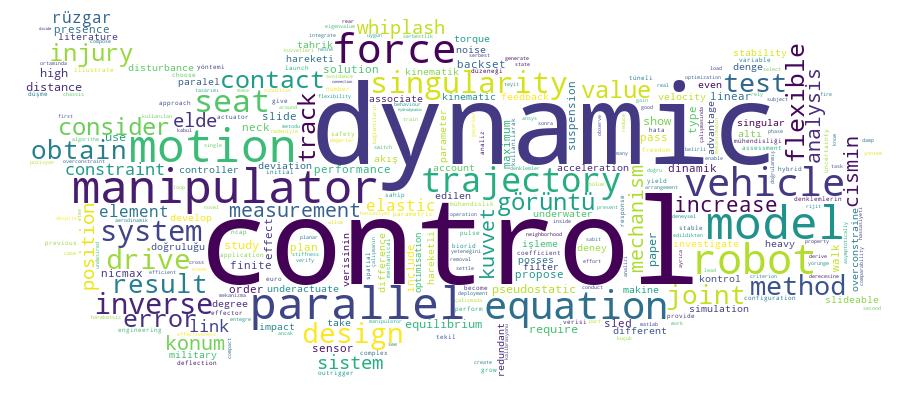
18 results
Scholarly Output Search Results
Now showing 1 - 10 of 18
Article Citation - WoS: 2Citation - Scopus: 3On the Stability of Inverse Dynamics Control of Flexible-Joint Parallel Manipulators in the Presence of Modeling Error and Disturbances(Tubitak Scientific & Technological Research Council Turkey, 2019) Korkmaz, Ozan; Denizli, Mustafa Semih; Ider, Sitki KemalInverse dynamics control is considered for flexible-joint parallel manipulators in order to obtain a good trajectory tracking performance in the case of modeling error and disturbances. It is known that, in the absence of modeling error and disturbance, inverse dynamics control leads to linear fourth-order error dynamics, which is asymptotically stable if the feedback gains are chosen to make the real part of the eigenvalues of the system negative. However, when there are modeling errors and disturbances, a linear time-varying error dynamics is obtained whose stability is not assured only by keeping the real parts of the frozen-time eigenvalues of the system negative. In this paper, the stability of such systems is investigated and it is proved that the linear time-varying system can be rendered stable by selecting the feedback gains such that the variation of the system becomes sufficiently slow. To illustrate the performance of the control method, deployment motion of a 3-(R) under bar PR planar parallel manipulator subject to impact is simulated. For the impact model, the impulse-momentum and the coefficient of restitution equations for the system are derived.Article Citation - WoS: 2Citation - Scopus: 2Kinematic Design and Analysis of a Novel Overconstraint Walking Mechanism(Cambridge Univ Press, 2025) Selvi, Ozgun; Cindioglu, Cagri; Ider, Sitki Kemal; Ceccarelli, MarcoWalking mechanisms offer advantages over wheels or tracks for locomotion but often require complex designs. This paper presents the kinematic design and analysis of a novel overconstrained spatial a single degree-of-freedom leg mechanism for walking robots. The mechanism is generated by combining spherical four-bar linkages into two interconnecting loops, resulting in an overconstrained design with compact scalability. Kinematic analysis is applied using recurrent unit vector methods. Dimensional synthesis is performed using the Firefly optimization algorithm to achieve a near-straight trajectory during the stance phase for efficient walking. Constraints for mobility, singularity avoidance, and transmission angle are also implemented. The optimized design solution is manufactured using 3D printing and experimentally tested. Results verify the kinematic properties including near-straight-line motion during stance. The velocity profile shows low perpendicular vibrations. Advantages of the mechanism include compact scalability allowing variable stride lengths, smooth motion from overconstraint, and simplicity of a single actuator. The proposed overconstrained topology provides an effective option for the leg design of walking robots and mechanisms.Master Thesis Tekil Pozisyonların Varlığında Düzlemsel Paralel Bir Robotun Yörünge Tasarımı(2025) Özkök, Emre Umut; İder, Sıtkı KemalParalel manipülatörlerin tahrik tekilliği konumlarında, tahrik elemanları uç‐efektörü belirli yönlerde kontrol etme yeteneğini kaybeder. Ancak dinamik denklemlerin belirli tutarlılık koşulları uygun yörünge tasarımıyla sağlandığında, manipülatör tekil konfigürasyonlardan geçerken gerekli tahrik kuvvetleri ve sistem hareketi kararlı kalabilir. Bu çalışmada incelenen mekanizma, sabit bağlantı dâhil altı mafsal ve altı bağlantıdan oluşan, üç serbestlik derecesine sahip bir sistemdir. İlk aşamada mekanizmanın kinematik analizi ve dinamik simülasyonu gerçekleştirilmiştir. Kinematik analizde bağlantıların kütle merkezlerinin orta noktalarında bulunduğu varsayılmış, buna göre konum ve hız denklemleri türetilmiştir. Ardından bağlantıların kinetik ve potansiyel enerjileri hesaplanmış, bu değerler kullanılarak dinamik denklemler oluşturulmuştur. Manipülatör tekil konuma tutarsız ve tutarlı yörüngelerle geçerken tahrik torklarının zamana bağlı değişimi incelenmiştir. Söz konusu analiz MATLAB ortamında yürütülmüştür. Kinematik sonuçların doğruluğu, Autodesk Inventor'dan elde edilen verilerle karşılaştırılarak doğrulanmıştır. Kinematik analizin geçerliliği teyit edildikten sonra dinamik denklemler test edilmiştir; bu doğrulama, mekanizmanın serbest düşme hareketi yapıp yapmadığının gözlemlenmesiyle gerçekleştirilmiştir. Serbest düşme hareketi uygun şekilde simüle edildikten sonra, hem dinamik denklemlerin hem de elde edilen tork grafiklerinin doğruluğu doğrulanmıştır (Serbest düşme hareketinin doğruluğu, Working Model ve MATLAB ortamında yapılan analizlerin karşılaştırılmasıyla teyit edilmiştir.).Bu tez, daha önce önerilmiş yöntemleri kullanarak bir paralel manipülatörün analizini sunmaktadır.Article Citation - WoS: 1Citation - Scopus: 2Dynamic Analysis and Design Optimisation of a Heavy Military Vehicle(inderscience Enterprises Ltd, 2021) Acar, Bulent; Ider, S. Kemal; Cicek, Burak CanThis paper investigates the dynamic response of a heavy military vehicle which is subjected to a dynamic firing load while it is settled on its outriggers. Dynamic behaviour of a settled heavy military vehicle under a dynamic firing load is one of the major design factors of a launching vehicle. Two different finite element (FE) models are created in ANSYS software to obtain the dynamic behaviour of the launching vehicle. The first model is a detailed finite element model (DFEM) and the second model is a simple and less degree of freedom (DOF) parametric FE model which is created with the ANSYS Parametric Design Language (APDL) in order to perform the design optimisation by swiftly varying the parameters such as clamp attachment positions on the chassis, outrigger deployment and outrigger case cross section.Article Citation - WoS: 2Citation - Scopus: 2Desingularization of Flexible-Joint Parallel Robots(Budapest Tech, 2021) Ider, Sitki Kemal; Ozdemir, MustafaParallel robots possess a characteristic type of singularities, called type II or drive singularities, inside their workspace. In the neighborhood of these singularities, the inverse dynamics solution grows unboundedly and the robot becomes uncontrollable. There is growing literature on methods that enable parallel robots to pass through drive singularities. Most of this literature relies on dynamic models that presume rigid joints. However, the flexibility of the drive train elements should also be taken into account for high accuracy. In this paper, we propose a systematic trajectory planning method for enabling flexible-joint parallel robots to pass through drive singular configurations. Our method generates admissible polynomial trajectories of degree eleven. Four conditions are derived and incorporated into the method to prevent undesired back-and-forth motion of the endpoint. This ensures not only an efficient operation of the robot but also the avoidance of unintended multiple occurrences of the same singularity. The boundedness of the inverse dynamics solution is also guaranteed.Article Citation - WoS: 2Citation - Scopus: 2Parametric Analysis of an Anti-Whiplash System Composed of a Seat Suspension Arrangement(Springer Heidelberg, 2015) Ider, Sitki Kemal; Gokler, Mustafa Ilhan; Ozdemir, MustafaNeck injuries frequently seen in low-speed rear-end collisions are referred to as whiplash injuries. Most of the proposed anti-whiplash systems in the literature rely on reducing the backset. A relatively new and promising alternative concept is a slideable seat. This study aimed to parametrically analyze an anti-whiplash vehicle seat that can slide backward against a horizontal suspension arrangement composed of a spring and a damper in response to a rear-end collision, and to investigate the effects of the suspension parameters on the injury risk. A simplified model of a slideable vehicle seat is developed, and simulations are conducted in LS-DYNA (R) environment using this slideable seat model and the commercially available finite element model of the BioRID II dummy. The maximum value of the Neck Injury Criterion (NICmax) is used as the measure of the injury risk. As a result, a strong linear inverse correlation is observed between NICmax and the maximum seat sliding distance, while the stiffness and damping coefficients of the suspension are varied. This result is also verified by obtaining the same NICmax value for the same maximum seat sliding distance (although the stiffness and damping coefficients are different). It is also shown that, for a given backset value as large as 60 mm, a slideable seat with the suspension parameters selected to yield a reasonable maximum seat sliding distance such as 100 mm significantly improves NICmax compared to a standard seat. As the maximum seat sliding distance is increased, the injury risk becomes smaller.Master Thesis Görüntü İşleme Metodu Kullanılarak Rijit Cismin Konum Verisinin Belirlenmesi(2024) Görgülü, Uğur; İder, Sıtkı KemalBu tez çalışmasında, görüntü işleme metodu ile hareketli cismin konum verisinin elde edilmesi anlatılmaktadır. Hareketli cismin konumunu analiz etmek için test düzeneği kurulmuş ve cismin ~250 m/s hızla, ~8 metrelik hareketi boyunca, 2000 fps ile görüntü alınmıştır. Görüntü analizi ve kamera kalibrasyonu TrackEye programı kullanılarak yapılmış, sonuç olarak konum verisi elde edilmiştir. Tez çalışması ayrıca ne kadar hassasiyet ile pozisyon verisinin bulunduğuna ait bölüm içermektedir. Bu bölüm ile konum verisinin hassasiyeti tespit edilmiştir. Hassasiyet çalışmasında kullanılan test düzeneği, hareketli nesne yerine hareketsiz nesne kullanılması dışında ana test düzeneğine benzer şekilde kurulmuştur. Hareketsiz cismin konum verisi, görüntü işleme yöntemi ve mutlak doğru olarak kabul edilen takeometre ölçümleri ile elde edilmiştir. Sonuçlara göre, görüntü işleme yöntemi ile rijit cismin konumu 2 cm'den küçük hata ve 1 cm'den küçük ortalama hata ile elde edilebilmektedir. Bu değerler ana çalışmanın tolerans sınırları içerisindedir; dolayısıyla yöntem doğrulanmış kabul edilebilir. Hacimsel kısıtlar nedeniyle hareketli cismin konum verisi, entegre sensörler gibi geleneksel yöntemlerle elde edilemediğinde bu çalışmada doğrulanmış olan görüntü işleme yöntemi faydalı olabilmektedir.Article Desingularization of Flexible-Joint Parallel Robots(Budapest Tech Polytechnical Institution, 2021) İder, Sıtkı Kemal; Özdemir, MustafaArticle Citation - WoS: 12Citation - Scopus: 17Trajectory Tracking Control of an Underactuated Underwater Vehicle Redundant Manipulator System(Wiley, 2016) Ider, S. Kemal; Ozgoren, M. Kemal; Korkmaz, OzanThe purpose of this study is to control the position of an underactuated underwater vehicle manipulator system (U-UVMS). It is possible to control the end-effector using a regular 6-DOF manipulator despite the undesired displacements of the underactuated vehicle within a certain range. However, in this study an 8-DOF redundant manipulator is used in order to increase the positioning accuracy of the end-effector. The redundancy is resolved according to the criterion of minimal vehicle and joint motions. The underactuated underwater vehicle redundant manipulator system is modeled including the hydrodynamic forces for the manipulator in addition to those for the autonomous underwater vehicle (AUV). The shadowing effects of the bodies on each other are also taken into account when computing the hydrodynamic forces. The Newton-Euler formulation is used to derive the system equations of motion including the thruster dynamics. In order to establish the endeffector trajectory tracking control of the system, an inverse dynamics control law is formulated. The effectiveness of the control law even in the presence of parameter uncertainties and disturbing ocean currents is illustrated by simulations.Article Citation - WoS: 2Citation - Scopus: 2Hybrid Force and Motion Control of a Three-Dimensional Flexible Robot Considering Measurement Noises(Mdpi, 2022) Kilicaslan, Sinan; Ozgoren, Mustafa Kemal; Ider, Sitki KemalThis work addresses the end-effector trajectory-tracking force and motion control of a three-dimensional three-link robot considering measurement noises. The last two links of the manipulator are considered as structurally flexible. An absolute coordinate approach is used while obtaining the dynamic equations to avoid complex dynamic equations. In this approach, each link is modeled as if there is no connection between the links. Then, joint connections are expressed as constraint equations. After that, these constraint equations are used in dynamic equations to decrease the number of equations. Then, the resulting dynamic equations are transformed into a form which is suitable for controller design. Furthermore, the dynamic equations are divided as pseudostatic equilibrium and deviation equations. The control torques resulting from the pseudostatic equilibrium and the elastic deflections are obtained easily as the solution of algebraic equations. On the other hand, the control torques corresponding to the deviations are obtained without any linearization. Encoders, strain gauges, position sensors and force and moment sensors are required for measurements. Low pass filters are considered for the sensors. For the crossover frequencies of the sensors, low and high values are chosen to observe the filtering effect on the robot output.
