
Aylı, Ülkü Ece
Loading...
Profile URL
Name Variants
Ayli, Ece & Aylı, Ece & Aylı İnce, Ülkü Ece & Ayli, Ulku Ece
Job Title
Doç. Dr.
Email Address
eayli@cankaya.edu.tr
Main Affiliation
06.06. Makine Mühendisliği
Makine Mühendisliği
06. Mühendislik Fakültesi
01. Çankaya Üniversitesi
Makine Mühendisliği
06. Mühendislik Fakültesi
01. Çankaya Üniversitesi
Status
Current Staff
Website
ORCID ID
Scopus Author ID
Turkish CoHE Profile ID
Google Scholar ID
WoS Researcher ID
Files
Sustainable Development Goals
 1
1NO POVERTY
0
Research Products
 2
2ZERO HUNGER
0
Research Products
 3
3GOOD HEALTH AND WELL-BEING
2
Research Products
 4
4QUALITY EDUCATION
0
Research Products
 5
5GENDER EQUALITY
0
Research Products
 6
6CLEAN WATER AND SANITATION
0
Research Products
 7
7AFFORDABLE AND CLEAN ENERGY
18
Research Products
 8
8DECENT WORK AND ECONOMIC GROWTH
0
Research Products
 9
9INDUSTRY, INNOVATION AND INFRASTRUCTURE
3
Research Products
 10
10REDUCED INEQUALITIES
0
Research Products
 11
11SUSTAINABLE CITIES AND COMMUNITIES
0
Research Products
 12
12RESPONSIBLE CONSUMPTION AND PRODUCTION
1
Research Products
 13
13CLIMATE ACTION
2
Research Products
 14
14LIFE BELOW WATER
0
Research Products
 15
15LIFE ON LAND
0
Research Products
 16
16PEACE, JUSTICE AND STRONG INSTITUTIONS
0
Research Products
 17
17PARTNERSHIPS FOR THE GOALS
0
Research Products

This researcher does not have a Scopus ID.

This researcher does not have a WoS ID.
No records found in other affiliations.

Scholarly Output
47
Articles
35
Views / Downloads
2921/705
Supervised MSc Theses
4
Supervised PhD Theses
0
WoS Citation Count
213
Scopus Citation Count
233
Patents
0
Projects
0
WoS Citations per Publication
4.53
Scopus Citations per Publication
4.96
Open Access Source
11
Supervised Theses
4
| Journal | Count |
|---|---|
| Journal of Thermal Science and Engineering Applications | 3 |
| Proceedings of the Institution of Mechanical Engineers, Part C: Journal of Mechanical Engineering Science | 3 |
| Journal of Thermal Engineering | 3 |
| 5th International Anatolian Energy Symposium | 2 |
| Journal of Computing and Information Science in Engineering | 2 |
Current Page: 1 / 7
Scopus Quartile Distribution
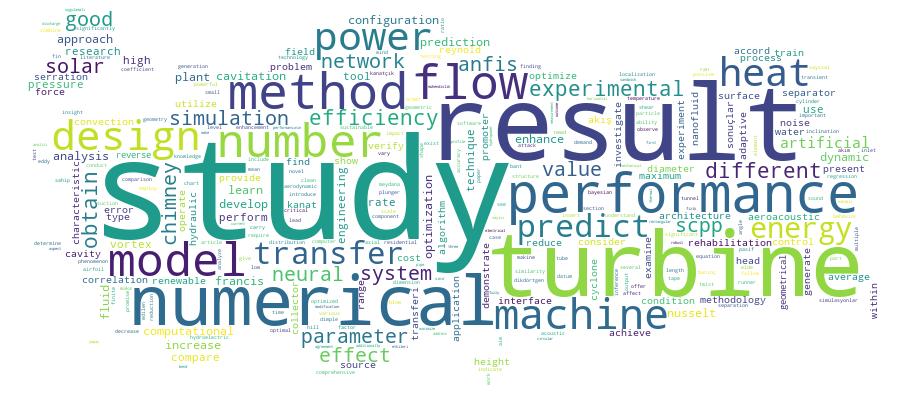
Competency Cloud
47 results
Scholarly Output Search Results
Now showing 1 - 10 of 47
Article Citation - WoS: 3Citation - Scopus: 6A Comprehensive Review of Cyclone Separator Technology(Wiley, 2024) Ayli, Ece; Kocak, EyupThis review article examines the working principles, optimal dimensions, effects of key parameters, and the results of experimental/numerical studies on cyclone separators. Investigations have been conducted on the effects of parameters such as vortex finder diameter, conical part diameter, cyclone separator diameter, cylinder height, inlet height, inlet width, vortex finder length, and cyclone total length on efficiency, performance, and pressure drop. Furthermore, the article explores current modifications and efforts to improve efficiency. These modifications include adding water nozzles, inserting ribs, employing double-stage cyclones, incorporating additional inlets, using finned cylinder bodies, adding extra top inlets, introducing liquid jets, employing helical roof inlets, adding laminarizers, incorporating internal spiral vanes, and employing slotted vortex finders. While serving as a guide to optimize the design and performance of cyclone separators, this article emphasizes new and innovative approaches to enhance their industrial applicability. By compiling studies conducted from conceptual birth to the present, the aim of this article is to serve as a guidebook.Article Citation - WoS: 2Citation - Scopus: 1Exploring the Potential of Artificial Intelligence Tools in Enhancing the Performance of an Inline Pipe Turbine(Sage Publications Ltd, 2024) Celebioglu, Kutay; Ayli, Ece; Cetinturk, Huseyin; Tascioglu, Yigit; Aradag, SelinIn this study, investigations were conducted using computational fluid dynamics (CFD) to assess the applicability of a Francis-type water turbine within a pipe. The objective of the study is to determine the feasibility of implementing a turbine within a pipe and enhance its performance values within the operating range. The turbine within the pipe occupies significantly less space in hydroelectric power plants since a spiral casing is not used to distribute the flow to stationary vanes. Consequently, production and assembly costs can be reduced. Hence, there is a broad scope for application, particularly in small and medium-scale hydroelectric power plants. According to the results, the efficiency value increases on average by approximately 1.5% compared to conventional design, and it operates with higher efficiencies over a wider flow rate range. In the second part of the study, machine learning was employed for the efficiency prediction of an inline-type turbine. An appropriate Artificial Neural Network (ANN) architecture was initially obtained, with the Bayesian Regularization training algorithm proving to be the best approach for this type of problem. When the suitable ANN architecture was utilized, the prediction was found to be in good agreement with CFD, with an root mean squared error value of 0.194. An R2 value of 0.99631 was achieved with the appropriate ANN architecture.Article Citation - WoS: 3Citation - Scopus: 5Optimization of Vortex Promoter Parameters To Enhance Heat Transfer Rate in Electronic Equipment(Asme, 2020) Ayli, Ece; Bayer, OzgurIn this paper, optimization of the location and the geometry of a vortex promoter located above in a finned surface in a channel with eight heat sources is investigated for a Reynolds number of 12,500 < Re < 27,700. Heat transfer rates and the corresponding Nusselt number distributions are studied both experimentally and numerically using different vortex promoter geometries (square, circular, and triangular) in different locations to illustrate the effect of vortex promoter on the fluid flow. Optimization study considered a range of following parameters: blockage ratio of 0.30<(y/C) < 0.45 and interpromoter distance ratio of 0.2277 <(x/L) < 0.3416. Results show that fins over which rectangular and circular promoters are integrated perform better in enhancing the heat transfer. According to the numerical and experimental results, higher blockage ratios cause significantly higher heat transfer coefficients. According to the observations, as the interpromoter distances increase, shedding gains strength, and more turbulence is created. All vortex promoters enhance heat transfer resulting in lower temperature values on the finned surface for different (y/C) and (x/L) values and Reynolds numbers. The use of promoters enhances the heat transfer, and the decrease in the maximum temperature values is recorded on the finned surface changing between 15% and 27%. The biggest decrease in maximum surface temperature value is 500 K-364 K and observed in circular promoter case with (y/C) = 0.43, (x/L) = 0.3416, and Reynolds numbers of 22,200.Article Citation - WoS: 5Citation - Scopus: 6Prediction of the Heat Transfer Performance of Twisted Tape Inserts by Using Artificial Neural Networks(Korean Soc Mechanical Engineers, 2022) Kocak, Eyup; Ayli, EceA numerical study is undertaken to investigate the effect of twisted tape inserts on heat transfer. Twisted tapes with various aspect ratios and single, double, and triple inserts are placed inside a tube for Reynolds numbers ranging from 8000 to 12000. Numerical results show that the tube with a twisted tape and different numbers of tape is more effective than the smooth tube in terms of thermo-hydraulic performance. The highest heat transfer is achieved with the triple insert, with the highest turning number and an increment of 15 %. Then, an artificial neural network (ANN) model with a three-layer feedforward neural network is adopted to obtain the Nusselt number on the basis of four inputs for a heated tube with a twisted insert. Several configurations of the neural network are examined to optimize the number of neurons and to identify the most appropriate training algorithm. Finally, the best model is determined with one hidden layer and thirteen neurons in the layer. Bayesian regulation is chosen as the training algorithm. With the optimized algorithm, excellent precision for measuring the output is provided, with R2 = 0.97043. In addition, the optimized ANN architecture is applied to similar studies in the literature to predict the heat transfer performance of twisted tapes. The developed ANN architecture can predict the heat transfer enhancement performance of similar problems with R2 values higher than 0.93.Article Citation - WoS: 6Citation - Scopus: 6Mitigating Cavitation Effects on Francis Turbine Performance: a Two-Phase Flow Analysis(Pergamon-elsevier Science Ltd, 2025) Altintas, Burak; Ayli, Ece; Celebioglu, Kutay; Aradag, Selin; Tascioglu, YigitDue to their ability to operate over a wide range of flow rates and generate high power, Francis turbines are the most widely used of hydroturbine type. Hydraulic turbines, are designed for specific flow and head conditions tailored to site conditions. However, Francis turbines can also be operated outside of design conditions due to varying flow and head values. Operation outside of design conditions can lead to cavitation. In this study, singlephase steady-state an alyses were conducted initially to examine cavitation in detail, followed by two-phase transient analyses. The results obtained from these analyses were compared to determine the cavitation characteristics of the designed turbine. The steady-state simulation results indicate the occurrence of cavitation, including traveling bubble and draft tube cavitation, under overload operating conditions. However, these cavitation characteristics are not observed in the two-phase transient simulation results under the same operating conditions. Additionally, the turbine efficiency is predicted to be higher in the transient simulation results. This is attributed to the frozen rotor interface used in the steady-state simulations, which over predicts flow irregularities. The reduced flow irregularities in the transient results have resulted in lower cavitation and losses, leading to higher predicted turbine efficiency.Master Thesis Bükülmüş Bant Geometrisinin ve Nanoparçacıkların Tüplerde Isı Transfer Performansına Sinerjistik Etkileri(2025) Çakmak, Yılmaz Ömür; Yapıcı, Ekin Özgirgin; Aylı, Ülkü EceBorularda ısı transferini artırmak son yıllarda verimlilik açısından önemli bir konu olmuştur. Bu nedenle birçok pasif yöntem kullanılmış ve araştırmalarda yer bulmuştur. Bükülmüş bant ek parçaları bu pasif yöntemlerden biri olup borudaki akış rejimini ve hareketi değiştirerek ısı transferini artıran yapılar olarak öne çıkmaktadır. Bu parçalar akış içerisinde belirli bölgelerde girdap hareketi oluşturarak türbülans görevi görmekte ve termal sınır tabakasını bozarak ısı transfer katsayısını iyileştirmektedir. Bu çalışmada borularda kullanılan bükümlü bant geometrisinin nanopartiküllerle ısı transferi iyileştirmesine olan etkileri incelenmiştir. Temel amaç, kullanılacak sıvıya çeşitli nanopartikül konsantrasyonlarına sahip nanopartiküller eklenmesi ve sistem yapısına farklı büküm oranlarıyla eklenen bükümlü bant ek parçası ile ısı transferi iyileştirmesindeki artışı incelemek ve gözlemlemektir. Hesaplamalı Akışkanlar Dinamiği (HAD) simülasyonları kullanılarak, bükülmüş bant geometrisine sahip boru içerisindeki nanoakışkanın ısı transferi davranışı simüle edilmiştir. Bu simülasyonlardan elde edilen sonuçlar, nanopartikül konsantrasyonunun artırılmasının ısı transfer performansını arttırdığını ve en verimli bükümlü bant ek parçası tasarımının 4 büküm oranına sahip olan tasarım olarak tasvir edildiğini göstermektedir. Al2O3-TiO2 (%10-6) nanofluidinin kullanımının sistem üzerinde oldukça olumlu bir etkiye sahip olduğu gözlemlenmiştir. Nusselt sayısı, sürtünme faktörü ve Performans değerlendirme kriterleri (PEC) ile ilgili karşılaştırmalar yapılmıştır.Article Citation - WoS: 1Citation - Scopus: 1Performance Determination of Axial Wind Tunnel Fan With Reverse Engineering, Numerical and Experimental Methods(Asme, 2022) Ayli, Ece; Kocak, EyupIn today's technology, in case of the need for rehabilitation, renovation, or damage, it is necessary to recover the problems quickly with a cost-effective approach. In the case of destructive failure, or misdesign of the devices, replacing the problematic part with the new design is crucial. In order to substitute the related part with the efficient one, reverse engineering (RE) methodology is utilized. In this paper, from the perspective of engineering implementation and based on the idea of reverse engineering, axial wind tunnel fan is rehabilitated using numerical and experimental methods. The current study is focused on an axial pressurization fan placed into Cankaya University Mechanical Engineering Laboratory wind tunnel that has firm guaranteed specifications of 5.55 m(3)/s airflow capacity. The measurements performed during experiments showed that the fan provides less than 60% airflow compared with firm guaranteed specifications. In order to determine the problems of the existing fan, a reverse engineering methodology is developed, and the noncontact data acquisition method is used to form a computer aided drawing (CAD) model. A computational fluid dynamics (CFD) methodology is developed to analyze existing geometry numerically, and results are compared with an experimental study to verify numerical methodology. According to the results, the prediction accuracy of the numerical method can attain 92.95% and 96.38% for flowrate and efficiency, respectively, at the maximum error points.Article Machine Learning-Based Efficiency Prediction of Francis Type Hydraulic Turbines Through Comprehensive Performance Testing(Sage Publications Ltd, 2025) Besni, Ferdi; Buyuksolak, Fevzi; Ayli, Ece; Celebioglu, Kutay; Aradag, Selin; Tascioglu, YigitIn this study, the rehabilitation works carried out for the KEPEZ HPP, which has been in operation for over 50 years in Antalya, Turkey, is discussed. Within this scope, the existing turbine components are optimized using the CFD method, and a design that provides higher performance at the required flow rate and head is obtained. Analyses are performed using numerical methods to examine the behavior of the new turbine at different flow rates and heads, and a hill chart is created. In the second stage, model tests are carried out at the TOBB ETU HYDRO Water Turbine Design and Test Center in accordance with IEC60193 standards. Different ML methods are examined for their ability to predict turbine performance, following the development of the hydrid CFD-Experimental methodology. According to the authors knowledge, there is no study in the literature that combines experimental, numerical, and ML methods for turbines, and ML methods have not been applied before for Francis-type turbine performance prediction. The outcomes of the study contribute to the advancement of turbine design and optimization processes, offering valuable insights for the successful implementation of rehabilitation projects in the hydropower sector.Conference Object Numerical Study of the Influence of Chimney Configurations in a Solar Chimney Power Plant(2019) Nsaif, O.; Al-Rawe, M.; Özgirgin, E.; Aylı İnce, Ülkü EceArticle Citation - WoS: 52Citation - Scopus: 58Numerical Investigation on the Performance of a Small Scale Solar Chimney Power Plant for Different Geometrical Parameters(Elsevier Sci Ltd, 2020) Yapici, Ekin Ozgirgin; Ayli, Ece; Nsaif, OsamaIn recent decades, demand for energy has been significantly increased, and considering environmental impacts and the degrading nature of fossil fuels, clean and emission-free renewable energy production has attracted a great deal of attention. One of the most promising renewable energy sources is solar energy due to low cost and low harmful emissions, and from the 1980s, one of the most beneficial applications of solar energy is the utilization of solar chimney power plants (SCPP). A SCPP is a simple and reliable system that consists of three main components; a solar collector, a chimney (tower) and a turbine to utilize electrical energy. Recently, by the advancement in computer technology, the use of CFD methodology for studying SCPP has become an extensive, robust and powerful technique. In light of the above, in this study, numerical simulations of a SCPP through three-dimensional axisymmetric modeling is performed. A numerical model is created using CFD software, and the results are verified with an experimental study from the literature. After ensuring good agreement with the experiments, chimney's and collector's geometric parameters effects and different configurations effects on SCPP performance, simultaneously and additively is investigated. The study introduces an insight to the performance enhancement methods and finding the best configuration of a SCPP model, which will be the basis of a detailed prototyping process. Based on the numerical results, the best configuration of the SCPP has been found as the diverging chimney which enhances the generated power. The results of the study showed that the chimney height and collector radius increase has a positive effect on the power output and efficiency of the system, but when construction and material costs are also considered, each has an optimal value. The maximum impact on the performance is found to be by the chimney tower radius and the collector height and inclination are found to have optimum values considering performance. According to the obtained results, the best performance for the SCPP was obtained with 3.5 m chimney height, 30 cm tower diameter, 400 cm of collector diameter with 6 cm height and zero inclination angle. By the correct selection of the dominant performance parameter which can be done by correctly interpreting the results of this study, "the best" design of a SCPP real scale prototype considering maximum power requirement can be done. (C) 2020 Elsevier Ltd. All rights reserved.